Guyana & Indian Heritage
Migration Journey
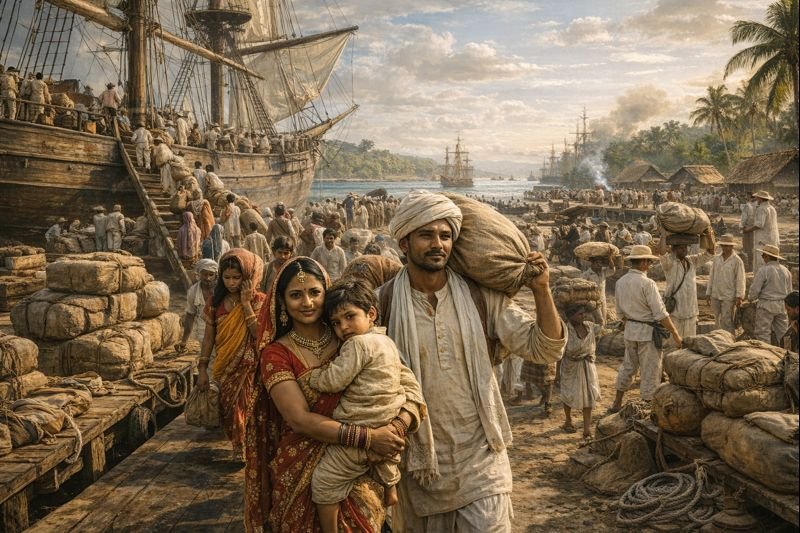
Indian migration to Guyana began in the early 19th century under the British indentured labour system. Thousands of Indians were recruited from regions such as Bihar, Uttar Pradesh, and Tamil Nadu to work on sugar plantations after the abolition of slavery. The journey to Guyana was long and difficult, often lasting several months by sea. Migrants faced overcrowded ships, limited supplies, and uncertainty about their future, yet many undertook the voyage in search of economic survival and new opportunities.
Despite the hardships, this migration marked the beginning of a permanent Indian presence in Guyana. The journey itself became a defining experience, shaping a shared memory of sacrifice, resilience, and hope that continues to influence Indo-Guyanese identity today.
Settlement Patterns
After completing their indenture ship contracts, many Indian migrants chose to remain in Guyana rather than return to India. They settled primarily in rural areas near plantations, gradually forming villages and agricultural communities. These settlements were often self-sustaining, with families cultivating rice, vegetables, and other crops to support their livelihoods.
Over time, Indo-Guyanese communities expanded into towns and urban centres as education and economic opportunities increased. These settlement patterns helped establish strong social networks based on kinship, shared traditions, and collective progress, contributing to the stable growth of Guyana’s population.
Social, Cultural, and Economic Contributions
Indo-Guyanese communities have made lasting contributions to Guyana’s social and cultural landscape. They preserved religious practices such as Hinduism and Islam, celebrated festivals like Diwali and Phagwah (Holi), and maintained traditional customs related to marriage, language, and family life. These traditions were passed down through generations and remain an integral part of Guyanese culture.
Economically, Indo-Guyanese played a major role in transforming agriculture, particularly in rice and sugar production. Many also became entrepreneurs, traders, and professionals, contributing to national development. Their dedication to education, enterprise, and community building has helped shape modern Guyana.
Composition of the Guyanese Population
Diversity and Multicultural Interactions
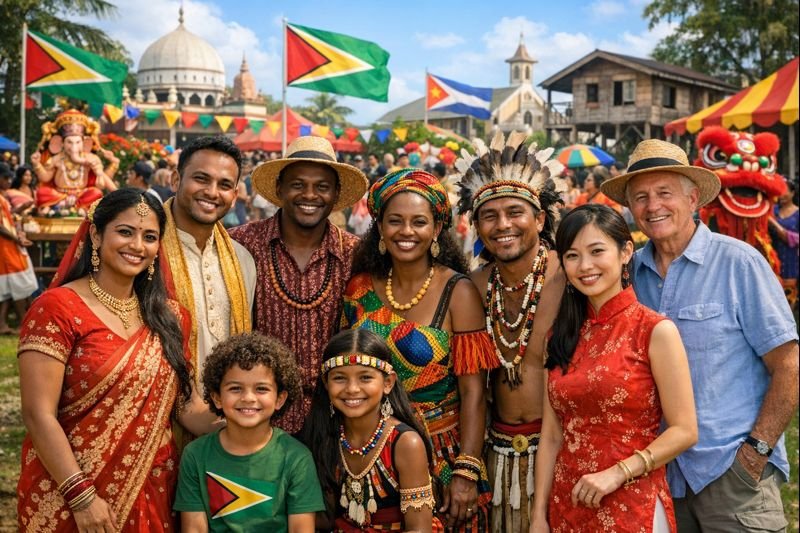
Guyana is widely recognised for its multicultural character. Different ethnic groups interact through shared public spaces, workplaces, educational institutions, and national celebrations. Religious and cultural festivals from various communities are celebrated across the country, promoting mutual respect and understanding.
This diversity has strengthened Guyana’s social fabric, encouraging dialogue and cultural exchange. The interaction of traditions, values, and beliefs continues to define Guyanese identity, making the nation a unique example of cultural coexistence in the Caribbean and South America.
Demographic Insights
Guyana’s population reflects a complex history of migration and settlement. Indo-Guyanese and Afro-Guyanese communities form the largest demographic groups, alongside Indigenous peoples, Europeans, Chinese, and individuals of mixed heritage. Each group contributes to the country’s ethnic and cultural diversity.
Population patterns have evolved over time due to migration, urbanisation, and economic change. Today, Guyana’s demographics highlight a society shaped by shared history, adaptation, and coexistence.