Meditation
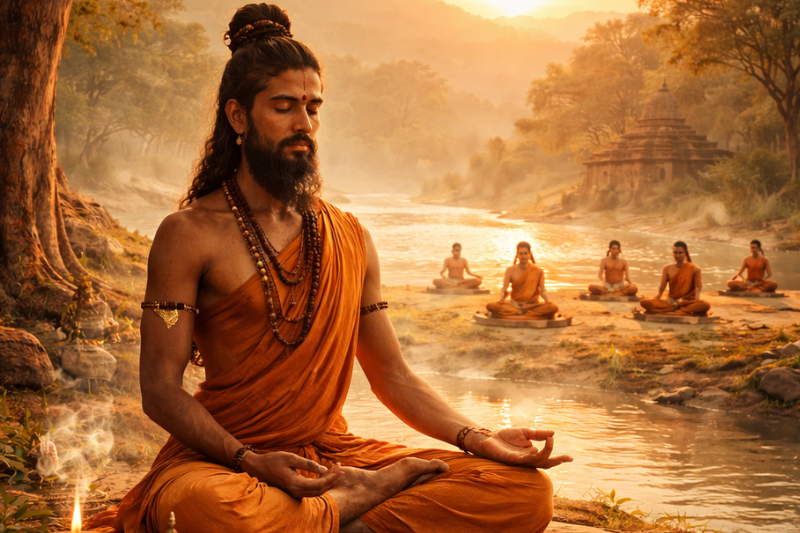
Meditation originated in India as a powerful spiritual practice aimed at attaining inner peace, self-realisation, and higher consciousness. Rooted in Hindu, Buddhist, and Jain traditions, meditation was practised by sages and monks as a path to wisdom, compassion, and mental clarity. In India, it influenced moral values, emotional stability, and spiritual discipline across generations. As meditation spread beyond India, it reinforced the country’s role as a global source of spiritual knowledge and mindfulness practices that continue to benefit humanity.
The Global Journey of Meditation: From Ancient India to the World and Guyana
Meditation originated in India as a powerful spiritual discipline aimed at attaining inner peace, self-realisation, and higher consciousness. Rooted in ancient traditions such as Hinduism, Buddhism, and Jainism, meditation was practised by sages, rishis, and monks as a path toward wisdom, compassion, and liberation. Over centuries, it has evolved into a universal practice that transcends religion, culture, and geography, influencing societies around the world.
Ancient Roots and Spiritual Foundations
The origins of meditation can be traced back thousands of years to the sacred texts of India, including the Vedas and the Upanishads. These texts describe meditation as a means to connect the individual soul (Atman) with the universal consciousness (Brahman). The practice was further refined in the teachings of Gautama Buddha, who emphasized mindfulness and awareness as tools to overcome suffering.
In ancient India, meditation was not limited to monasteries or forests. It was integrated into daily life, guiding individuals toward discipline, ethical living, and self-control. It encouraged values such as truthfulness, non-violence, patience, and humility, forming the moral backbone of society.
Core Values of Meditation
Meditation carries profound values that go far beyond relaxation. One of its most important contributions is the cultivation of inner peace. In a world filled with distractions and stress, meditation teaches individuals to quiet the mind and find stillness within themselves.
Another key value is self-awareness. Through regular practice, individuals become more conscious of their thoughts, emotions, and actions. This awareness helps in making better decisions, improving relationships, and developing emotional intelligence.
Compassion and empathy are also deeply rooted in meditation practices. By understanding one’s own mind, individuals become more sensitive to the feelings of others. This fosters harmony in families, communities, and societies.
Meditation also promotes discipline and focus. It trains the mind to remain steady and attentive, which enhances productivity and creativity in daily life. These values have made meditation not only a spiritual practice but also a practical tool for personal growth.
Expansion Across the World
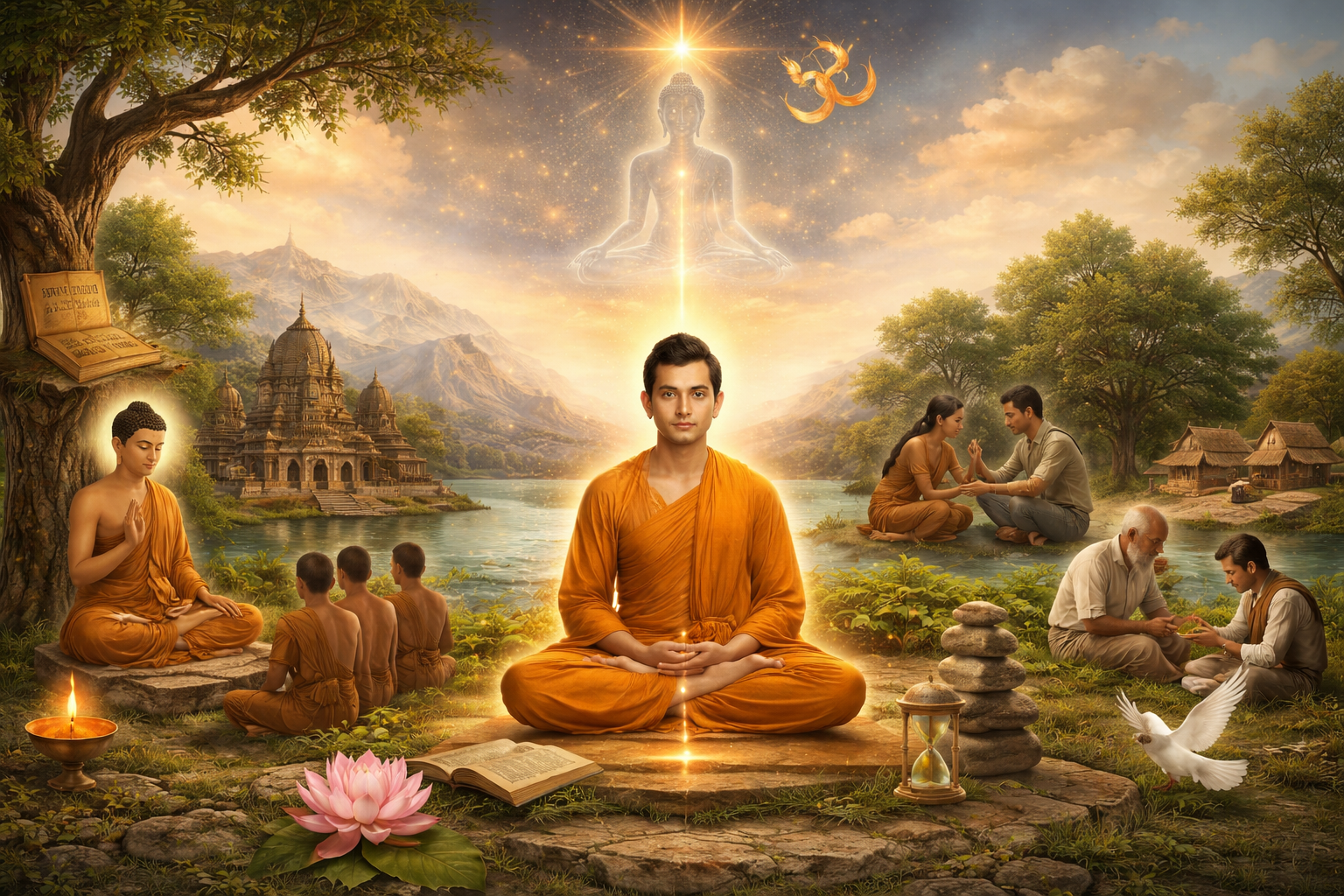
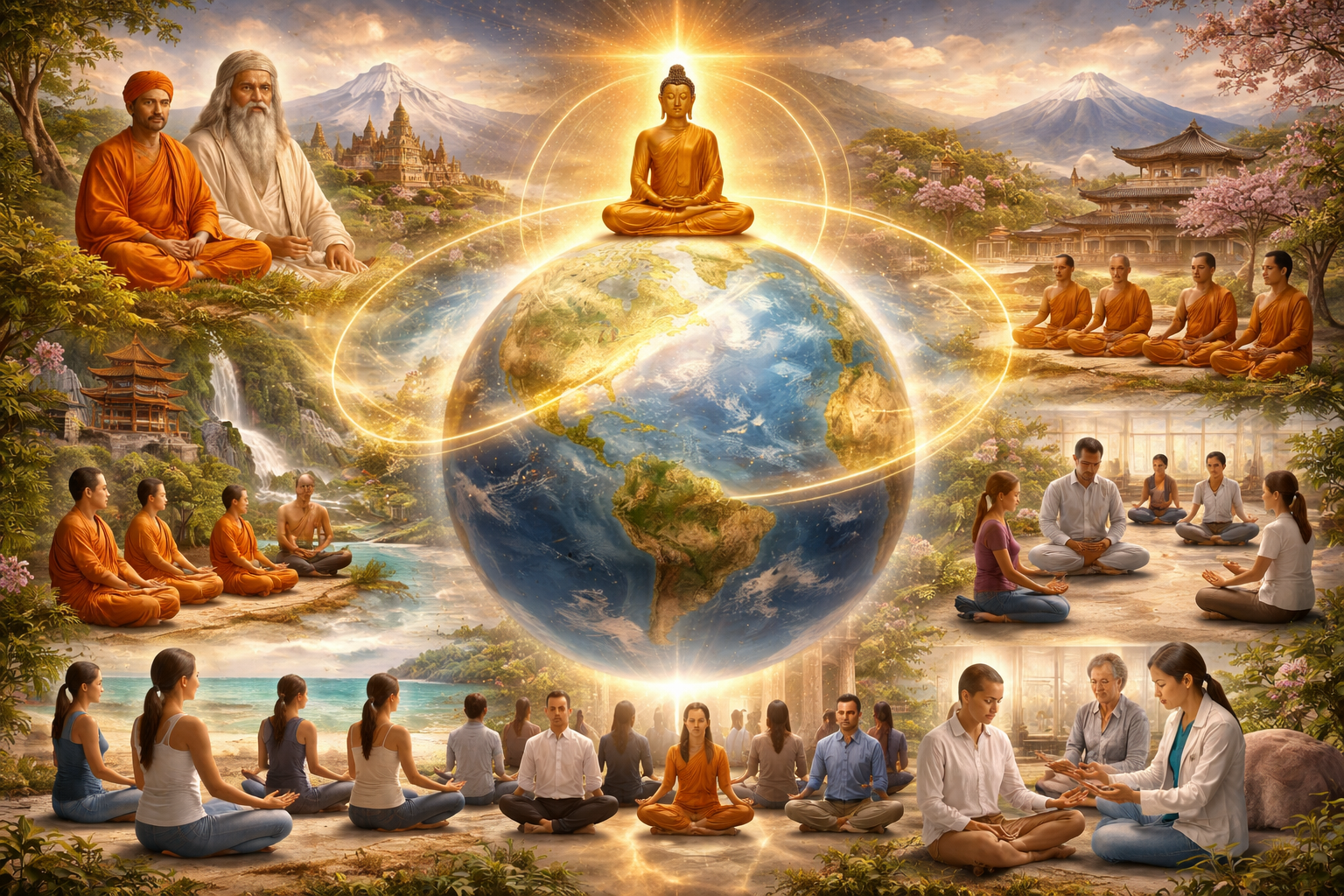
From its origins in India, meditation gradually spread across Asia and later to the rest of the world. Buddhist monks carried meditation practices to countries such as China, Japan, and Southeast Asia, where it became an integral part of cultural and spiritual life.
In the modern era, meditation gained global recognition through spiritual leaders and teachers such as Swami Vivekananda, who introduced Indian philosophy to the West, and Maharishi Mahesh Yogi, who popularized meditation as a scientific and accessible practice.
Today, meditation is practised worldwide in various forms, including mindfulness, yoga meditation, and breathing techniques. It is embraced not only by spiritual seekers but also by professionals, students, and even healthcare providers. Scientific research has confirmed its benefits in reducing stress, improving mental health, and enhancing overall well-being.
Meditation in Modern Society
In today’s fast-paced world, meditation has become more relevant than ever. With increasing levels of stress, anxiety, and lifestyle-related challenges, people are turning to meditation as a solution for mental and emotional balance.
Schools, universities, and workplaces around the world are incorporating meditation into their routines. It helps students improve concentration and academic performance, while employees benefit from increased focus and reduced burnout.
Healthcare systems are also recognizing the value of meditation. It is often recommended as a complementary therapy for conditions such as anxiety, depression, and high blood pressure. This widespread acceptance highlights how an ancient Indian practice has become a global tool for wellness.
Influence of Meditation in Guyana
The influence of meditation has also reached Guyana, a country with deep cultural and historical ties to India. Through the Indian diaspora, many spiritual traditions, including meditation and yoga, were introduced and preserved over generations.
In Guyana, meditation is practised in temples, yoga centers, and community gatherings. It plays an important role in maintaining cultural identity and spiritual connection among Indo-Guyanese communities. Festivals, religious events, and spiritual discourses often include meditation as a way to promote inner peace and devotion.
In recent years, meditation has gained popularity beyond religious settings in Guyana. People from diverse backgrounds are embracing it as a tool for stress relief and mental clarity. It is increasingly being recognized for its ability to improve emotional well-being and promote a balanced lifestyle.
Meditation also contributes to social harmony in Guyana’s multicultural society. By encouraging calmness, understanding, and compassion, it helps bridge differences and foster unity among people of different ethnic and religious backgrounds.
A Timeless Gift to Humanity
Meditation stands as one of India’s greatest contributions to the world. It is a timeless practice that continues to guide humanity toward peace, self-discovery, and harmony. From ancient sages meditating in forests to modern individuals seeking balance in busy lives, the essence of meditation remains unchanged.
Its journey from India to the world, and its growing influence in countries like Guyana, reflects its universal appeal and enduring relevance. Meditation is not confined to any one religion or culture; it is a shared human experience that connects individuals to their inner selves and to each other.
Conclusion
From its sacred origins in India to its global presence today, meditation has transformed lives and societies in profound ways. It has nurtured values such as peace, discipline, compassion, and self-awareness, making it a powerful force for personal and collective well-being.
As the world continues to face challenges of stress, conflict, and uncertainty, meditation offers a path toward clarity and harmony. Its growing influence in Guyana and across the globe is a testament to its enduring power as a source of spiritual wisdom and human upliftment.