
Buddhism
Buddhism is one of the world’s most influential spiritual traditions, founded in the 6th century BCE by Siddhartha Gautama, who came to be known as the Buddha, meaning “the Enlightened One.” Emerging in the Indian subcontinent within the broader Indic philosophical environment, Buddhism developed as a path focused on understanding suffering, cultivating compassion, and attaining liberation through inner transformation. While it began as a reform movement engaging with existing spiritual ideas of the time, it evolved into a distinct tradition with its own teachings, monastic institutions, and cultural expressions.
At the core of Buddhism lie the Four Noble Truths, which diagnose the human condition. The Buddha taught that life involves suffering (dukkha), that suffering arises from craving and attachment, that it can be overcome, and that the path to its cessation is the Noble Eightfold Path. This path outlines ethical conduct, mental discipline, and wisdom as the means to achieve liberation, or Nirvana — a state beyond suffering and the cycle of rebirth. Unlike traditions centered on divine worship, Buddhism places emphasis on self-awareness, mindfulness, and personal effort as the key to spiritual awakening.

Buddhist philosophy is deeply analytical and psychological in its approach. It explores impermanence (anicca), non-self (anatta), and interdependent origination — the idea that all phenomena arise in dependence upon causes and conditions. These principles encourage detachment from ego and foster a sense of interconnectedness. Rather than focusing on metaphysical speculation, the Buddha emphasised practical teachings aimed at reducing suffering and cultivating compassion.
Monastic life became a defining feature of Buddhist culture. The Sangha, or community of monks and nuns, preserved and transmitted the teachings through disciplined practice and study. Over time, great monastic universities such as Nalanda and Vikramshila emerged as global centers of learning, attracting students from across Asia. These institutions played a crucial role in shaping Buddhist scholarship, philosophy, and debate.
As Buddhism spread beyond India to Sri Lanka, Southeast Asia, Central Asia, China, Korea, Japan, and Tibet, it adapted to local cultures while retaining its core principles. This led to the development of diverse traditions such as Theravada, Mahayana, and Vajrayana Buddhism. Theravada, prominent in Sri Lanka and Southeast Asia, emphasizes the original teachings and monastic discipline. Mahayana, which flourished in East Asia, introduced the ideal of the Bodhisattva — one who seeks enlightenment not only for oneself but for the liberation of all beings. Vajrayana, practiced mainly in Tibet and the Himalayan regions, incorporated ritual symbolism, meditation techniques, and esoteric practices.
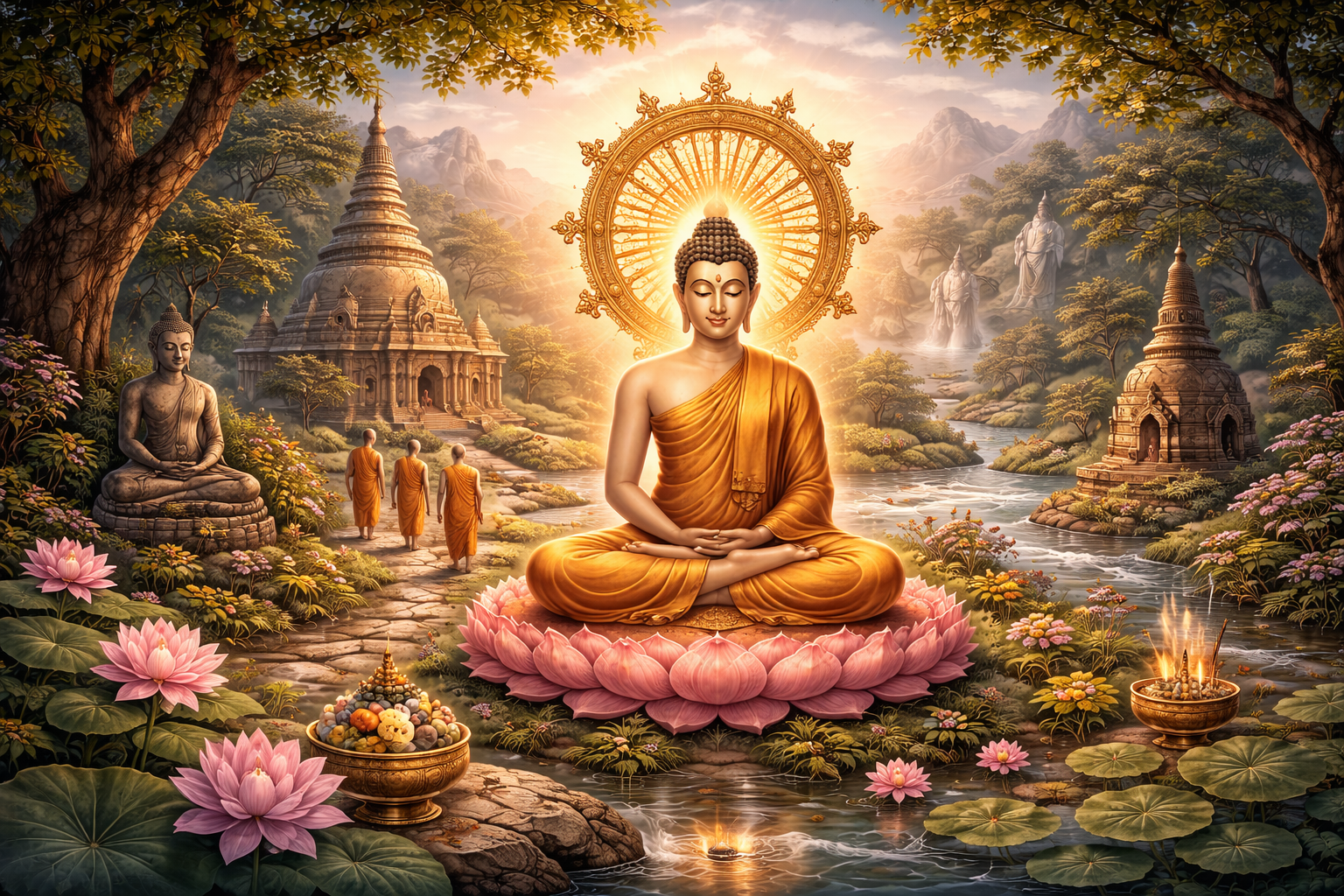
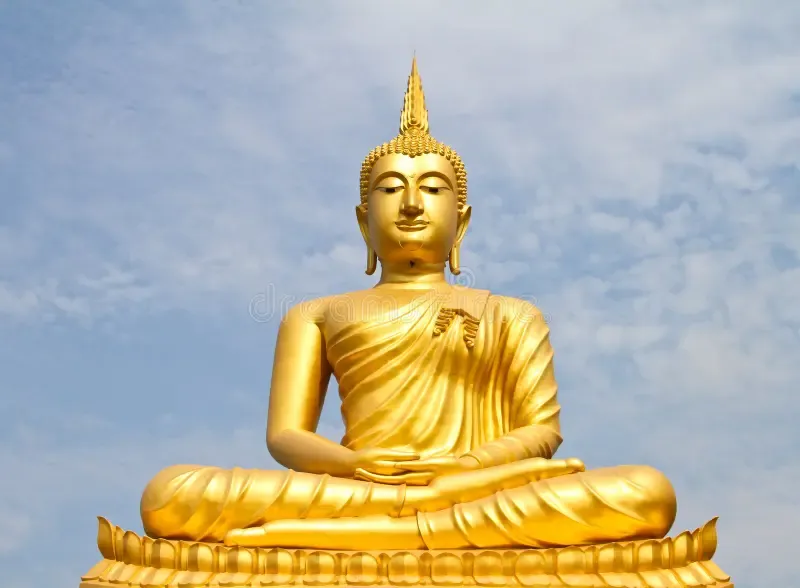
Buddhist culture profoundly influenced art, architecture, and literature across Asia. Stupas, monasteries, and temples became architectural landmarks, often decorated with murals and sculptures depicting scenes from the Buddha’s life. Iconic structures such as the Great Stupa at Sanchi and the Ajanta cave paintings illustrate the deep artistic heritage associated with Buddhism. The serene image of the meditating Buddha has become a universal symbol of peace and mindfulness.
Ethically, Buddhism promotes compassion (karuna), loving-kindness (metta), and non-violence (ahimsa). These values shaped social norms in many regions and inspired leaders and reformers across history. The emphasis on moral conduct, right livelihood, and mindful living encourages a balanced life rooted in awareness and empathy.
In modern times, Buddhist practices such as meditation and mindfulness have gained global recognition. Psychological and scientific communities have explored the benefits of meditation for mental health and well-being. Figures such as the Dalai Lama have helped present Buddhist philosophy as a universal message of peace, dialogue, and compassion in a contemporary world marked by conflict and materialism.
Though Buddhism originated in India, it became a pan-Asian civilisation force, shaping cultures, governance models, ethical systems, and artistic traditions across continents. Its enduring appeal lies in its practical wisdom and its focus on transforming the mind as the key to transforming the world. More than a religion, Buddhism represents a disciplined path of self-realisation grounded in insight, compassion, and the pursuit of inner freedom.