Indo-Guyanese Arrival
Indian Arrival in Guyana: A Legacy of Courage, Culture, and Contribution
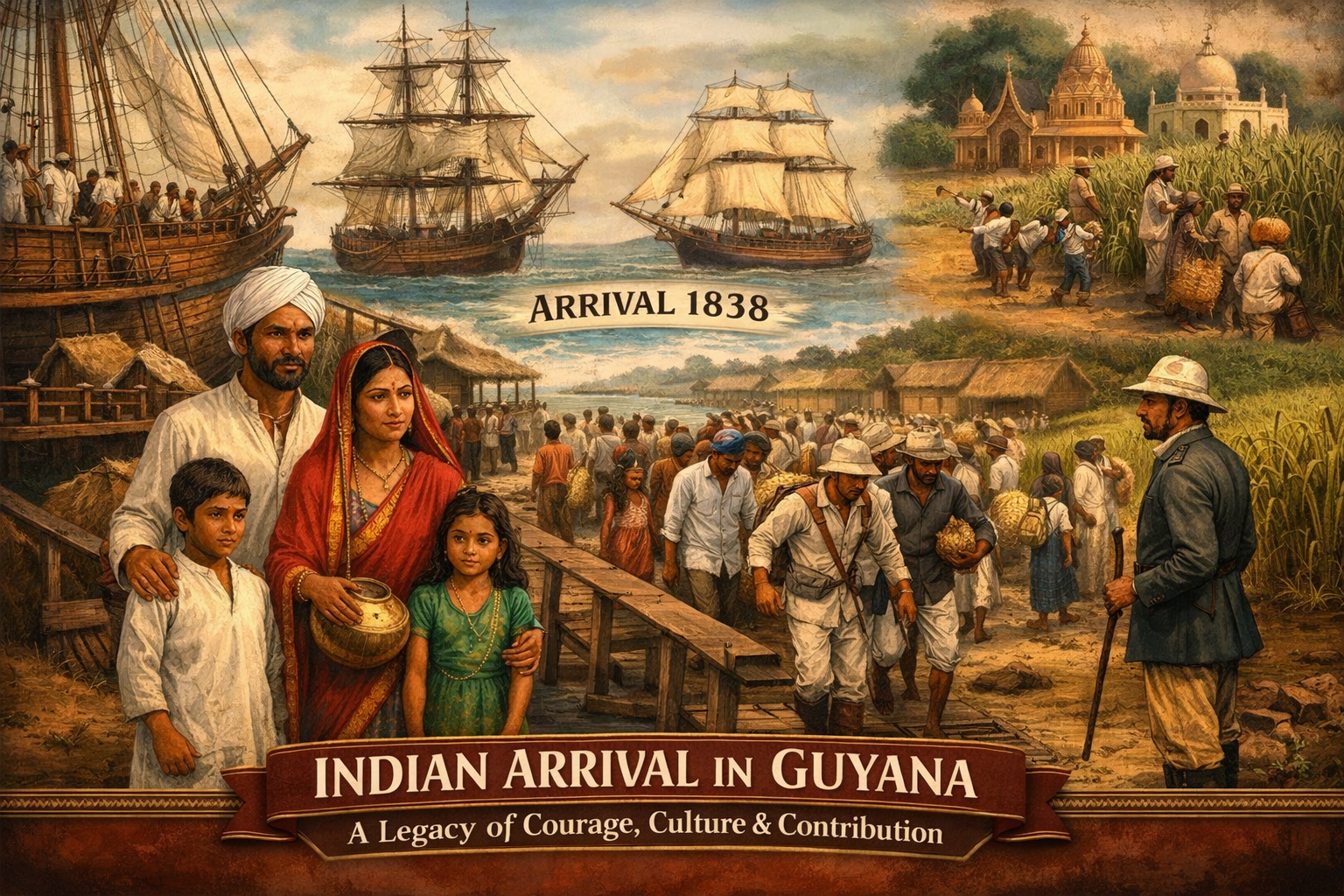
The story of the arrival of Indians in Guyana is one of courage, endurance, and cultural transformation. It is a journey that began nearly two centuries ago and continues to shape the social, cultural, and economic fabric of the nation today. The first East Indians arrived in the then British Guiana in 1838, bringing with them not only their labor but also their traditions, languages, spirituality, and strong sense of community. Their sacrifices and contributions laid the foundation for a vibrant Indo-Guyanese heritage that remains deeply woven into the identity of modern Guyana.
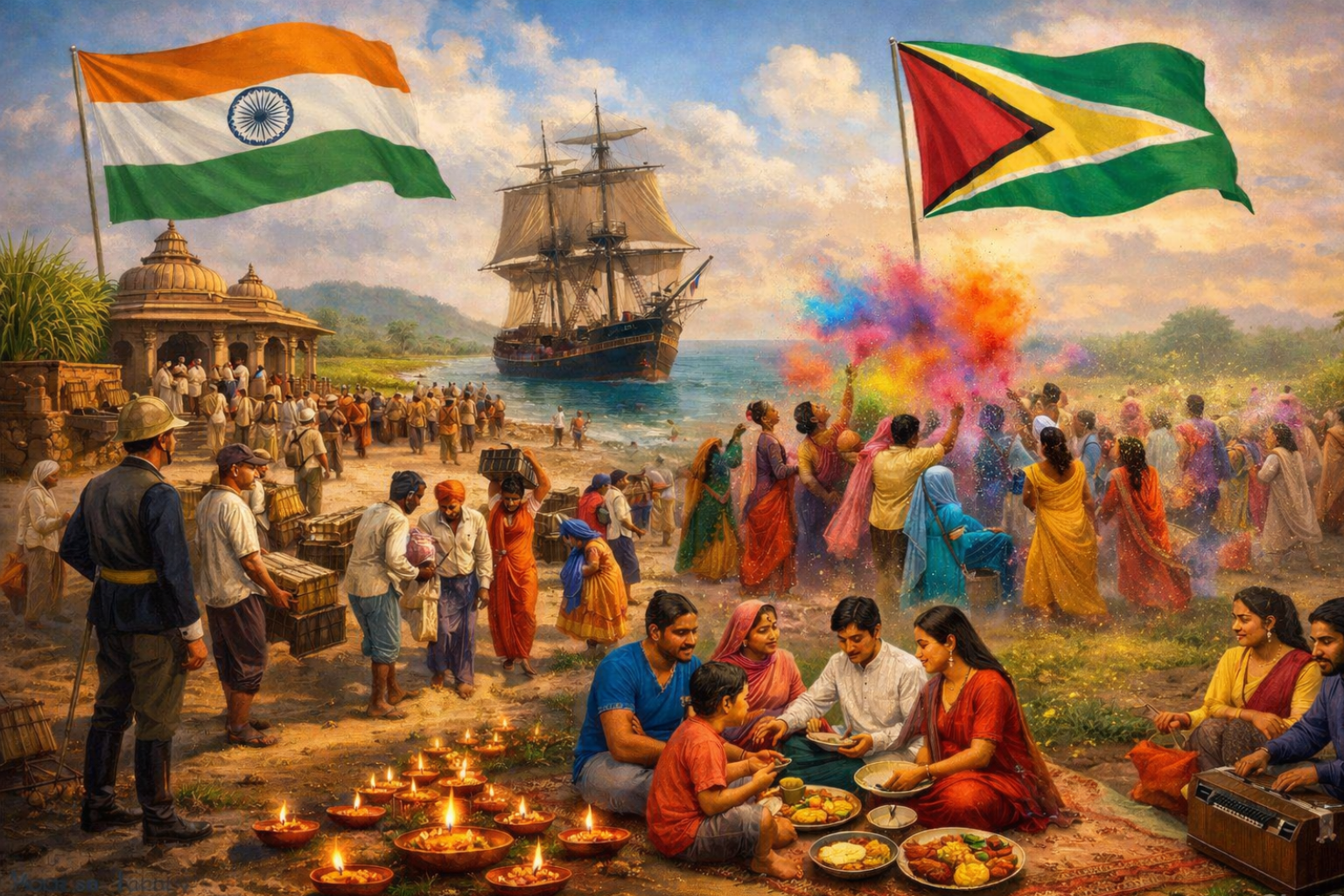
The historic voyage began on January 13, 1838, when the ship Whitby sailed from India carrying 248 indentured immigrants. These men and women embarked on a long and uncertain journey across the oceans in search of a new life. After a grueling voyage lasting 112 days, the ship finally arrived in Guyana on May 5, 1838. Just sixteen days later, another ship, the Hesperus, departed Calcutta with 165 immigrants and reached Guyana around the same time. Sadly, the journey was not without tragedy. During these voyages, 18 individuals lost their lives, including two who fell overboard. Despite these losses, the arrival of these pioneers marked the beginning of a historic chapter that would transform the country.
Over the decades that followed, many other ships carried indentured laborers from India to Guyana. Vessels such as Lord Hunter, Nester, Manchester, Thetis, Tamerlane, Marten Luther, Troy, John Wickliffe, Aurora, Lady Akennaway, Latoya, York, Victor Emanuel, Plantagenet, Ellen Borough, Simla, Bann, Foyle, British Peer, The Bruce, Sutley, Indus, Sheila, and finally the SS Ganges in 1917 continued this migration. These voyages brought thousands of men and women who were recruited to work on sugar plantations following the abolition of slavery in the British Empire.
Between 1838 and 1917, an estimated 238,979 indentured laborers arrived in Guyana aboard 244 ships across 534 voyages. Once they reached the colony, they were distributed across the coastal plantations, where they worked under extremely harsh conditions. Long working hours, minimal wages, and strict plantation rules defined their daily lives. Yet, despite the hardships, these individuals demonstrated remarkable resilience, discipline, and determination.
The Indian immigrants did more than provide labor to sustain the plantation economy. They carried with them a rich cultural heritage that would deeply influence Guyanese society. They introduced new traditions, festivals, cuisines, languages, and religious practices. Their warmth, hospitality, and strong family values helped build close-knit communities that survived even in the most difficult circumstances.
One of the most powerful symbols of unity among the immigrants was the term “Jahaji.” This word, meaning “ship brother” or “ship sister,” reflected the deep bonds formed during the long sea voyages from India. People who travelled together considered themselves family, regardless of caste, region, or background. This sense of solidarity became the cornerstone of the Indo-Guyanese community and helped them overcome the many challenges they faced in their new homeland.
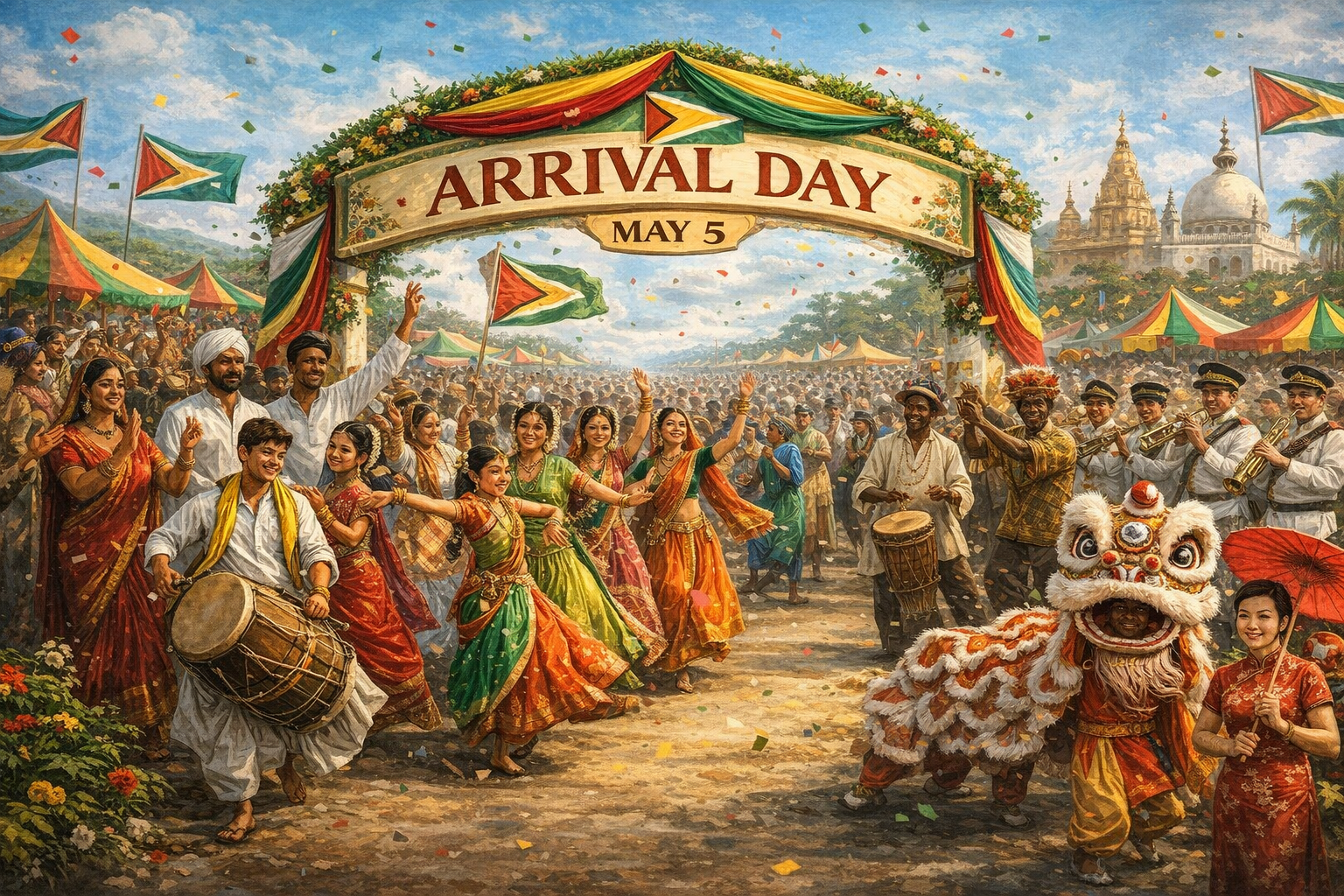
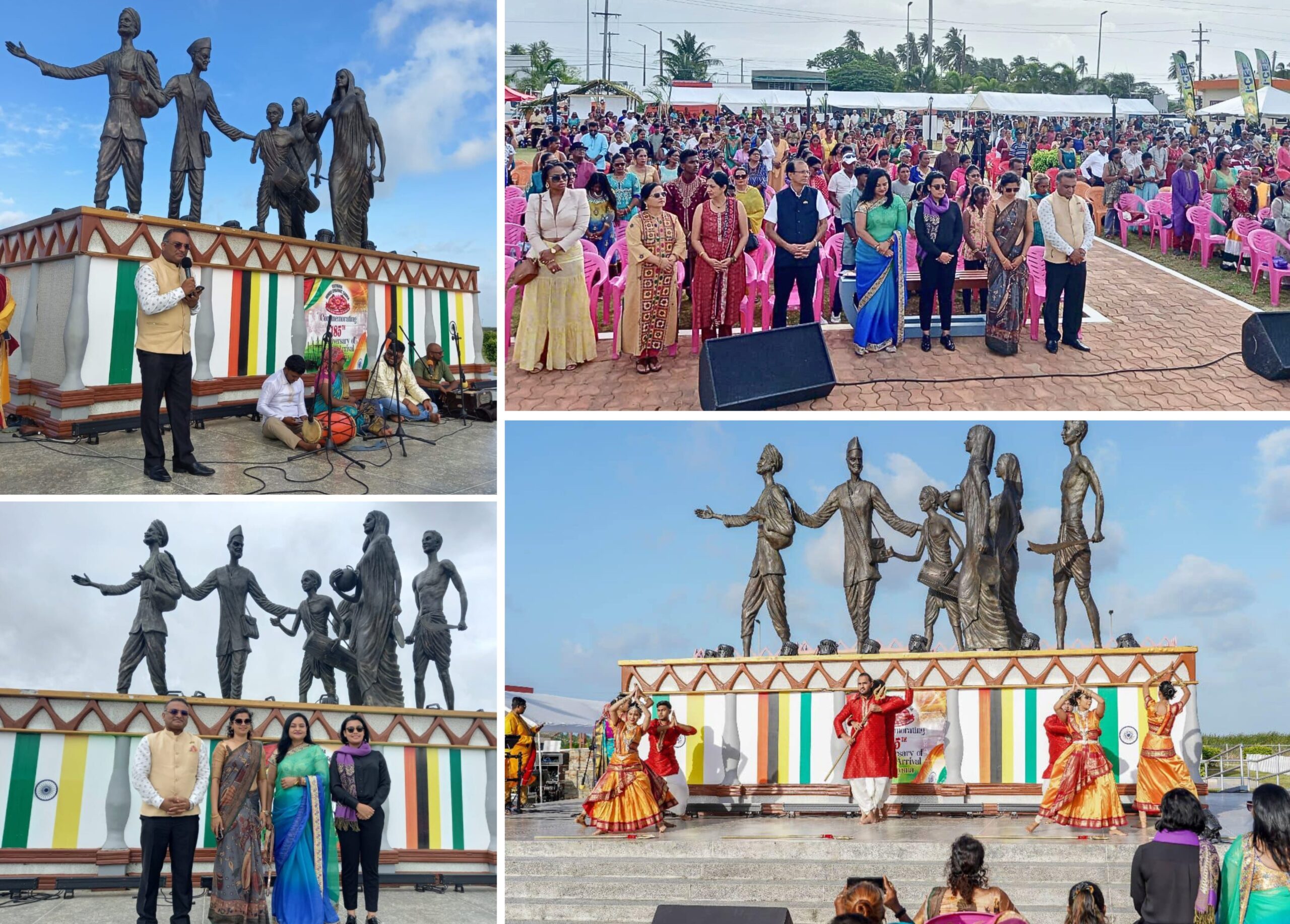
Today, the descendants of these pioneers continue to celebrate and honor their ancestors’ courage and resilience. Their influence can be seen in Guyana’s culture, cuisine, festivals, music, religion, and language. The story of Indian arrival is therefore not merely about migration—it is about the creation of a lasting legacy that enriched the nation and strengthened its multicultural identity. Recognizing the significance of this history, May 5 was officially designated a public holiday in 2004. However, instead of being named “Indian Arrival Day,” it was officially declared “Arrival Day.” The circumstances behind this decision reveal an important chapter in Guyana’s political and social history.
On April 14, 2003, the government established a Special Select Parliamentary Committee to review the Public Holidays Act, Chapter 19:07. The committee was tasked with examining the possibility of making May 26 a permanent public holiday to commemorate Guyana’s Independence Day, and also to consider May 5 as a holiday marking the arrival of Indians in Guyana. The reasoning behind this proposal was clearly stated in the committee’s report: Guyanese of Indian origin, who make up a significant portion of the population, had been advocating for more than forty years for May 5 to be declared a statutory holiday in recognition of the arrival of the first Indian indentured laborers in 1838.
Despite this strong historical and community support, the government resolution establishing the committee referred to the proposed holiday simply as “Arrival Day.” When the committee reviewed submissions from the public and organizations, it noted that almost all of them recommended the name “Indian Arrival Day,” similar to the designation used in Trinidad and Tobago.
Nevertheless, when the committee’s report was presented to the National Assembly on April 29, 2004, the final decision retained the name “Arrival Day.” The first official observance of this public holiday took place on May 5, 2004. The decision to adopt the broader name was likely influenced by the government’s desire to avoid alienating other ethnic communities in Guyana whose ancestors had also arrived as indentured laborers. Groups such as the Portuguese and Chinese had also contributed to the country’s development, and the authorities may have felt that a more inclusive name would better reflect the nation’s diverse heritage.
However, in the years that followed, these other communities did not choose to commemorate their arrival on May 5. In fact, many individuals from those groups expressed the view that their own historical arrival dates should be recognized separately rather than being merged into a single holiday associated primarily with Indian indentured immigration.
This perspective gained further recognition in 2017 when President David Granger established a precedent by officially designating January 12 as Chinese Arrival Day, although it was not declared a public holiday. Later that same year, on February 27, he proclaimed May 3 as Portuguese Arrival Day, which has since been observed through commemorative events by that community. These developments demonstrated that different ethnic groups could celebrate their own historical milestones without diminishing the contributions of others. As a result, many believe that the time has come to reconsider the naming of the May 5 holiday.
For countless Guyanese, May 5 represents a specific and profound historical event—the arrival of the first Indian indentured laborers who helped build the nation through perseverance, sacrifice, and determination. Renaming the holiday Indian Arrival Day would not only restore historical accuracy but also honor the legacy of those pioneers whose journey began across the seas nearly two centuries ago.
Their story is one of extraordinary resilience. From the long and dangerous voyages across the oceans to the struggles of plantation life, they endured immense hardship yet managed to preserve their culture, dignity, and unity. The descendants of those pioneers have since contributed to every sector of Guyanese society—agriculture, business, politics, education, and the arts. As Guyana continues to evolve as a multicultural and dynamic nation, recognizing the unique histories of its people becomes even more important. Honoring May 5 as Indian Arrival Day would acknowledge the courage of the first immigrants while celebrating the cultural richness they brought to Guyana.Ultimately, the legacy of the indentured laborers is not only an Indo-Guyanese story—it is a national story. It is a reminder that the strength of Guyana lies in the resilience, diversity, and unity of its people. And it is a history that deserves to be remembered, respected, and properly recognized for generations to come.
Preserving Religion and Spiritual Traditions
One of the strongest pillars that helped Indo-Guyanese retain their civilization was religion. The early indentured laborers quickly began constructing small shrines and places of worship near their living quarters on the plantations. Over time, these shrines evolved into mandirs, masjids, and community prayer halls that became centers of spiritual and social life.
Hindu traditions such as Ramayana readings, bhajans, and pujas became regular community activities. Muslim Indo-Guyanese maintained their Islamic practices through daily prayers, fasting during Ramadan, and celebrations of Eid. Religious leaders, priests, and imams played a significant role in guiding the community and ensuring that younger generations understood their spiritual heritage.
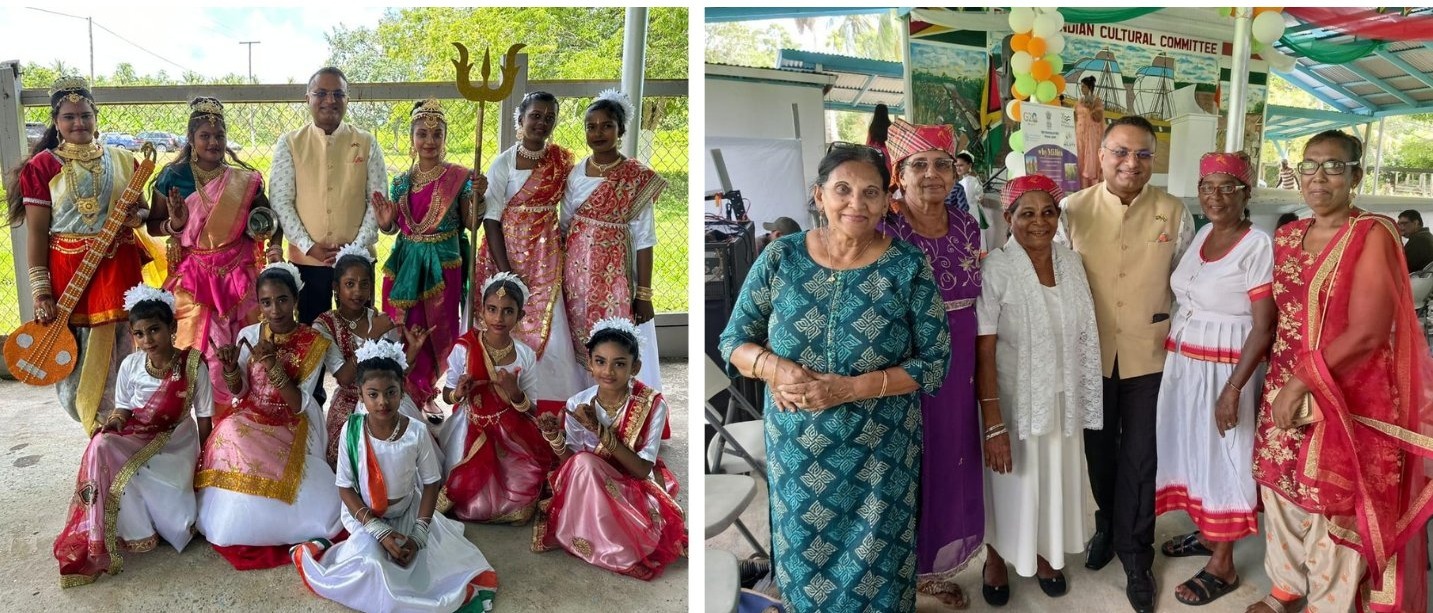
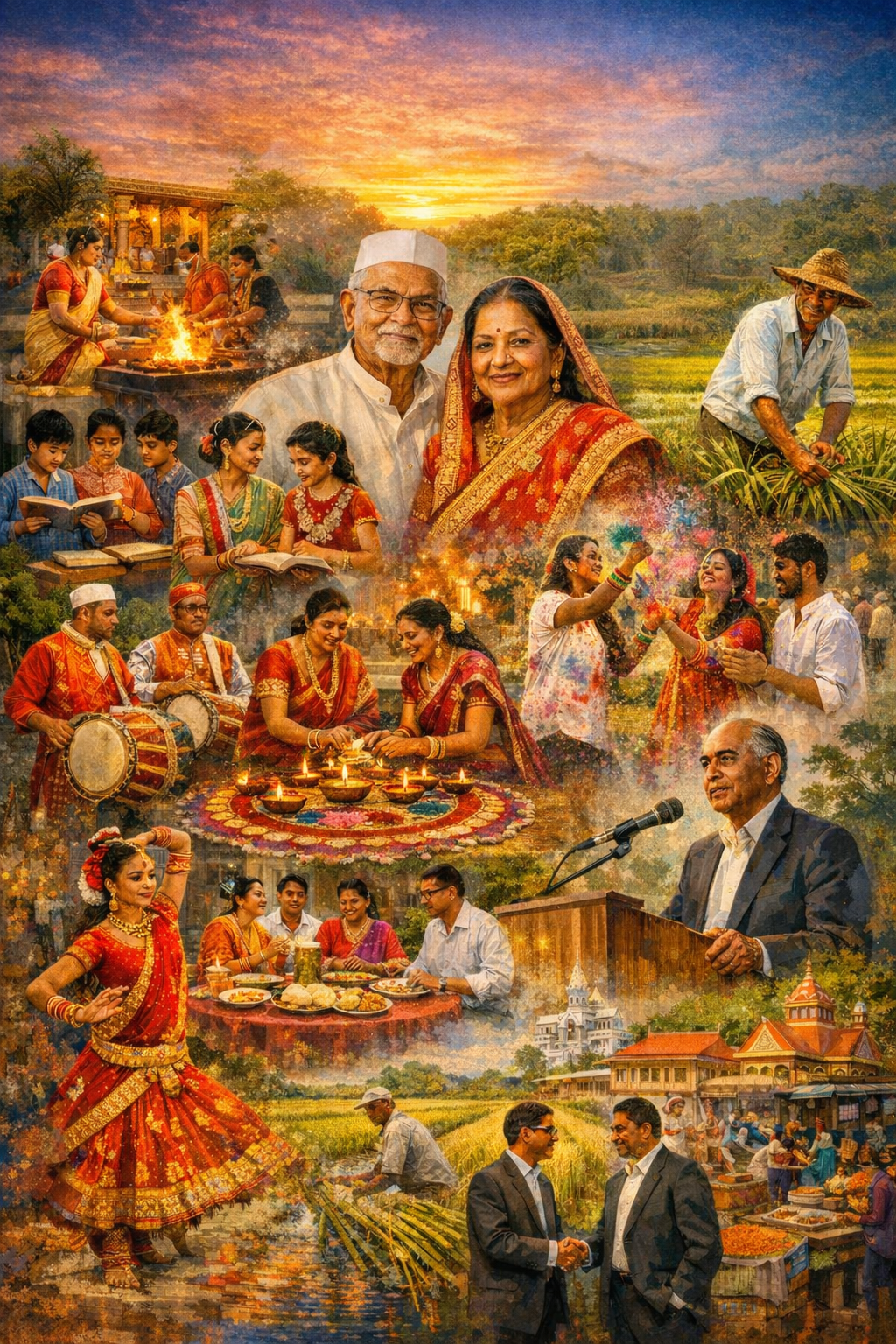
Festivals became powerful symbols of cultural continuity. Celebrations such as Diwali, Phagwah (Holi), and Eid were observed with great devotion and enthusiasm. These events were not merely religious rituals but also gatherings that strengthened community bonds and reinforced a shared identity. Today, these festivals are widely celebrated across Guyana and have become national events enjoyed by people of all backgrounds.
Language, Music, and Cultural Expression
Language was another vital tool through which Indo-Guyanese retained their heritage. Early migrants spoke dialects such as Bhojpuri, Awadhi, and Hindi. While English eventually became the dominant language in Guyana, many Indian words, expressions, and cultural phrases remained embedded in everyday speech. Cultural songs, folk tales, and religious recitations continued to be passed down through generations.
Music and cultural performances also played a crucial role in preserving Indian traditions. Traditional forms such as chowtal singing during Phagwah, tassa drumming, and devotional bhajans have remained popular among Indo-Guyanese communities. These artistic expressions connect the diaspora to their ancestral homeland and keep cultural memories alive.
Indian dance forms, wedding rituals, and storytelling traditions are still practiced in many Guyanese households. Cultural organizations, temples, and community groups frequently organize events that celebrate Indian heritage, ensuring that younger generations remain connected to their roots.
Culinary Heritage and Family Traditions
Food is another powerful expression of civilization, and Indo-Guyanese cuisine reflects the blending of Indian culinary traditions with Caribbean influences. Dishes such as roti, curry, dhal, rice, and various chutneys have become staples of Guyanese cuisine. These meals are often prepared using recipes passed down through generations, preserving the flavors and cooking techniques brought from India.
Family life also plays a central role in maintaining cultural continuity. Indo-Guyanese families traditionally emphasize respect for elders, strong family bonds, and collective responsibility. Weddings, religious ceremonies, and family gatherings are important cultural events that reinforce traditional values and customs.
Marriage rituals, traditional clothing, and ceremonial practices continue to reflect Indian influences. Even in modern Guyanese society, many families strive to uphold these customs while adapting to contemporary lifestyles.
The Role of Education in Cultural Continuity
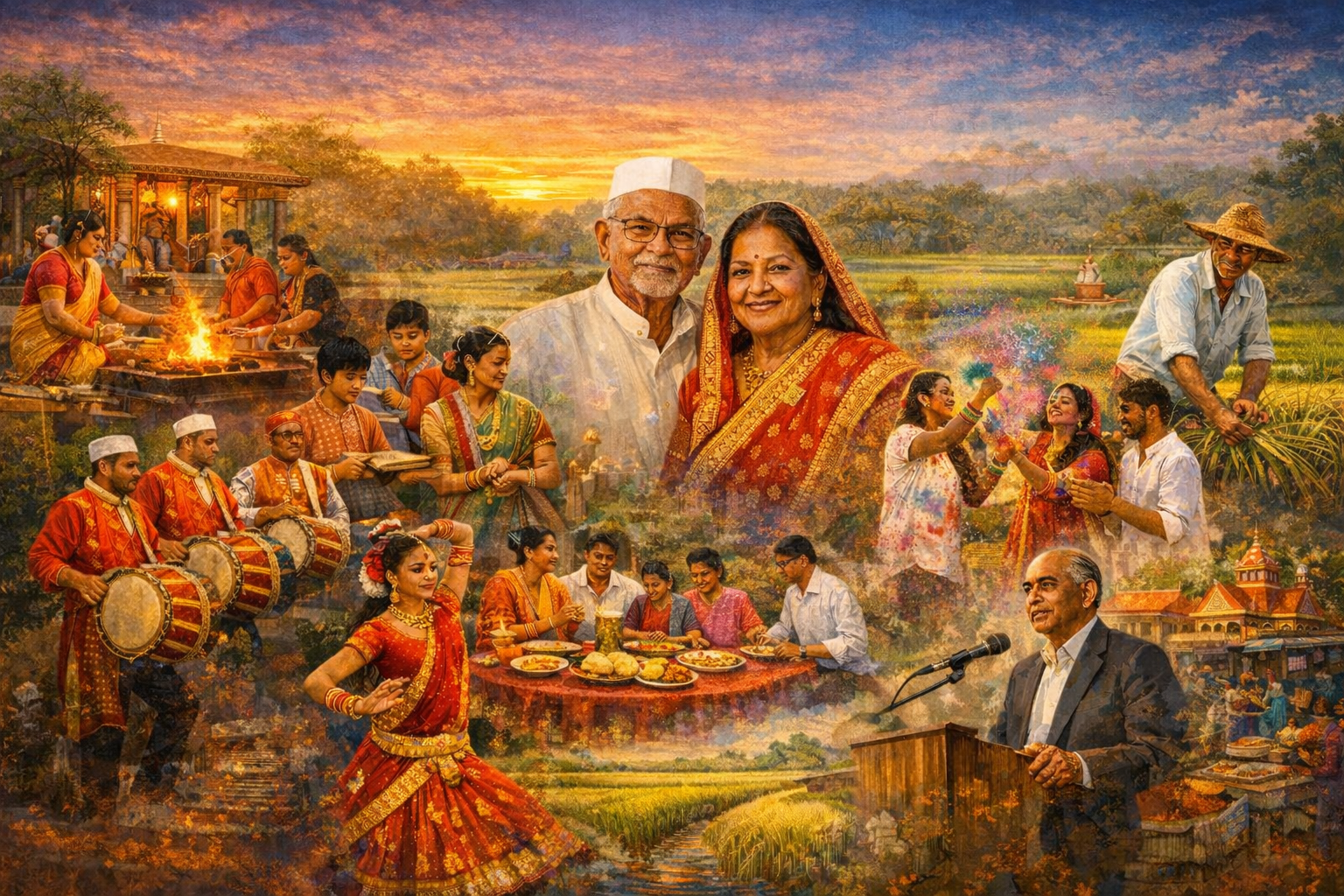
Education has been one of the most powerful forces behind the success and preservation of Indo-Guyanese civilization. From the earliest days after indentureship ended, parents placed immense importance on schooling. Despite financial hardships, many families made great sacrifices to ensure their children received proper education.
This commitment led to the emergence of a highly educated Indo-Guyanese population. Over the decades, Indo-Guyanese individuals have excelled in professions such as medicine, law, engineering, academia, business, and public administration. Their achievements helped elevate the economic and social standing of the community while also contributing to the development of Guyana as a nation.
Educational success also strengthened cultural awareness. Many Indo-Guyanese scholars, writers, and historians have documented the history of indentureship and the contributions of their ancestors, ensuring that this legacy is not forgotten.
Economic Progress and Entrepreneurship
After completing their indenture contracts, many Indians chose to remain in Guyana rather than return to India. They gradually moved away from plantation labor and began building independent livelihoods. Many acquired land and became rice farmers, cattle rearers, and small-scale agricultural producers.
Their dedication and work ethic transformed Guyana’s agricultural sector, particularly in rice cultivation and cattle farming. Over time, Indo-Guyanese also entered trade and commerce, establishing shops, transportation businesses, and manufacturing enterprises.
Today, Indo-Guyanese entrepreneurs play a significant role in Guyana’s business landscape. Their contributions extend across industries including agriculture, retail, construction, finance, and technology.
Political Leadership and National Development
Indo-Guyanese have also played a vital role in shaping Guyana’s political landscape. Leaders from the community were central to the country’s independence movement and democratic development. One of the most prominent figures was Cheddi Jagan, who co-founded the People’s Progressive Party and became a key leader in the struggle for social justice and national independence.
Through political participation and leadership, Indo-Guyanese have contributed significantly to the governance and progress of the nation. Their involvement in public service has helped shape policies related to economic growth, social equality, and national unity.
Cultural Adaptation and Multicultural Harmony
While preserving their Indian heritage, Indo-Guyanese have also embraced the multicultural nature of Guyanese society. Guyana is home to diverse ethnic groups including Afro-Guyanese, Indigenous communities, Chinese, Portuguese, and others. Indo-Guyanese culture has blended with these influences to create a unique national identity.
Festivals such as Diwali and Phagwah are celebrated not only by Indo-Guyanese but also by people from other communities. This cultural exchange has strengthened national unity and fostered mutual respect among Guyana’s diverse population.
Retaining Civilization in the Modern Era
Today, Indo-Guyanese continue to preserve their civilization through cultural institutions, religious organizations, and educational initiatives. Temples, mosques, cultural associations, and youth groups actively promote Indian heritage through language classes, religious education, and cultural programs.
Media platforms, literature, and community events also play an important role in keeping traditions alive. Indo-Guyanese writers, historians, and artists continue to explore themes related to identity, migration, and cultural preservation.
In the diaspora as well—particularly in countries such as the United States, Canada, and the United Kingdom—Indo-Guyanese communities remain deeply connected to their cultural roots.
A Living Civilization
The story of the Indo-Guyanese is not merely a historical account of migration and survival; it is a testament to the strength of civilization itself. Through faith, family, education, and cultural pride, they transformed adversity into opportunity and built a thriving community in a new land.
Nearly two centuries after the first ships arrived in Guyana, the descendants of those indentured laborers continue to honor their ancestors by preserving their traditions while contributing to the progress of the nation. Their journey stands as one of the most remarkable examples of how culture and civilization can endure across oceans, generations, and changing times.