
Nalanda University
The Rise, Destruction, and Revival of the World’s First Great Residential University of Nalanda.
Nalanda University was one of the greatest centres of learning in the ancient world, established in the 5th century CE during the reign of Kumaragupta I of the Gupta Empire in present-day Bihar, India. For nearly seven centuries, Nalanda was a beacon of scholarship, attracting students and teachers from across Asia. At a time when much of the world lacked organised higher education systems, Nalanda functioned as a fully residential international university, supported by royal patronage from successive Indian dynasties, including the Guptas, Emperor Harsha, and the Pala rulers. Its longevity and scale made it one of the earliest and most remarkable universities in human history.

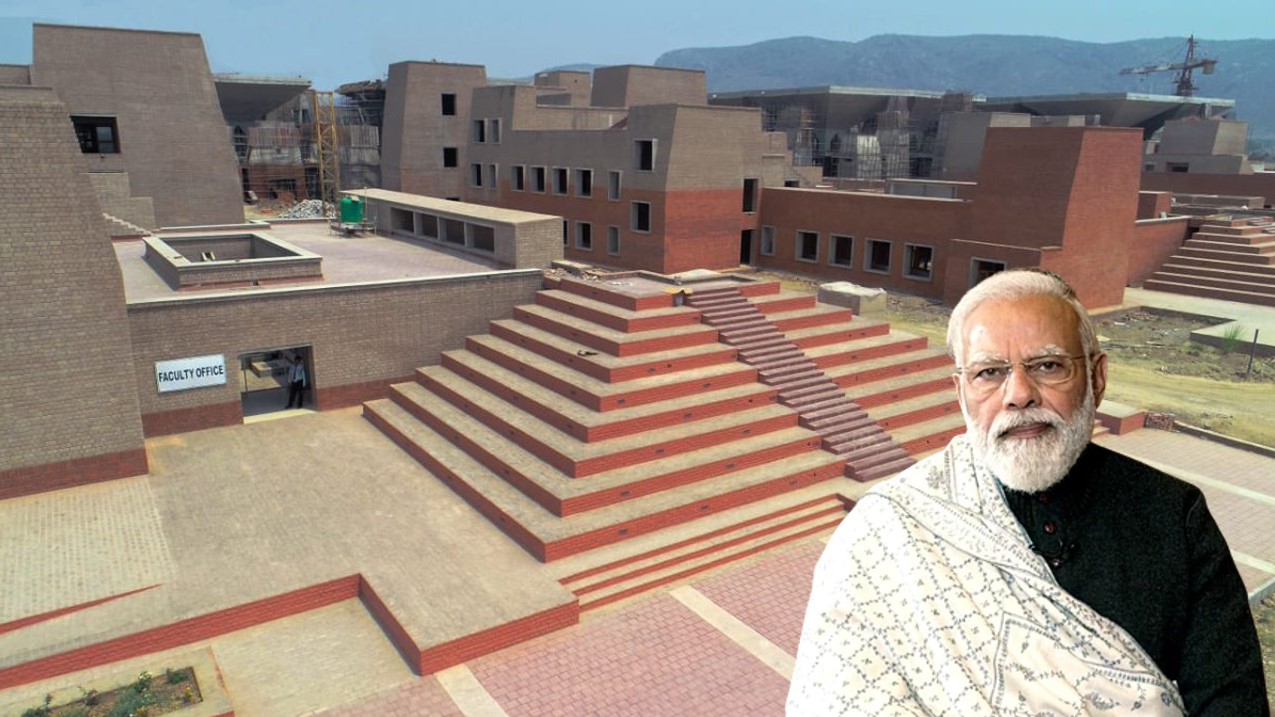
The Nalanda campus was vast and carefully planned, comprising multiple monasteries, temples, lecture halls, meditation centres, and student hostels, built primarily of red brick. Historical accounts describe a disciplined academic environment, with thousands of resident students and teachers living within its walls. According to the Chinese monk Xuanzang, who studied there in the 7th century, admission to Nalanda was highly competitive, with rigorous oral examinations conducted at the gates. Only the most talented students were admitted, and debate, logic, and intellectual rigour were central to the university’s culture.
Although Nalanda was a major centre for Buddhist studies, particularly Mahayana philosophy, its curriculum was remarkably broad. Students studied subjects such as logic, grammar, linguistics, medicine, mathematics, astronomy, political science, literature, and the arts. The institution fostered intellectual exchange across cultures, and scholars from China, Korea, Tibet, Sri Lanka, and Southeast Asia came to study there and later took its teachings back to their homelands. Another Chinese pilgrim, Yijing, also documented Nalanda’s scholarly discipline and the high standards of its academic life.

One of Nalanda’s greatest treasures was its vast library complex, known as Dharmaganja, or the “Treasury of Truth.” The library reportedly comprised several large buildings and housed hundreds of thousands of manuscripts on palm leaves and other materials. These manuscripts covered religion, philosophy, science, medicine, and mathematics. Nalanda was not merely a place of learning but also a centre of knowledge production, preservation, and translation. Its scholars played a key role in transmitting Indian intellectual traditions across Asia.
In the late 12th century, Nalanda suffered a tragic fate amid political upheaval in northern India. Around 1193 CE, the university was attacked by forces led by Muhammad Bakhtiyar Khilji, a Turkic military commander associated with the expanding Delhi Sultanate. Historical sources report that the institution was sacked, monks were killed or dispersed, and the great library was set on fire. The destruction was devastating, symbolising not only the fall of the university but also the decline of major Buddhist institutions in northern India. While historians debate certain details, there is broad agreement that the attack marked the end of Nalanda as a functioning centre of learning.
Bakhtiyar Khilji’s own career was short-lived. After his campaigns in Bihar and Bengal, he attempted to invade Tibet, but his expedition failed because of harsh terrain and resistance. His weakened position led to internal conflict, and in 1206 CE he was assassinated by one of his own officers. Though his rule was brief, his name remains linked to the destruction of important educational institutions such as Nalanda.
For centuries after its destruction, Nalanda lay in ruins and was gradually buried under soil and vegetation. In the 19th century, archaeological excavations led by British scholars revealed the scale and architectural sophistication of the ancient university. The excavated site revealed the organised layout of monasteries, temples, and academic spaces, confirming historical accounts of its grandeur. Today, the ruins stand as a powerful reminder of India’s ancient intellectual achievements.
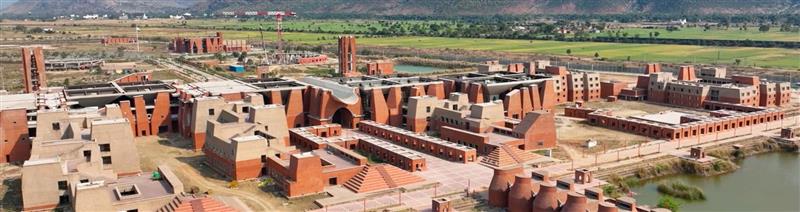
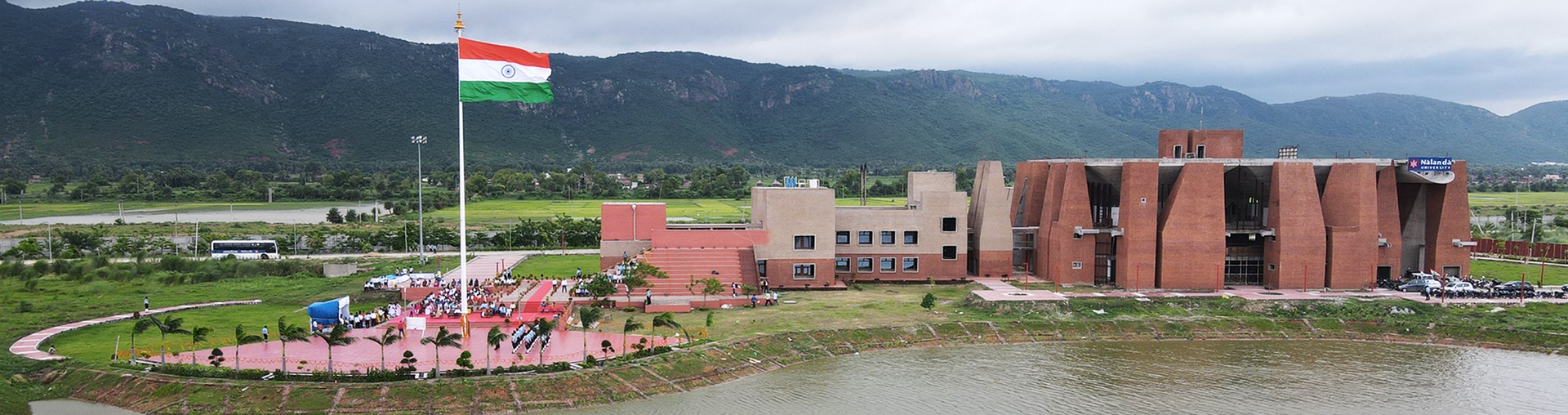
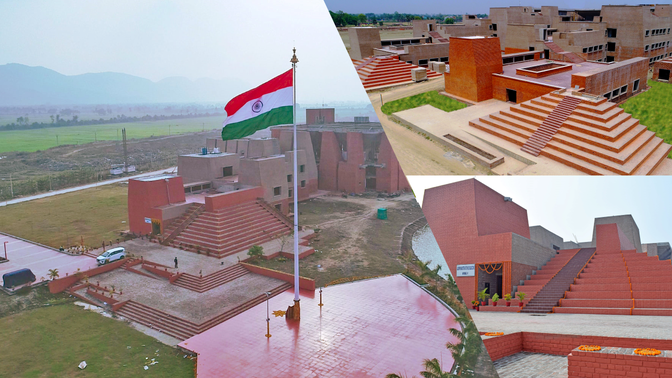
In the 21st century, India revived Nalanda’s legacy by establishing a new Nalanda University near Rajgir. Officially re-established in 2010, the modern institution seeks to reflect the original spirit of international cooperation and interdisciplinary learning. It now offers programmes in historical studies, ecology and environmental studies, Buddhist studies, philosophy, and international relations. Students from various countries once again gather in Bihar, echoing the global character that defined ancient Nalanda.
Nalanda’s story is one of brilliance, destruction, and renewal. It embodies the heights of intellectual achievement in the ancient world, the vulnerability of knowledge in times of conflict, and the resilience of educational ideals across centuries. Although its original buildings were reduced to ruins, the spirit of learning that once flourished there continues to inspire scholars and institutions around the world.
Bakhtiyar Khilji: The Conqueror Remembered for Destruction and Cultural Devastation

Bakhtiyar Khilji is one of the most controversial figures in medieval Indian history, largely remembered for the violent, destructive, and disruptive nature of his military campaigns in eastern India in the late 12th and early 13th century. A Turkic-Afghan military adventurer serving under the Ghurid empire, he became notorious for his rapid and aggressive conquests, which caused widespread loss of life, dismantling of established political structures, and severe cultural and intellectual damage.
One of the most infamous aspects of Bakhtiyar Khilji’s actions was his attack on major centers of learning and Buddhist monastic universities. In 1193, he launched a swift and brutal raid on the ancient university of Nalanda, one of the oldest and most prestigious educational institutions in the world. Nalanda had been a flourishing center of learning for centuries, attracting students and scholars from across Asia, producing significant contributions in philosophy, medicine, astronomy, mathematics, and religion. Historical narratives, though debated in some details by modern scholars, depict Khilji’s forces storming the campus, killing the monks and scholars sheltering there, destroying buildings, and setting fire to its massive library. Traditional accounts describe huge volumes of manuscripts burning for months, symbolizing a catastrophic loss of knowledge and cultural heritage.
In addition to Nalanda, Bakhtiyar Khilji is widely credited with the destruction of other prominent institutions such as Vikramshila and Odantapuri, both major seats of Buddhist learning. These destructions dealt a severe blow to India’s intellectual life. Even if the exact details of how the raids occurred are disputed, the general historical consensus acknowledges that Khilji’s campaigns contributed to the decline of Buddhist educational hubs in eastern India, which were never fully revived after these assaults.
Beyond these attacks on academic and cultural centers, Bakhtiyar Khilji’s military methods were marked by brutality and extreme violence. His raids were fast, often carried out with little warning, amplifying the shock and chaos experienced by local populations. Villages and towns that resisted were met with harsh reprisals. Historians describe how Khilji’s cavalry moved swiftly across large territories, leaving behind devastation and fear. The elderly Sena ruler Lakshmana Sena, who ruled a major kingdom in eastern India before Khilji’s incursions, was caught off guard by his approach; forced to flee his capital, his authority was dismantled with little organized resistance. Khilji’s conquests were less about negotiated surrender or alliance and more about overwhelming force and subjugation.
In his ambition to expand territory, Bakhtiyar Khilji also initiated an ill-fated expedition toward the Himalayan region and Tibet. While that military campaign ended in an embarrassing defeat for his army, the very decision to invade such difficult terrain reflected his willingness to undertake reckless military adventures without adequate preparation. This campaign resulted not only in loss of soldiers’ lives but also in diminishing his own standing as a commander.
Religious motivations have also been attributed to much of Khilji’s violence. As a Muslim invader operating in predominantly Hindu and Buddhist regions, many of his actions were perceived as attacks on the faith, institutions, and people of other religions. While medieval warfare often involved religious dimensions, the image of Khilji as a destroyer of temples and monasteries persists strongly in later sources and folklore. Temples were desecrated or repurposed, symbols of local belief systems were targeted, and communities that resisted conquest sometimes faced forced conversions or punitive actions.
The cumulative effect of Bakhtiyar Khilji’s campaigns was profound disruption of the social, political, and cultural fabric of the regions he invaded. The swift dismantling of established kingdoms, the collapse of educational institutions, and the displacement of populations triggered long-term changes in eastern India’s history. The Senas, who had been a powerful ruling dynasty, saw their authority erased in the face of Khilji’s conquests. The Buddhist monastic scholarly tradition, once vibrant, entered a period of irreversible decline in that region.
Modern historians often discuss these events with nuance — acknowledging gaps in sources and differing interpretations — but the negative consequences of Khilji’s invasions are widely recognized. His actions are associated with ruin rather than building, destruction rather than creation, and upheaval rather than stability. Whether remembered as a ruthless invader, an agent of cultural loss, or a symbol of medieval military aggression, Bakhtiyar Khilji remains a figure whose legacy is tied to violence and devastation rather than constructive contributions to the societies he encountered.