

Yoga
From Ancient India to Guyana – A Journey of Health, Culture, and Well-Being
Yoga is one of the world’s oldest and most respected systems of physical, mental, and spiritual well-being. It is not merely a form of exercise but a complete lifestyle practice that promotes harmony between the body, mind, and spirit. Today, yoga is practiced by millions of people across continents, helping individuals manage stress, improve health, and live more balanced lives. The word “Yoga” comes from the Sanskrit word “Yuj,” meaning union or connection. This union represents the integration of physical strength, mental clarity, emotional stability, and spiritual awareness. Over thousands of years, yoga has evolved from a spiritual discipline practiced by sages in India to a global wellness movement embraced by people of all cultures and backgrounds.
The Origin and Invention of Yoga in Ancient India
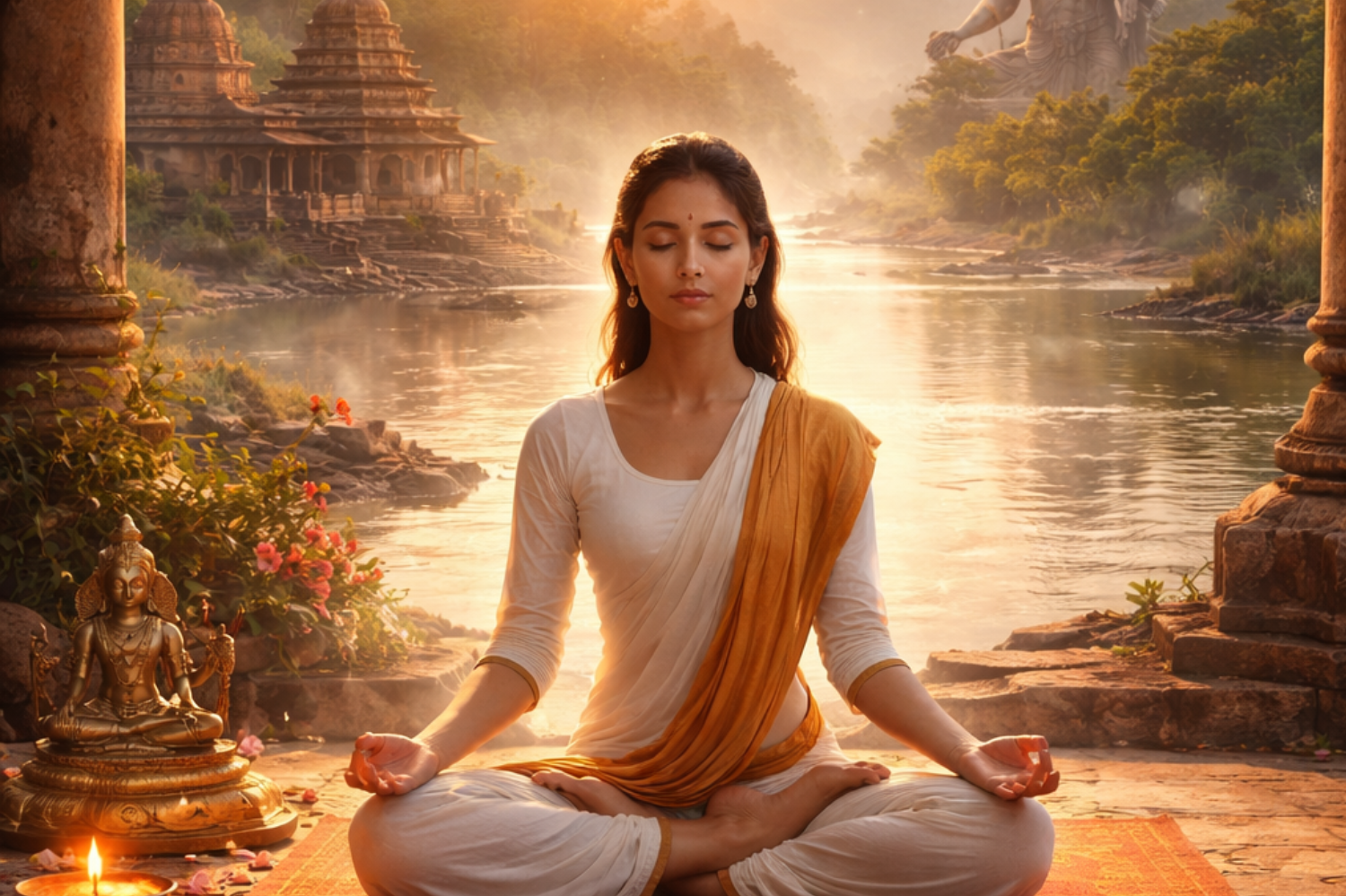
Yoga originated in ancient India more than 5,000 years ago, making it one of the oldest known systems of self-development and healing. Historical evidence from the Indus Valley Civilization shows figures seated in meditation postures, indicating that early forms of yoga were practiced during that era.
The philosophical foundations of yoga were later recorded in sacred texts such as the Vedas and Upanishads. These texts explored the relationship between the body, mind, and the universe, forming the basis for yoga practices. A major milestone in the development of yoga was the work of the ancient sage Patanjali, who compiled the Yoga Sutras around 200 BCE. In this text, he outlined the Eight Limbs of Yoga, which include ethical behaviour, physical postures, breathing techniques, concentration, meditation, and spiritual enlightenment. These teachings transformed yoga into a structured discipline that could be practised by individuals seeking physical health, mental peace, and spiritual growth.
The Global Spread and Popularity of Yoga
Yoga began spreading beyond India in the late 19th and early 20th centuries when Indian spiritual leaders introduced it to Western countries. One of the most influential figures in this movement was Swami Vivekananda, who presented Indian philosophy and yoga at the historic Parliament of the World’s Religions in the United States.
His teachings sparked widespread interest in yoga and meditation across Europe and North America. Over time, yoga became popular in countries such as the United States, United Kingdom, Canada, and Australia, where millions of people practice yoga for health and wellness. Recognizing its global importance, the United Nations officially declared June 21 as the International Day of Yoga in 2014. Since then, this day has been celebrated worldwide, including in Guyana, with mass yoga sessions and wellness programs.
How Yoga Came to Guyana
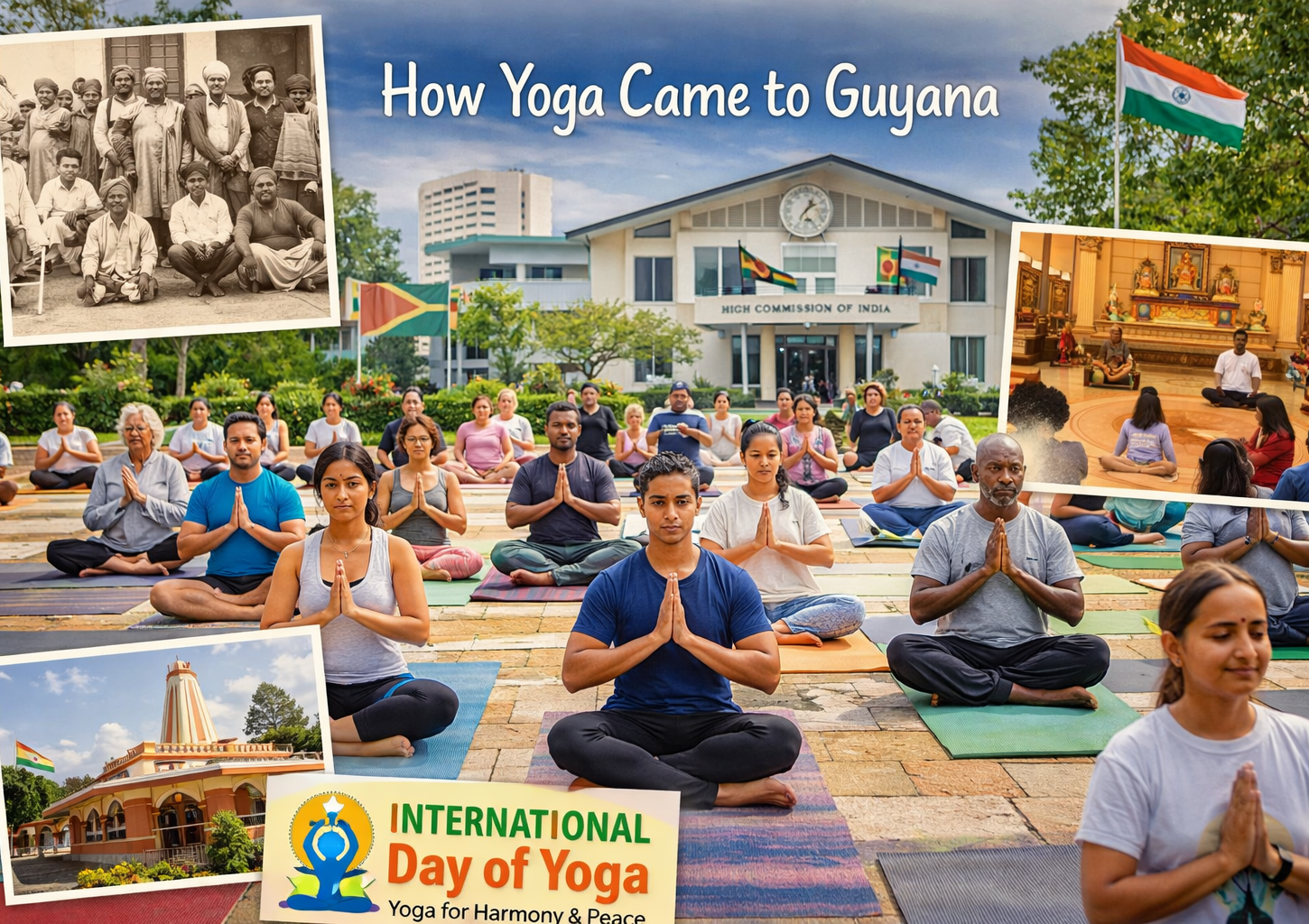
Yoga arrived in Guyana through the migration of Indian indentured laborers during the 19th century. Between 1838 and 1917, thousands of Indians were brought to Guyana to work on sugar plantations after the abolition of slavery in the British Empire. These immigrants carried with them their religious beliefs, cultural traditions, and spiritual practices, including yoga and meditation.
Although early yoga practices in Guyana were mostly connected to religious rituals and traditional lifestyles, the practice gradually evolved into a recognized health and wellness activity. Temples, community organizations, and cultural groups began introducing structured yoga sessions to promote physical fitness and mental well-being. In recent decades, yoga has gained significant popularity in Guyana, particularly in urban centers such as Georgetown. Schools, wellness centers, and community groups now organize yoga classes, workshops, and public events to encourage healthy living.
The government of Guyana and international organizations have also supported yoga initiatives. The High Commission of India in Georgetown plays an active role in promoting yoga by organizing annual celebrations on the International Day of Yoga, bringing together people from diverse communities to participate in group sessions and awareness programs. Today, yoga in Guyana is practiced by people of all ages and backgrounds, including students, professionals, senior citizens, and healthcare workers. It has become a valuable tool for improving health, reducing stress, and strengthening community connections.
The Present Status of Yoga in the Modern World
In the modern era, yoga has become a global wellness industry worth billions of dollars. It is widely practiced in homes, schools, hospitals, fitness centers, and corporate offices. Many healthcare professionals recommend yoga as part of preventive medicine and rehabilitation programs. Technology has made yoga more accessible than ever before. Online classes, mobile applications, and virtual training sessions allow individuals to practice yoga from anywhere in the world. This digital transformation has played a major role in increasing the popularity of yoga among younger generations.
Yoga is also being integrated into educational institutions to improve concentration, discipline, and emotional well-being among students. In workplaces, corporate yoga programs help employees manage stress, increase productivity, and maintain a healthy work-life balance.
Health Benefits of Yoga
Yoga offers a wide range of physical, mental, and emotional benefits that make it one of the most effective wellness practices available today.

Improves Physical Health
Regular yoga practice strengthens muscles, improves flexibility, and enhances posture. It also supports cardiovascular health and helps prevent lifestyle-related diseases such as obesity, diabetes, and high blood pressure.

Reduces Stress and Anxiety
Yoga includes breathing exercises and relaxation techniques that calm the nervous system and reduce stress levels. It helps individuals manage anxiety, improve mood, and maintain emotional stability.

Enhances Mental Focus and Productivity
Yoga improves concentration, memory, and decision-making skills. It promotes mindfulness, enabling individuals to stay focused and perform better in academic and professional settings.
Supports Emotional Well-Being
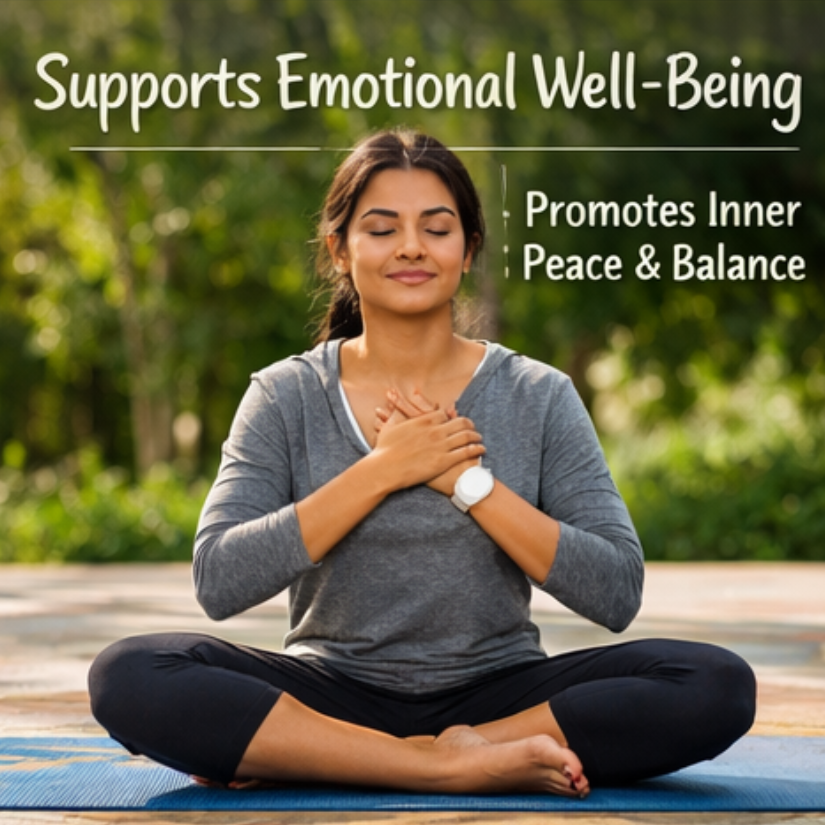
Yoga encourages self-awareness and emotional balance. It helps individuals develop resilience, confidence, and a positive outlook on life.

Improves Sleep Quality
Yoga relaxes the body and mind, making it easier to fall asleep and maintain a healthy sleep cycle. It is particularly beneficial for individuals experiencing insomnia or fatigue.

Yoga for Children, Adults, and Seniors
One of the greatest strengths of yoga is its adaptability. It can be practiced by people of all age groups, regardless of their fitness level or health condition.
Children benefit from yoga by improving concentration, discipline, and physical coordination. Adults use yoga to manage stress, maintain fitness, and improve overall health. Seniors practice yoga to enhance mobility, reduce joint pain, and maintain independence.
In communities across Guyana, yoga programs are increasingly being introduced in schools, community centers, and healthcare facilities to promote healthier lifestyles and prevent chronic diseases.
The Future of Yoga in Guyana and Beyond
The future of yoga in Guyana looks promising as awareness about health and wellness continues to grow. More organisations, schools, and community groups are recognising the value of yoga as a preventive health practice.
Government agencies and international partners are expected to continue supporting yoga initiatives through public health campaigns and community outreach programs. As lifestyles become more demanding and stress levels increase, yoga will play an even more important role in promoting physical fitness, mental resilience, and social well-being.
Yoga is a timeless gift from ancient India that has transformed into a global symbol of health, peace, and unity. From its origins thousands of years ago to its widespread practice in modern societies, yoga continues to improve the lives of millions of people around the world.
In Guyana, yoga represents not only a path to better health but also a connection to cultural heritage and community values. By practising yoga regularly, individuals can build strength, reduce stress, and achieve a balanced and fulfilling life.