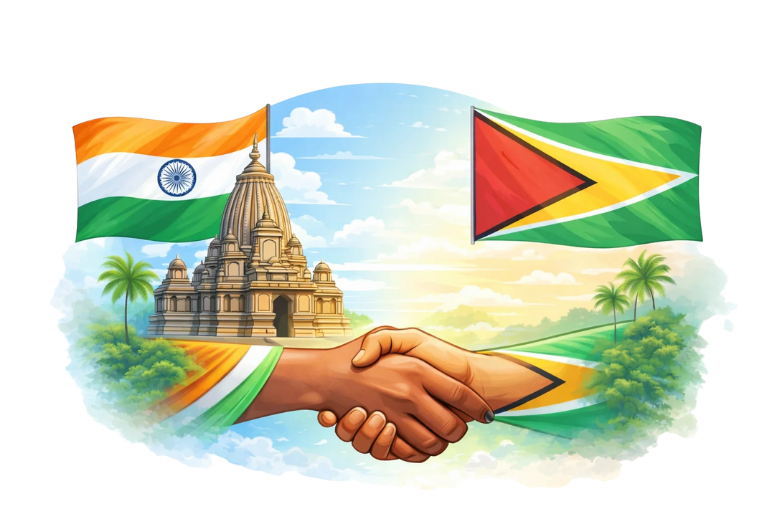
Welcome to the Indian Civilisation Institute of Guyana

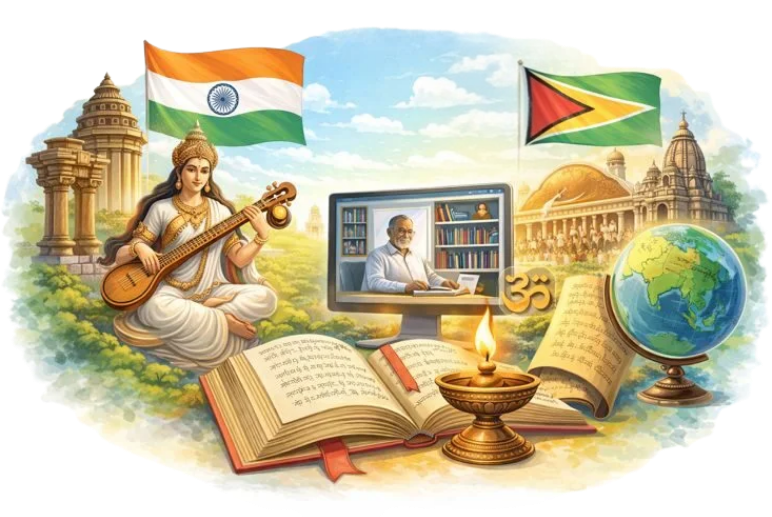
The Indian Civilisation Institute of Guyana was established with a clear purpose: to educate, preserve, and share the profound legacy of Indian civilisation that stretches back more than 4,000 years. This ancient civilisation has contributed enormously to humanity in areas such as philosophy, science, spirituality, mathematics, medicine, and cultural traditions.

For the Indo-Guyanese community and the global Indian diaspora, understanding these contributions is vital to maintaining a strong sense of identity and heritage. The institute works to ensure that future generations in Guyana and around the world remain aware of the achievements of their ancestors and the lasting influence of Indian civilisation on the development of the modern world.
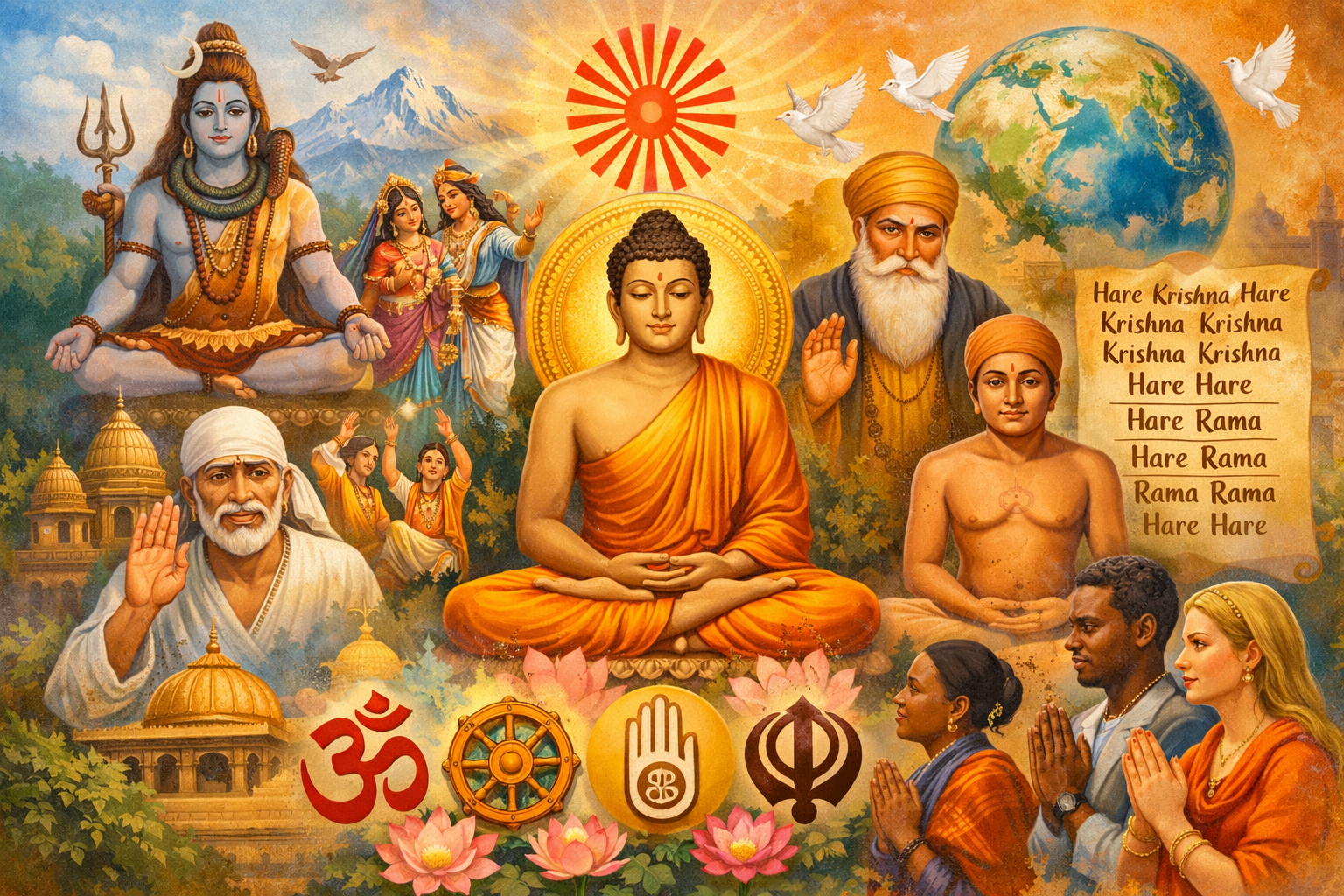
The Wisdom of Ancient Indian Sages

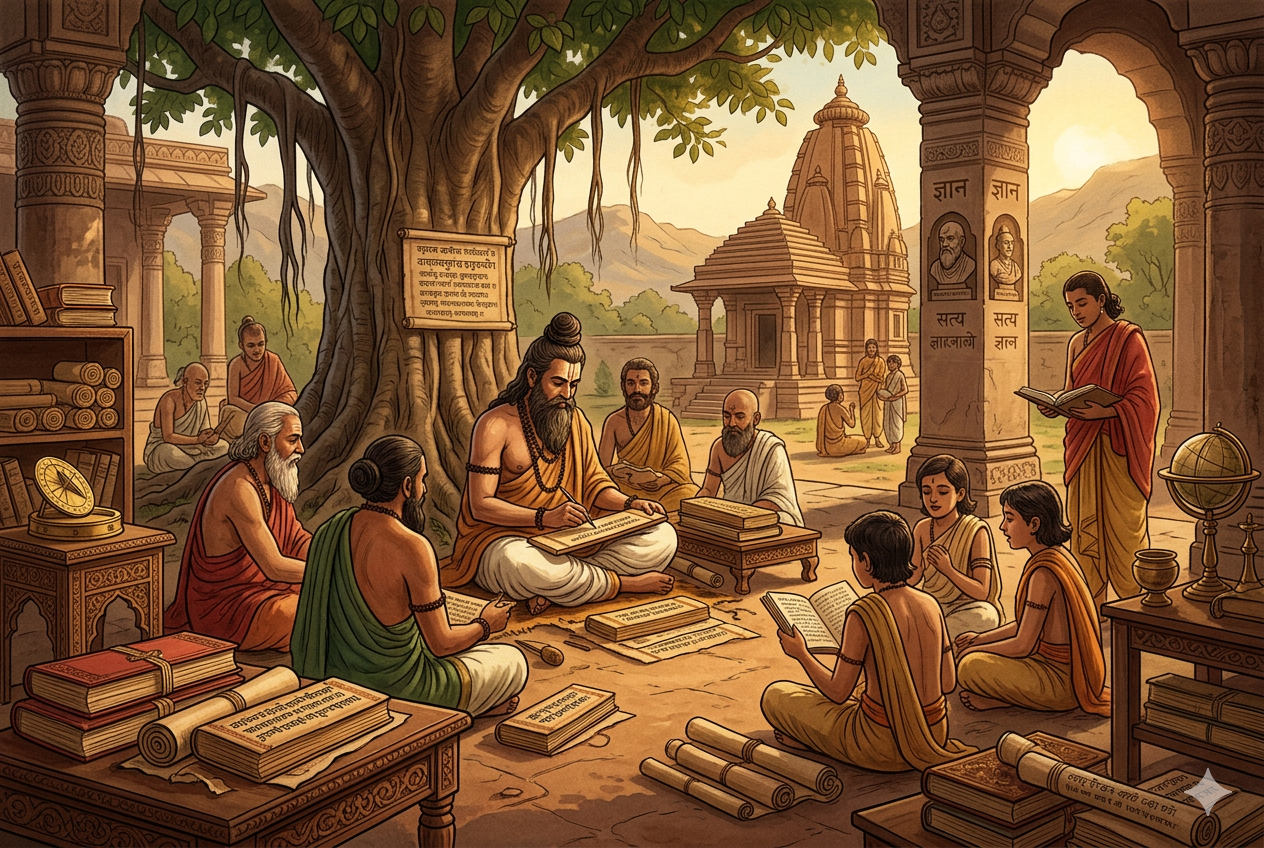
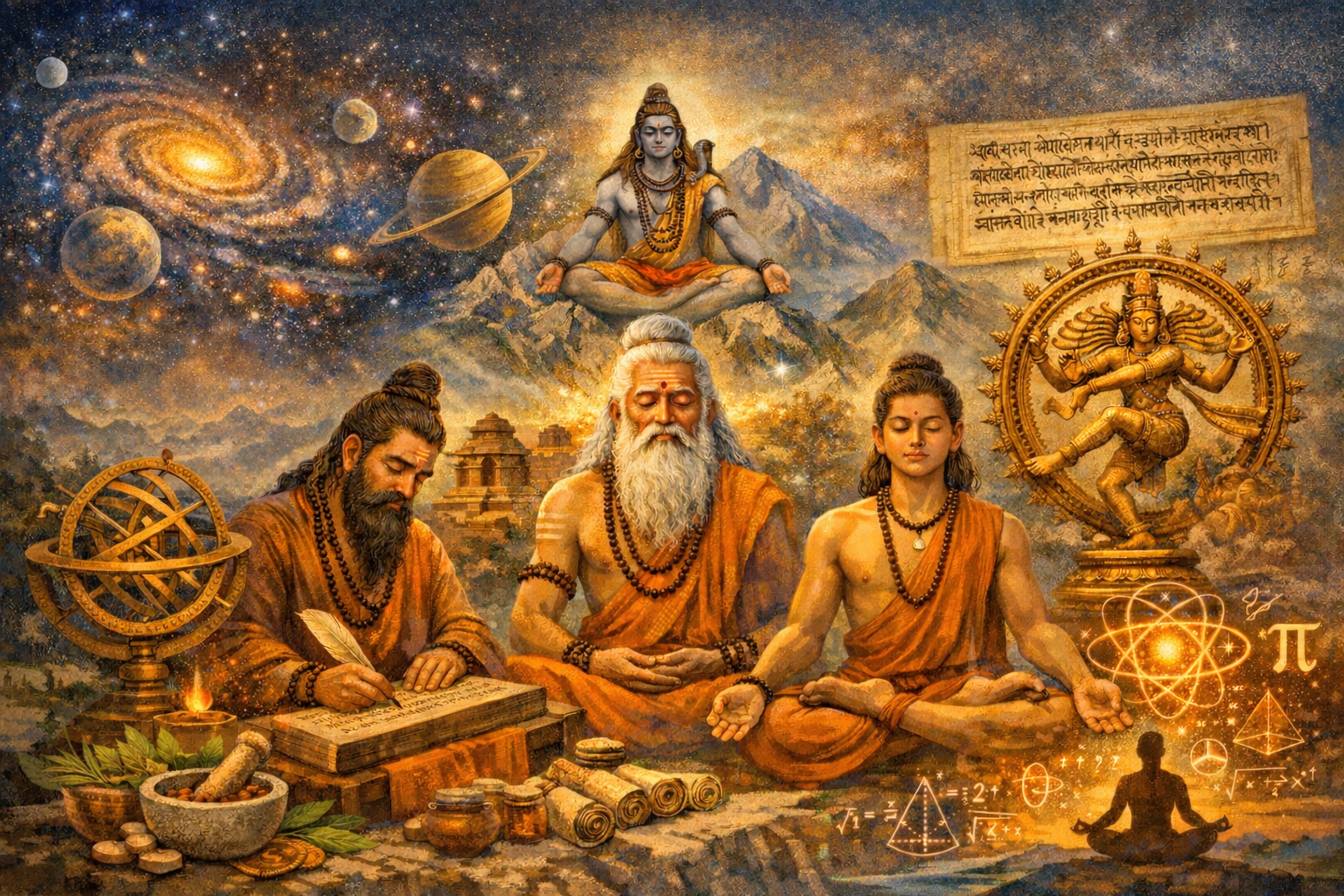
For thousands of years, Indian sages, rishis, and yogis explored the deepest questions of life through meditation, spiritual discipline, and philosophical inquiry. Their pursuit of knowledge was not limited to religious thought but extended to understanding the universe, human consciousness, and the laws governing nature.

These scholars documented their discoveries in the ancient language of Sanskrit. Through sacred texts and philosophical treatises, they discussed profound concepts such as the nature of the soul (Atma), the cycle of reincarnation, cosmic order, and the existence of vast universes and galaxies.

Their teachings also laid the foundation for many scientific and intellectual traditions, including mathematics, astronomy, logic, algorithms, Ayurveda, meditation, and yoga. These contributions continue to influence modern science, wellness practices, and spiritual philosophies across the world.

The Global Influence of Indian Religions

Indian civilisation gave birth to several major spiritual traditions that have shaped the moral and philosophical outlook of millions of people worldwide. Among these traditions are Hinduism, Buddhism, Jainism, and Sikhism, all of which originated on the Indian subcontinent and spread peacefully across Asia and beyond.

Buddhism, founded by Gautama Buddha more than 2,600 years ago, emerged from a royal Hindu family background and developed into one of the world’s most influential philosophical traditions. The teachings of Buddha emphasised compassion, mindfulness, and liberation from suffering. These ideas spread widely across Asia and continue to inspire millions today.

Other movements that emerged from Indian spiritual traditions include the teachings of Sai Baba of Shirdi, the spiritual philosophy of the Brahma Kumaris, and the global devotional movement of International Society for Krishna Consciousness, popularly known as the Hare Krishna movement.

These spiritual paths have attracted followers from Europe, North America, Africa, and many other parts of the world, demonstrating the universal appeal of Indian philosophical traditions.

Cultural Exchange Across Asia

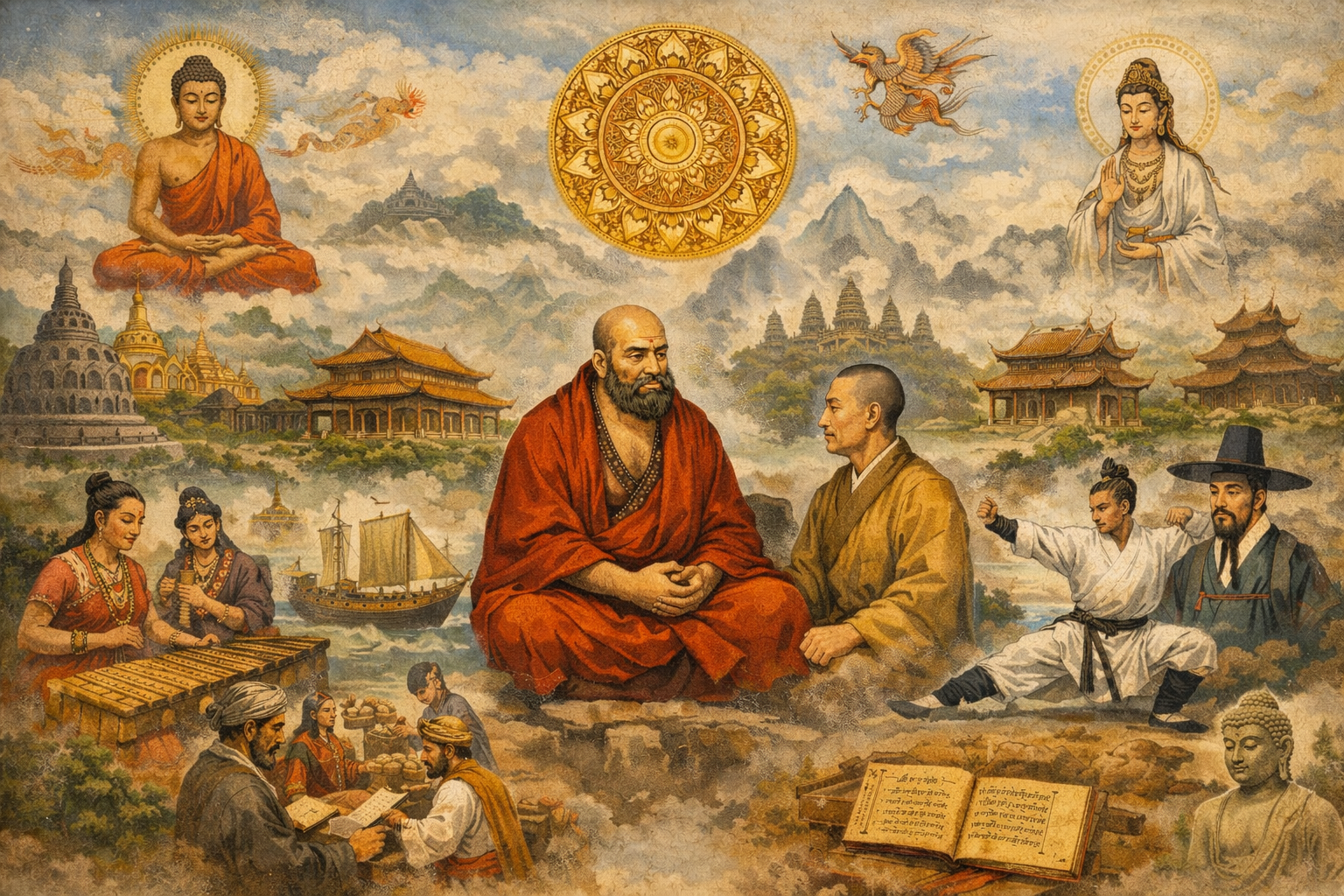
Indian culture spread across Asia primarily through peaceful cultural exchange rather than military conquest. Traders, monks, scholars, and travellers carried Indian ideas to distant lands where they influenced local cultures, art, literature, and religious practices.

Countries such as China, Japan, Korea, Indonesia, Thailand, Cambodia, Vietnam, Myanmar, and Mongolia adopted elements of Indian spirituality, philosophy, and cultural traditions. Buddhism in particular became deeply integrated into many Asian societies.

One notable historical figure in this cultural exchange was the Indian monk Bodhidharma, who travelled from South India to China during the 6th century. He is widely credited with introducing the teachings of Chan (Zen) Buddhism and is traditionally associated with the development of physical training practices that later influenced Shaolin martial arts.

Today, many Asian societies still reflect these ancient cultural links, visible in temple architecture, philosophical traditions, and spiritual practices.

Sanskrit: The Language of Ancient Knowledge

The ancient Indian language of Sanskrit is one of the oldest and most sophisticated languages ever developed. It served as the foundation for a vast body of literature covering religion, philosophy, science, and poetry.

The structure of Sanskrit grammar was systematised by the renowned scholar Panini in the 4th century BCE. His work is regarded as one of the greatest achievements in linguistic history because of its remarkable precision and scientific structure.

Sanskrit texts include some of the most influential works in world history, including the Vedas, Upanishads, and numerous philosophical writings that explore the nature of reality, consciousness, and human existence.

Many modern languages, particularly in Europe and Asia, share linguistic roots with Sanskrit, demonstrating its far-reaching influence.

The Great Hindu Scriptures

Hindu philosophical and spiritual teachings are preserved in a vast collection of sacred texts that guide moral conduct, spiritual understanding, and philosophical reflection.

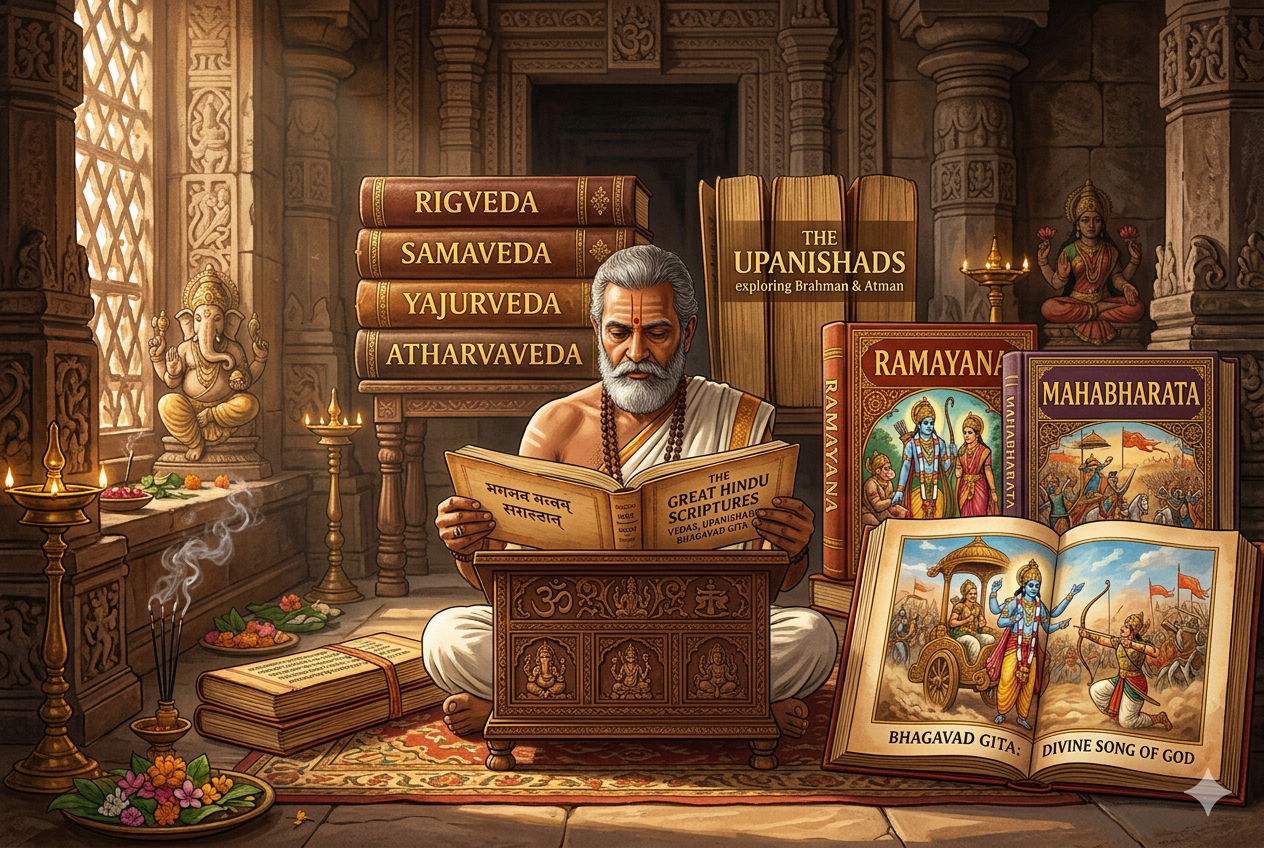
The most ancient scriptures are the Vedas, which consist of four major collections: the Rigveda, Samaveda, Yajurveda, and Atharvaveda. These texts contain hymns, rituals, and early philosophical insights.

The Upanishads explore deeper metaphysical ideas about the nature of ultimate reality (Brahman) and the individual soul (Atman). These texts form the philosophical core of Hindu thought.

Two great epics, the Mahabharata and the Ramayana, narrate powerful stories of duty, devotion, and moral dilemmas. Within the Mahabharata lies the Bhagavad Gita, a profound dialogue between Lord Krishna and the warrior Arjuna on the nature of duty, righteousness, and spiritual liberation.

These texts continue to inspire spiritual seekers, scholars, and communities around the world.

Indo-Guyanese Heritage and Cultural Identity

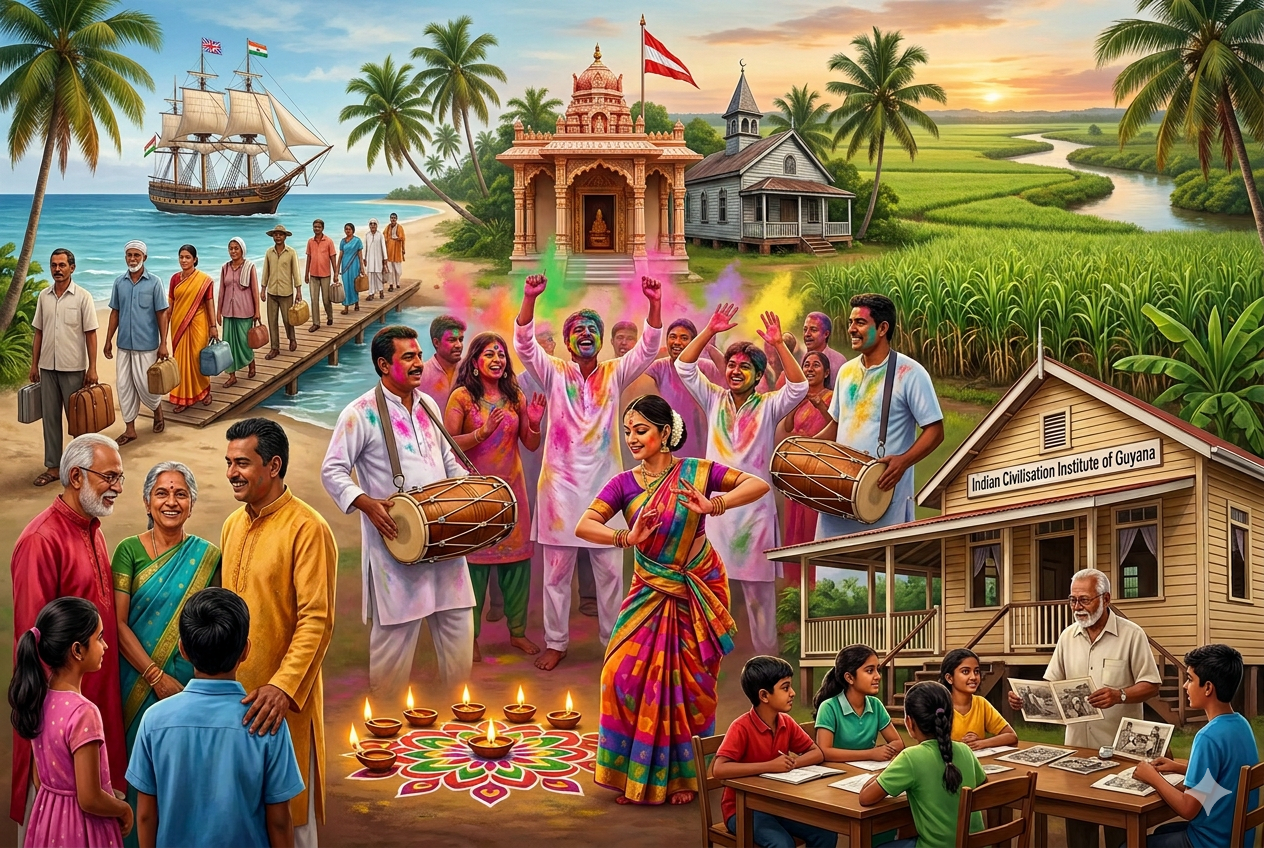
The Indo-Guyanese community forms an important part of Guyana’s multicultural society. Descendants of Indian indentured labourers who arrived during the nineteenth century brought with them rich traditions, religious practices, and cultural values that continue to shape Guyanese society today.

Festivals such as Diwali, Phagwah (Holi), and Ram Navami are celebrated with enthusiasm and devotion across Guyana. Traditional music, dance, cuisine, and family values also reflect the enduring influence of Indian heritage within the country.

The Indian Civilisation Institute of Guyana works to preserve these traditions and educate younger generations about the historical journey of their ancestors and the cultural identity they inherited.

Contributions to Science, Knowledge, and Philosophy

Indian civilisation has made remarkable contributions to many fields of knowledge. Ancient scholars explored astronomy, mathematics, medicine, and philosophy long before similar developments appeared elsewhere.

Indian mathematicians developed important concepts such as the decimal system and early numerical frameworks that influenced later scientific progress. Ayurvedic medicine offered a holistic approach to health that remains widely practised today.

Yoga and meditation, once spiritual disciplines practised by sages, have now become global practices embraced for physical and mental wellbeing.

Indian philosophical traditions also explored ideas about the universe, the nature of consciousness, and the relationship between the human soul and the cosmos.

Nalanda University and Ancient Centres of Learning

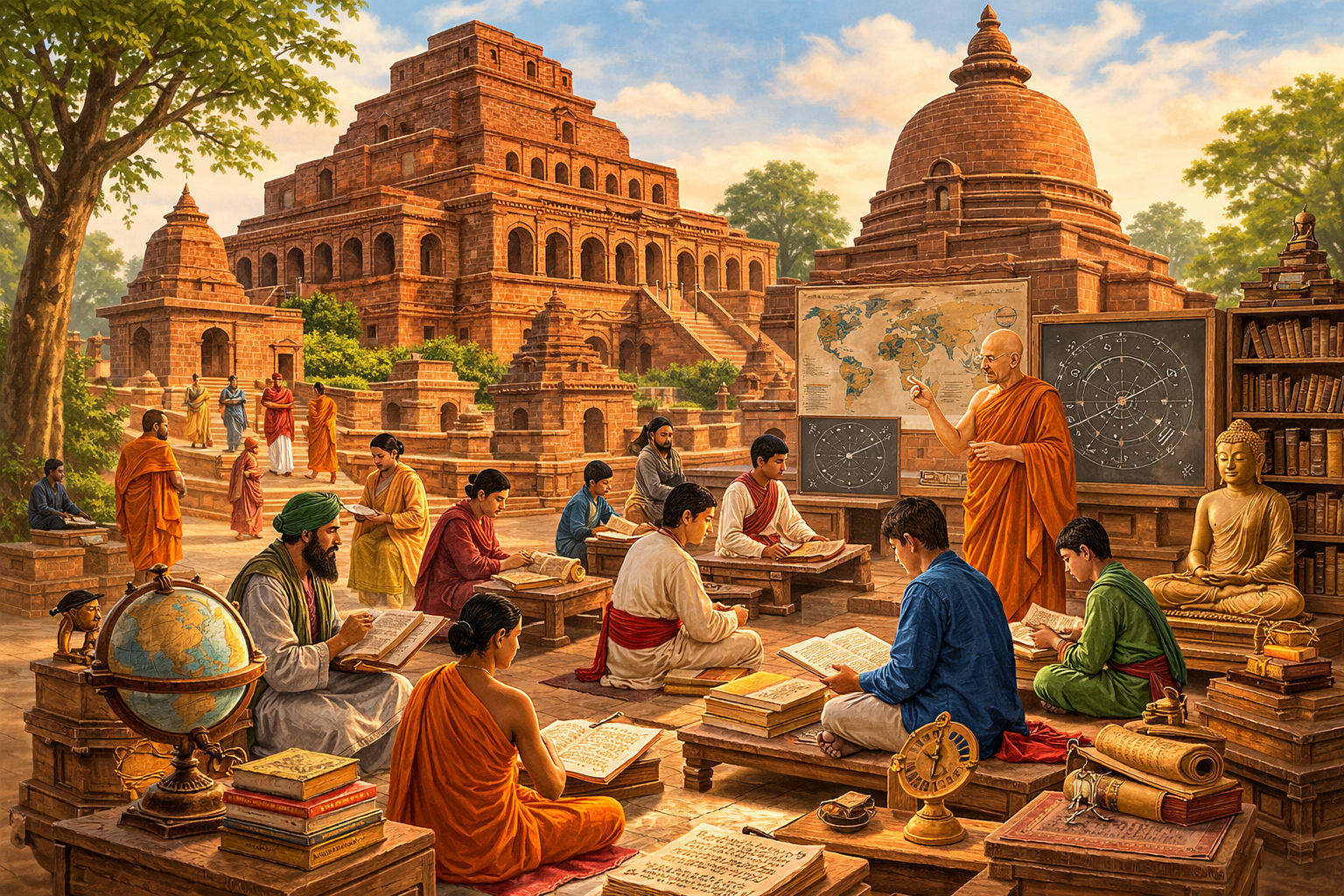
One of the greatest centres of learning in ancient history was Nalanda University in India. Established more than 1,500 years ago, it attracted scholars and students from across Asia.

Nalanda offered advanced education in philosophy, astronomy, medicine, mathematics, and Buddhist studies. At its peak, thousands of students and teachers studied there, making it one of the world’s earliest international universities.

The intellectual exchanges that took place at Nalanda played a crucial role in spreading knowledge across Asia.

The Harappan Civilisation

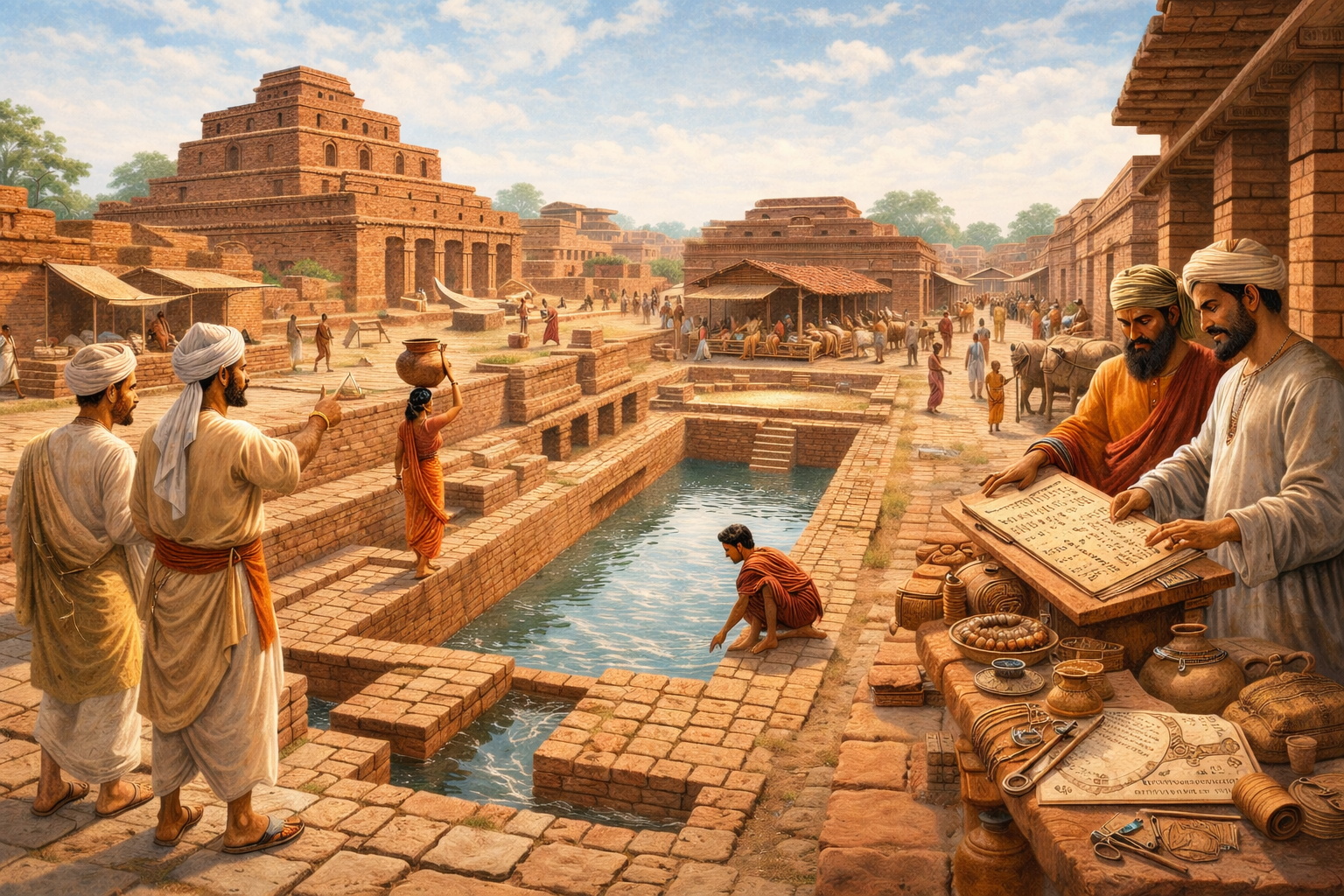
The roots of Indian civilisation extend even further back to the ancient urban society known as the Indus Valley Civilization. Cities such as Harappa and Mohenjo-Daro demonstrate remarkable achievements in urban planning, architecture, sanitation systems, and trade networks.

These cities, which flourished more than 4,000 years ago, reveal that Indian civilisation possessed advanced engineering and organisational skills at a very early stage in human history.

India and Global Trade

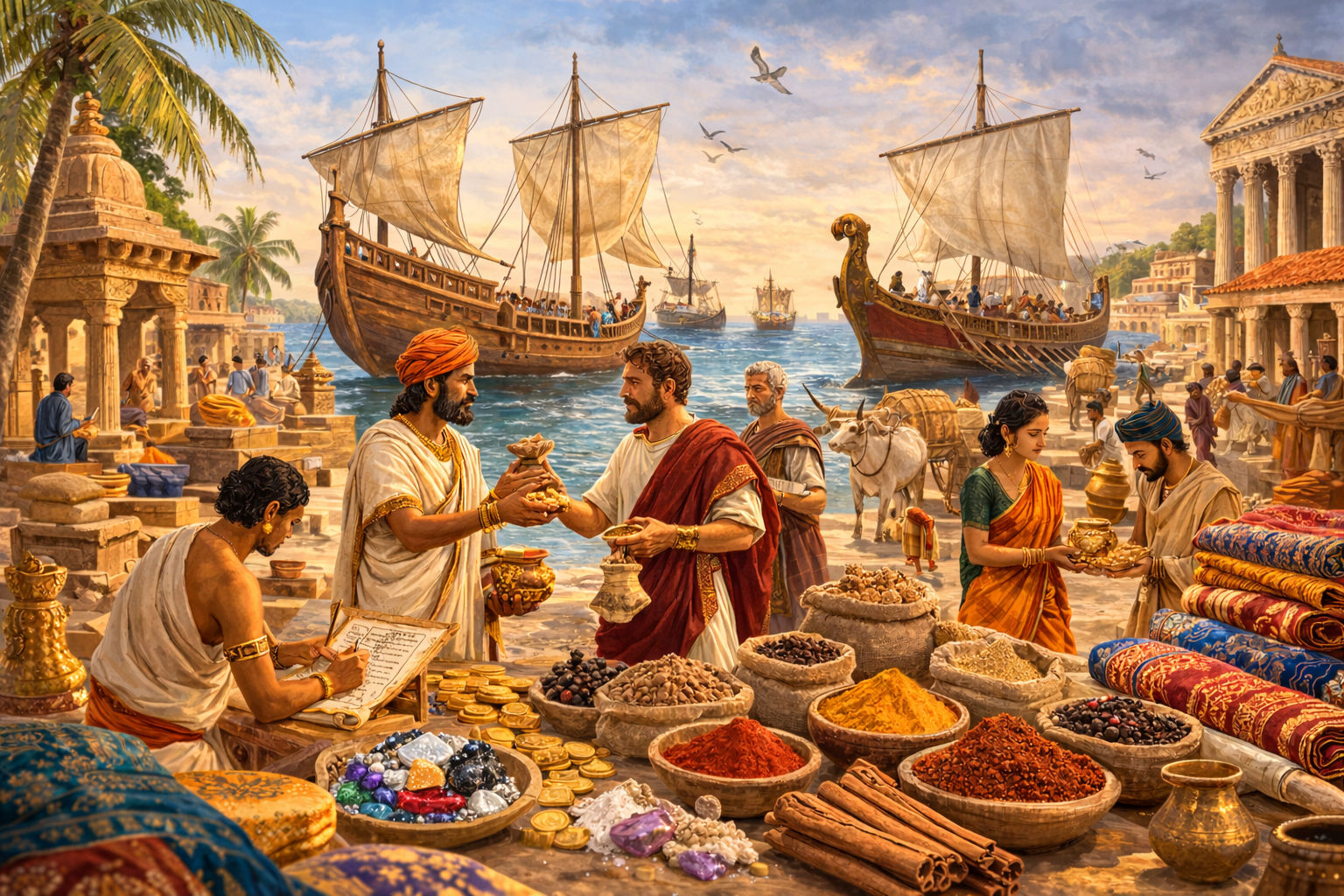
Ancient India was also an important centre of international trade. Historical records indicate that Indian merchants maintained strong commercial connections with the Roman Empire through maritime trade routes.

Roman traders travelled to Indian ports along the western and eastern coasts of the subcontinent, exchanging goods such as spices, textiles, precious stones, and metals. These trade connections contributed to the spread of Indian ideas, technologies, and cultural practices across vast regions

Our Mission

The mission of the Indian Civilisation Institute of Guyana is to preserve, promote, and advance the cultural, spiritual, and historical heritage of Indian civilisation. Through research, educational programs, cultural exhibitions, and academic initiatives, the institute seeks to inspire pride and understanding among Indo-Guyanese communities and the wider global diaspora. By sharing the wisdom of ancient traditions and highlighting their relevance in the modern world, the institute aims to strengthen cultural identity and encourage meaningful dialogue between cultures.

Our Vision

The vision of the institute is to become Guyana’s leading centre for the study and preservation of Indian civilisation. It aims to promote cultural understanding, academic research, and international collaboration while celebrating the shared heritage that connects India and Guyana. Through education, cultural exchange, and community engagement, the institute hopes to build a future in which the values of harmony, knowledge, and spiritual awareness continue to inspire generations to come.

Join Our Community

The Indian Civilisation Institute of Guyana invites individuals from all backgrounds to join its growing community. Membership is open to anyone interested in learning about Indian civilisation, Indo-Guyanese history, and global cultural connections. Members can participate in educational programs, cultural events, conferences, and discussions that celebrate the heritage and contributions of Indian civilisation. Visitors may register by providing their name, address, age, email, and contact number. Membership is free, and members will receive a monthly newsletter with updates about events, research, and cultural activities organised by the instit