
Indian civilisation and Artificial Intelligence: Ancient wisdom guiding the future of technology

The Convergence of Ancient Knowledge and Modern Technology

In the modern era, artificial intelligence has become one of the most transformative technologies shaping humanity’s future. While many nations primarily concentrate on the technological and economic aspects of AI, India offers a distinctive perspective rooted in its ancient civilisational heritage. Indian civilisation, which has evolved over thousands of years, holds profound philosophical insights about consciousness, knowledge, and the nature of reality. Today, these ancient ideas are increasingly being connected with the development of modern artificial intelligence. 


This distinctive blend of ancient wisdom and modern technology is often called techno-civilisational modernity. It presents an approach where technological progress is guided by philosophical principles, cultural customs, and a broader understanding of human well-being. Rather than viewing AI solely as a tool for efficiency or profit, India’s civilisational perspective emphasises that technology should ultimately benefit humanity and promote collective advancement. 
Philosophical Foundations of Indian Thought and AI

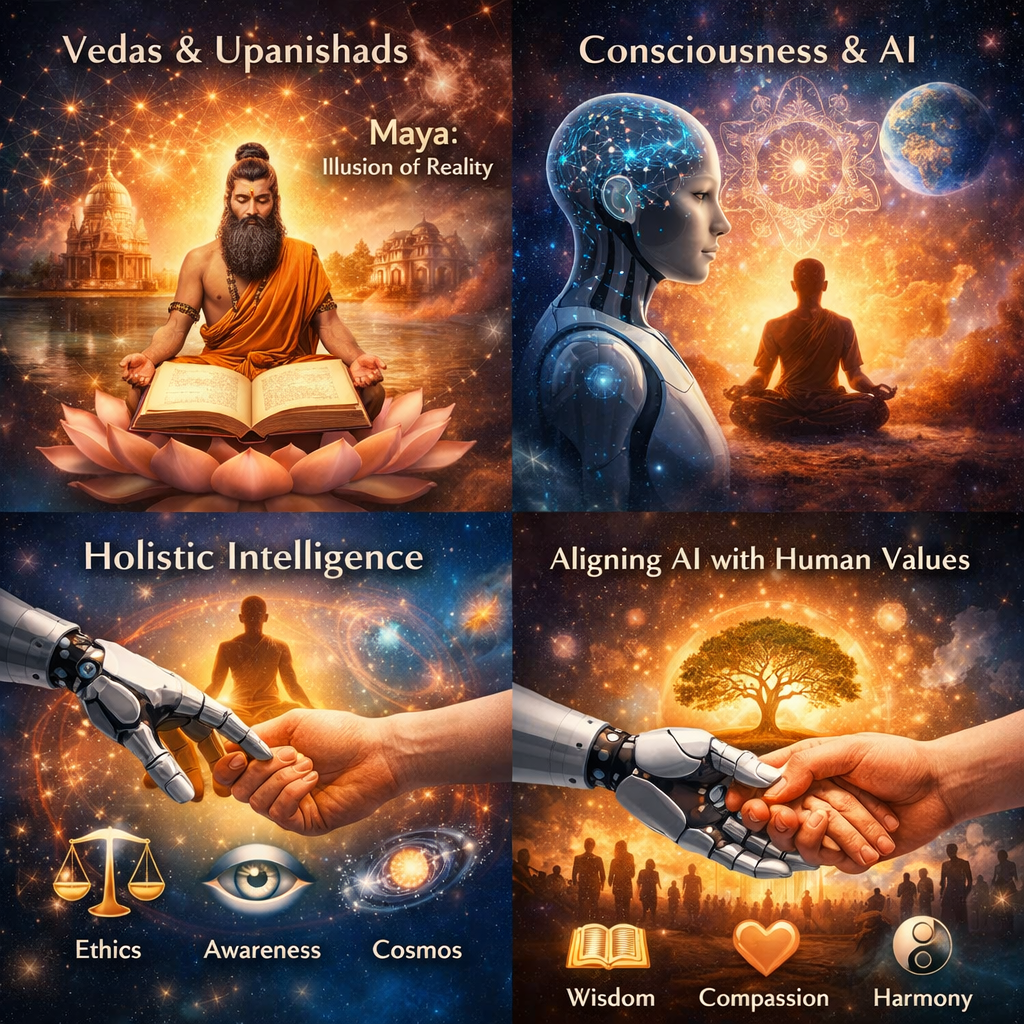
Indian philosophical traditions offer profound insights into consciousness, perception, and the nature of existence. Ancient texts such as the Vedas and Upanishads explore ideas that align surprisingly well with contemporary debates about artificial intelligence and cognitive systems. Concepts like Maya, which describe the intricate and layered nature of reality, can be viewed as early philosophical examinations of systems that appear real but are influenced by deeper underlying processes. 

These philosophical traditions endorse a holistic perspective of intelligence and consciousness. Rather than viewing intelligence solely as a mechanical or computational process, Indian philosophy sees it as interconnected with awareness, ethics, and the broader cosmos. This perspective provides a valuable framework for considering how artificial intelligence should evolve in ways that remain aligned with human values. 

Early Foundations of Computational Thinking in India

India’s contributions to knowledge systems have significantly shaped the foundations of modern science and computation. Many scholars emphasise that ancient Indian thinkers developed mathematical and linguistic frameworks similar to contemporary computational models. 

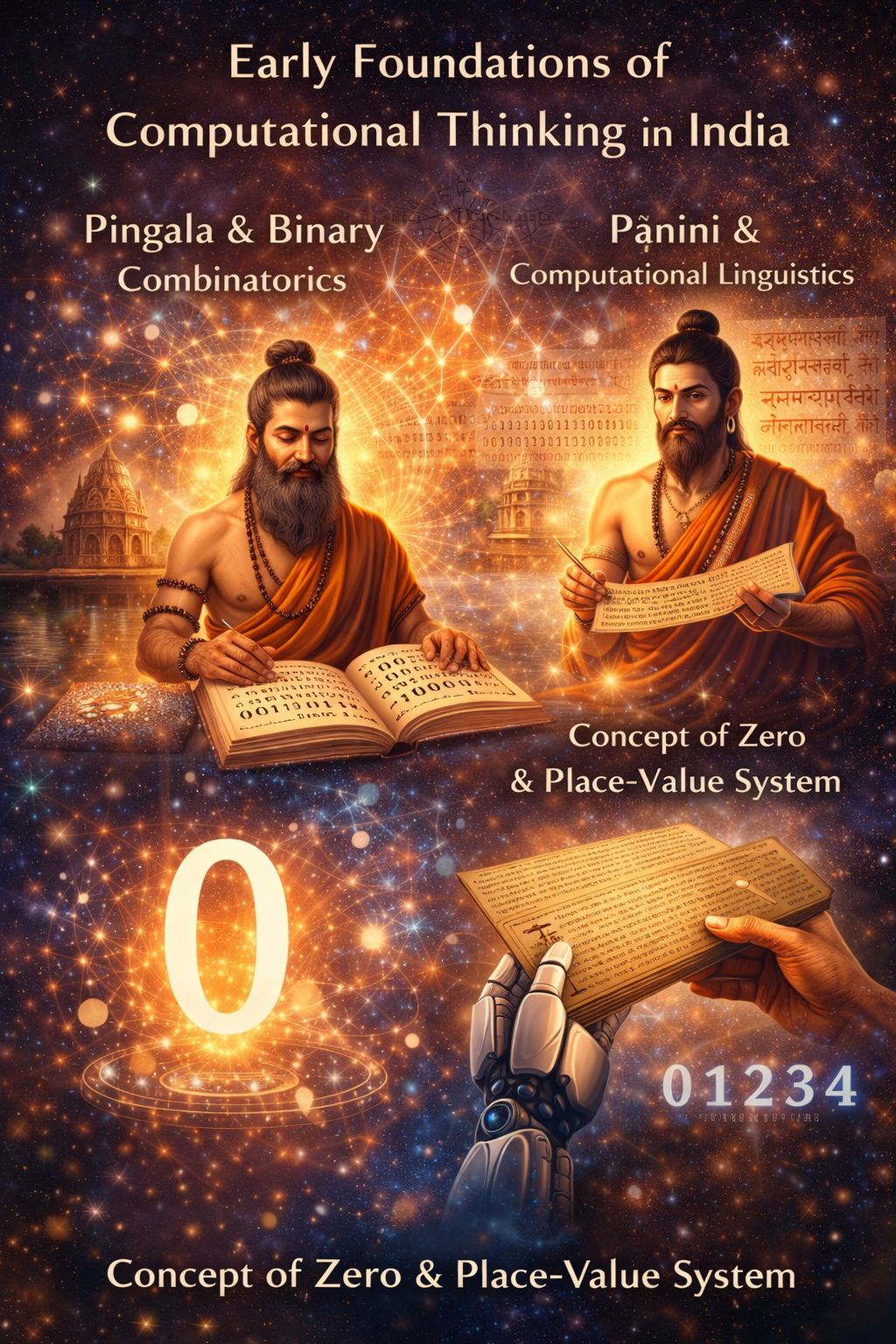
One of the most notable examples is Pingala, an ancient scholar who studied poetic metre and developed systems of binary combinatorics that resemble modern binary coding. His work laid the conceptual groundwork that underpins the binary logic used in contemporary computing systems. 

Similarly, the linguistic genius of Pāṇini transformed the study of grammar. His systematic rules for Sanskrit operate much like a structured programming language. Many researchers today consider Pāṇini the world’s first computational linguist because his grammar rules resemble algorithmic processes used in modern programming and natural language processing. 

Another vital contribution of Indian civilisation was the development of the concept of zero and the place-value system. These innovations transformed mathematics and facilitated the emergence of modern science and computing. Without these mathematical breakthroughs, the digital technologies that drive artificial intelligence today would not exist in their current form. 

Vikas and Virasat: Development Anchored in Heritage

India’s approach to artificial intelligence is guided by the dual principles of “Vikas” (development) and “Virasat” (heritage). This concept emphasises that technological progress should not come at the expense of cultural identity and traditional knowledge systems. 


The goal is not just to adopt AI but to develop it in a way that reflects India’s values and societal priorities. In this approach, AI becomes a tool for national progress while staying connected to the country’s cultural and civilisational heritage. 


This perspective aligns with the ancient Indian principle of Vasudhaiva Kutumbakam, meaning “the world is one family.” The philosophy promotes global cooperation and stresses that technological progress should benefit humanity rather than narrow interests. 

Building Human-Centric Artificial Intelligence 


One of the key elements of India’s AI vision is the emphasis on human-centred technology. Instead of prioritising automation solely for economic gains, India intends to utilise AI to enhance daily life and tackle major social issues. 


Artificial intelligence is being adopted across sectors such as education, agriculture, healthcare, and public services. In agriculture, AI tools help farmers predict crop patterns, monitor soil conditions, and boost productivity. In healthcare, AI can support early disease detection, improve diagnostics, and increase access to medical services in remote areas. 


By emphasising practical applications that benefit the public, India aims to create a model where technology empowers individuals rather than replaces them. 

Sovereign AI and Linguistic Diversity

India is one of the most linguistically diverse countries in the world, with hundreds of languages and dialects spoken across its regions. This diversity presents unique challenges for artificial intelligence systems that are often designed mainly for English-speaking users. 

To address this challenge, India is investing in the development of sovereign AI systems capable of understanding and supporting local languages and cultural contexts. These initiatives aim to ensure that digital technologies are accessible to everyone, including those living in rural areas or speaking regional languages. 

By developing AI tools customised to its own linguistic and cultural diversity, India aims to create technology that reflects the realities of its society while safeguarding digital sovereignty. 

Transforming the Workforce and Empowering Rural Communities

Artificial intelligence is also reshaping India’s workforce in unexpected ways. The rapid expansion of AI development has generated new job roles, particularly in data annotation, AI training, and digital services. 

Many of these opportunities are developing in smaller towns and rural areas rather than in major metropolitan cities. In regions such as Tamil Nadu, thousands of workers—many of them women—are engaged in AI-related projects, such as data labelling and model training. 

This shift helps distribute economic opportunities more evenly across the country and reduces the concentration of technology jobs in a few major urban centres. 

Indian Philosophy and the Future of AI

As artificial intelligence continues to develop, many thinkers believe that technological progress will eventually raise deeper questions about meaning, purpose, and consciousness. In a future where machines carry out many routine tasks, societies may need new ways to understand human value and fulfilment. 

Indian philosophical traditions may provide valuable insights for this emerging “post-work” era. Ideas from Dharmic philosophy emphasise balance, ethical responsibility, and the pursuit of knowledge beyond material success. These concepts could guide the ethical development of AI and help ensure technological progress remains aligned with human well-being. 

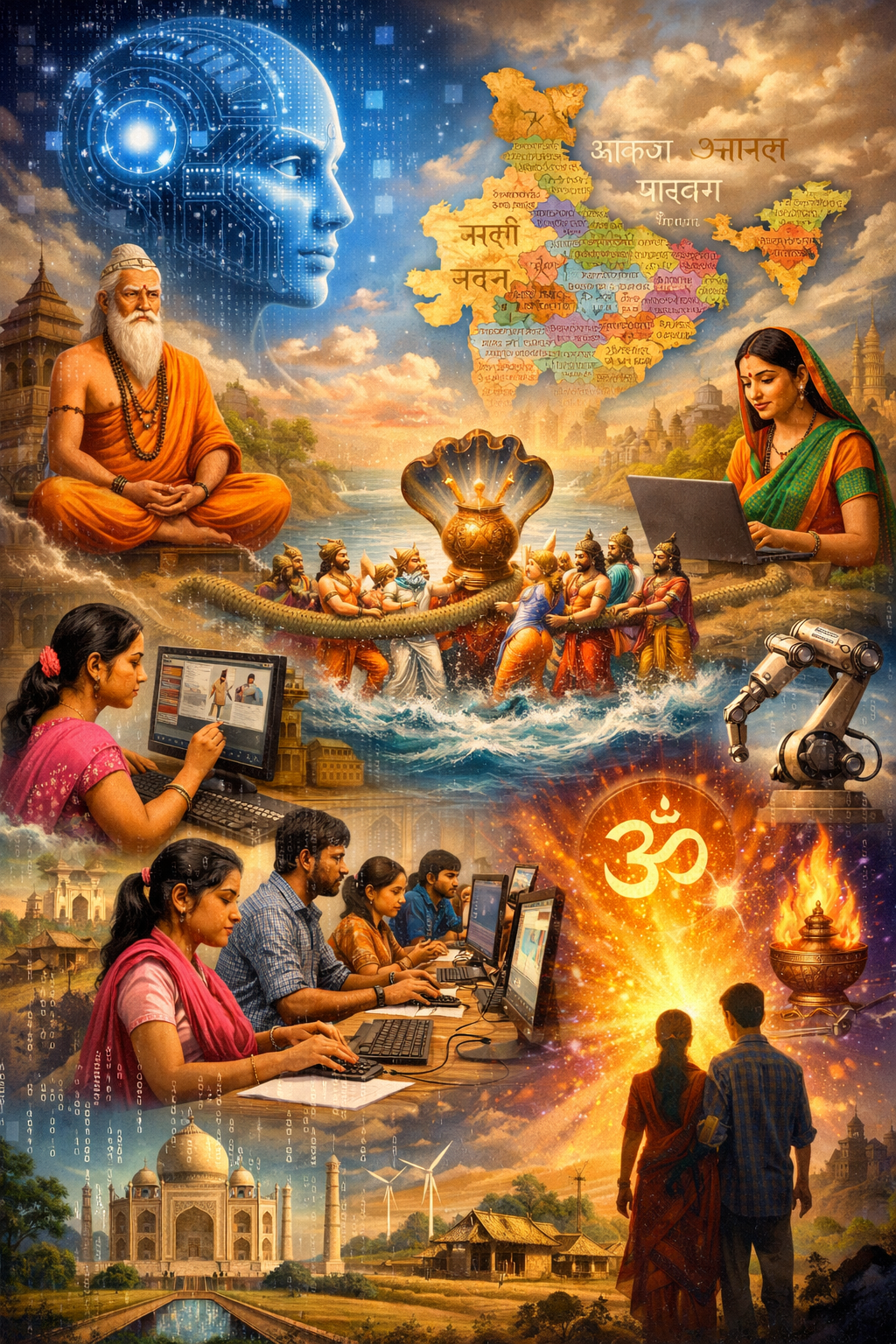
Some scholars suggest that understanding artificial intelligence may even require metaphors from Indian traditions, such as the symbolism of Agni representing transformative energy or the mythological story of Samudra Manthan, which illustrates the process of extracting knowledge through effort and collaboration. 

Toward an Indian Model of Artificial Intelligence

India’s emerging vision for AI fundamentally differs from merely technological models. It seeks to combine scientific innovation with philosophical wisdom, ethical responsibility, and social inclusion. 

Rather than seeing artificial intelligence as a force that displaces humanity, India’s civilisational perspective seeks to transform it into a tool that enhances human potential. By drawing on thousands of years of intellectual tradition, India could be uniquely placed to shape the next phase of the AI revolution. 

In this vision, technology is not separate from culture or philosophy. Instead, it becomes part of a broader civilisational journey—one where ancient Indian wisdom and modern innovation work together to create a more balanced and humane digital future.