
Indian Civilisation Institute of Guyana – Preserving Heritage and Showcasing India’s Gifts to the World
The website https://iciguyana.com embodies the vision and intellectual purpose of the Indian Civilisation Institute of Guyana, a platform dedicated to preserving, studying, and promoting the enduring heritage of Indian civilisation. The institute seeks to reconnect the Indo-Guyanese community with their historical and cultural roots while also enlightening a global audience about India’s significant contributions to humanity over thousands of years. The website functions not only as an informational portal but also as a cultural, philosophical, and educational platform that illustrates how the wisdom of Indian civilisation continues to influence the modern world.

Guyana shares a distinctive and historic bond with India. In the nineteenth century, thousands of Indians migrated to Guyana as indentured workers. Despite the hardships they faced in a new land, they brought with them their languages, traditions, religious practices, music, and cultural values. Over time, these traditions became vital to Guyana’s multicultural identity. Festivals such as Diwali, Phagwah, and Ram Navami are still celebrated with great enthusiasm across the country. The Indian Civilisation Institute of Guyana recognises the importance of safeguarding this heritage and ensuring that younger generations remain connected to their ancestors’ cultural and intellectual traditions.

One of the primary goals of the website is to preserve culture. Culture is expressed not only through festivals and rituals but also through philosophy, literature, knowledge systems, and worldviews. Indian civilisation is among the oldest continuous civilisations on Earth, with a recorded history spanning thousands of years. The institute emphasises that understanding this civilisation helps people appreciate the origins of many modern ideas concerning ethics, science, governance, and spirituality.

Another key focus of the website is education and knowledge sharing. Indian civilisation developed a vast intellectual tradition that made significant contributions to mathematics, medicine, astronomy, philosophy, linguistics, architecture, and literature. The institute aims to showcase these achievements so that people understand the role India played in shaping global knowledge. By presenting historical facts, philosophical ideas, and cultural narratives, the website seeks to inspire academic curiosity and intellectual engagement among students, researchers, and the public.
One of ancient India’s most significant achievements was the establishment of major centres of learning, such as Nalanda University. Founded in the fifth century CE in present-day Bihar, Nalanda became one of the earliest residential universities in the world and a prominent educational centre of the ancient period. At its peak, Nalanda accommodated over 10,000 students and approximately 2,000 teachers from across Asia, including China, Korea, Japan, Tibet, and Southeast Asia. Scholars journeyed thousands of miles to study subjects like philosophy, mathematics, astronomy, medicine, grammar, logic, and Buddhist studies.
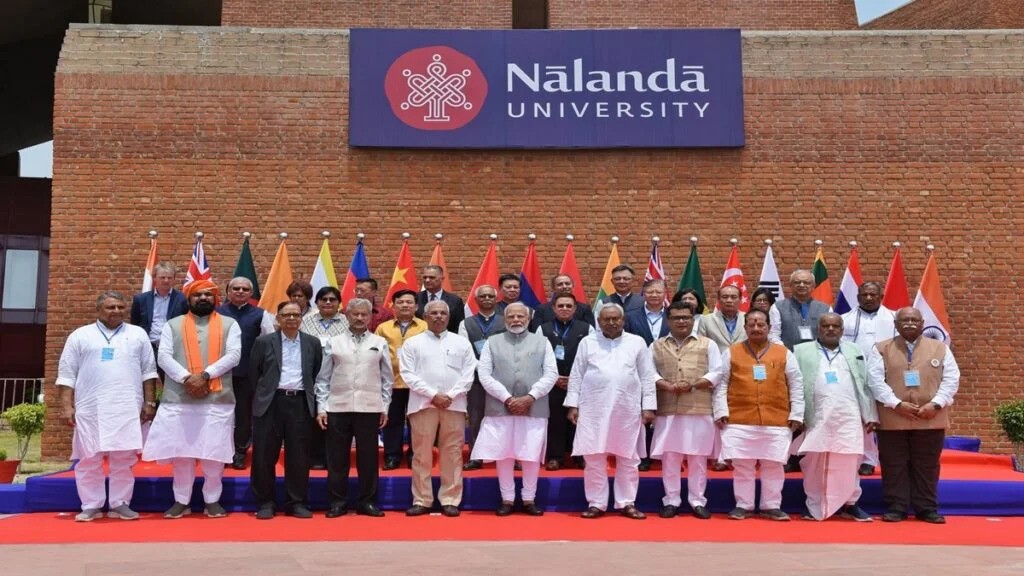
Nalanda was not only a centre for religious learning but also a hub for scientific and philosophical debate. The university boasted extensive libraries, including the renowned “Dharmaganja” library complex, which housed hundreds of thousands of manuscripts. These manuscripts preserved knowledge across various disciplines and were studied by scholars for generations. The destruction of Nalanda in the twelfth century marked a tragic loss of knowledge for the world, but its legacy continues to inspire modern institutions and scholars. The revival of Nalanda University in the twenty-first century symbolises the ongoing influence of India’s ancient educational heritage.
Another monumental centre of learning was Takshashila University, which existed centuries before Nalanda. Takshashila attracted students from across the ancient world and offered education in fields such as political science, economics, medicine, military science, and philosophy. Great scholars like Chanakya, the author of the Arthashastra, were associated with this institution. These ancient universities demonstrate that India was a global hub of education long before the rise of modern universities in Europe.
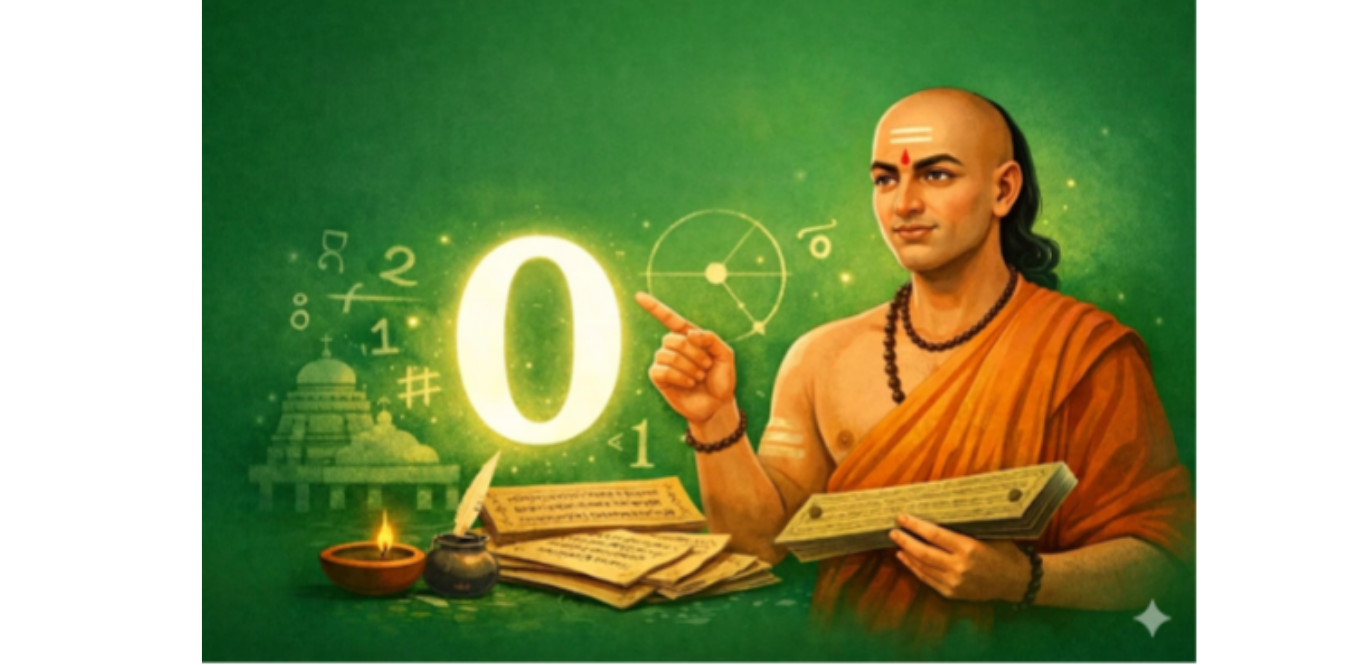
Indian civilisation has also made transformative contributions to mathematics and science. One of the most remarkable innovations was the concept of Zero, developed by Indian mathematicians. This idea revolutionised mathematics and facilitated advanced calculations. Alongside zero, Indian scholars devised the Decimal System, which forms the foundation of modern arithmetic used globally today.
The great mathematician Aryabhata made notable contributions to astronomy and mathematics in the fifth century. He estimated pi’s value, explained Earth’s rotation on its axis, and developed advanced astronomical models long before similar ideas appeared elsewhere. Later scholars such as Brahmagupta expanded mathematical knowledge by introducing rules for arithmetic operations involving zero and negative numbers.
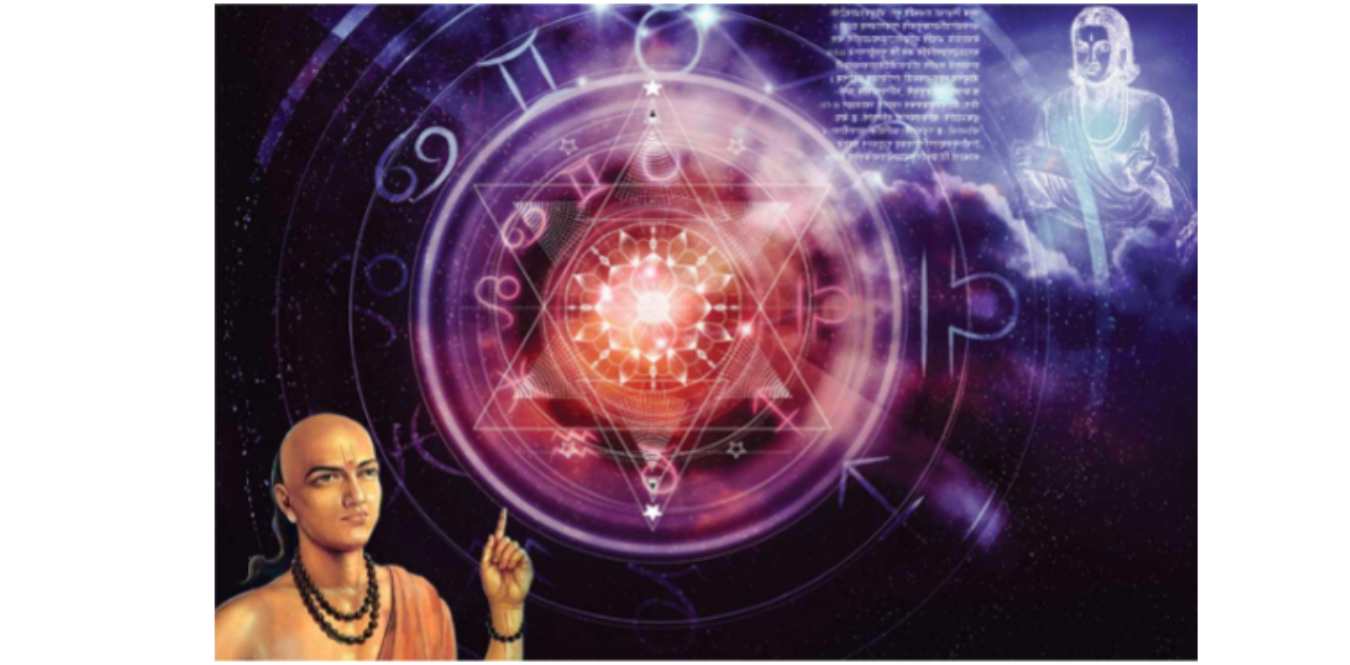
The origins of the modern numeral system and many fundamental mathematical ideas can be traced back to ancient India, where scholars developed the decimal place-value system using the digits 0–9, along with advanced concepts in arithmetic and trigonometry. These innovations laid the foundation for later scientific and mathematical progress across civilisations.
During the 8th and 9th centuries, these Indian mathematical techniques were transmitted to the Islamic world, where the Persian mathematician Muhammad ibn Musa al-Khwarizmi studied and systematised them. Around 825 CE, he authored the influential work ‘The Book of Addition and Subtraction According to the Hindu Calculation’, which explained how to perform arithmetic using the Hindu numeral system, including the revolutionary idea of zero as a placeholder in decimal notation.
Through later Latin translations, this work helped introduce the Hindu numerical system to Europe, where it eventually replaced older counting methods such as the abacus and became the standard numerical system used worldwide.
Long before the modern digital age, ancient India had already established intellectual foundations that closely resemble the principles of modern computing and artificial intelligence. Indian scholars devised systematic, rule-based methods in mathematics, linguistics, and logic that mirror today’s algorithmic thinking. The Shulba Sutras utilised step-by-step geometric procedures, like algorithms.
At the same time, the grammarian Pāṇini created an extremely precise formal grammar system for Sanskrit in the 4th century BCE, often compared to modern programming languages because of its structured rules and symbolic logic. Likewise, the scholar Pingala explored combinatorics akin to binary, and the mathematician Aryabhata advanced astronomical calculations using sophisticated numerical techniques. These intellectual traditions demonstrate that the conceptual roots of contemporary computational thinking and algorithmic systems ultimately originate from ancient Indian knowledge systems, which later spread to Persia, Asia, the Arab world, and eventually Europe.
Moreover, India’s development of the decimal place-value system and the concept of zero provided essential mathematical tools that later influenced global science and computing. These intellectual traditions show that the systematic logic, symbolic representation, and algorithmic thinking central to modern AI have roots in ancient Indian scholarship.
In the field of medicine, India contributed the ancient system of Ayurveda, which emphasises holistic health and the balance of mind, body, and spirit. Ayurveda developed sophisticated approaches to diagnosis, herbal medicine, diet, and lifestyle management thousands of years ago. Ancient medical scholars such as Sushruta wrote detailed medical texts describing surgical procedures and anatomical knowledge. Sushruta’s work included descriptions of complex surgeries such as cataract operations and reconstructive surgery, demonstrating the advanced medical understanding of ancient India.
Another significant contribution from India to the world is the practice of Yoga. Originating thousands of years ago, yoga combines physical postures, breathing techniques, and meditation to improve physical and mental well-being. Today, yoga is practised in nearly every country and has become a symbol of India’s spiritual heritage. International Yoga Day, celebrated worldwide each year, highlights the universal appeal of this ancient practice.

Indian civilisation is also renowned for its profound philosophical and spiritual traditions. Sacred texts such as the Vedas, the Upanishads, and the Bhagavad Gita explore profound questions about existence, ethics, duty, and consciousness. These texts emphasise the pursuit of knowledge, self-realisation, and harmony with the universe. The philosophical concepts developed in these texts have influenced thinkers worldwide and continue to inspire spiritual seekers today.

One of the core ideas promoted by Indian philosophy is Vasudhaiva Kutumbakam, which means “the world is one family.” This concept encourages unity, compassion, and respect among all people, regardless of cultural or religious differences. In multicultural societies like Guyana, this philosophy is particularly important because it advocates peaceful coexistence and mutual understanding.
Indian civilisation has also contributed powerful ideas about non-violence and social justice to the world. The philosophy of Mahatma Gandhi emphasised truth, non-violence, and peaceful resistance as tools for achieving political and social change. Gandhi’s ideas inspired major global leaders such as Martin Luther King Jr. and Nelson Mandela, who used similar principles to lead movements for civil rights and freedom in their respective countries.
Besides philosophy and science, Indian civilisation has made significant contributions to art, architecture, and literature. Ancient temples, monuments, and sculptures showcase the artistic skill of Indian craftsmen. Classical dance styles, music traditions, and literary works have influenced cultures across Asia and beyond. Epics such as the Ramayana and the Mahabharata rank among the longest and most influential literary works ever written, offering moral lessons and philosophical insights that remain relevant today.

The Indian Civilisation Institute of Guyana aims to highlight these achievements through its website. By sharing information about Indian history, philosophy, science, and culture, the institute seeks to foster a greater appreciation of India’s contributions to the world. The platform encourages academic research, cultural dialogue, and community participation, ensuring that the legacy of Indian civilisation continues to inspire future generations.
Another key aim of the institute is to enhance the relationship between India and Guyana. Cultural diplomacy plays a vital role in fostering strong international ties. By promoting shared heritage and fostering intellectual collaboration, the institute strengthens the historical and cultural bonds between the two nations.
The website also aims to inspire young people in Guyana and the wider diaspora to explore their heritage and take pride in their cultural identity. Understanding their ancestors’ achievements can motivate them to pursue education, innovation, and leadership in modern society. By connecting the past with the present, the institute encourages individuals to build a future grounded in knowledge, cultural awareness, and global responsibility.
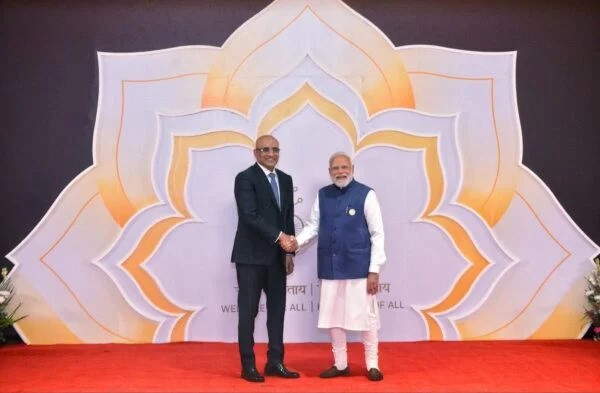
Ultimately, the Indian Civilisation Institute of Guyana is more than just a website. It is a cultural movement committed to preserving history, celebrating knowledge, and promoting universal values that benefit humanity. Through education, cultural awareness, and intellectual exploration, the institute strives to ensure that the wisdom of Indian civilisation continues to illuminate the way forward for people in Guyana and across the world.
Kaieteur Falls – Guyana
In an era of rapid technological change and globalisation, the lessons of ancient civilisations remain highly relevant. Indian civilisation highlights the importance of balancing material progress with spiritual well-being, scientific advancement with ethical responsibility, and individual growth with collective harmony. By sharing these timeless ideas through its digital platform, the Indian Civilisation Institute of Guyana helps ensure that India’s heritage continues to inspire, educate, and unite people across cultures and generations.
Vedan Choolun
Sorry, the comment form is closed at this time.