Indian Arrival Day in Guyana

Indian Arrival Day in Guyana: A Journey of Resilience, Heritage, and Nation-Building.

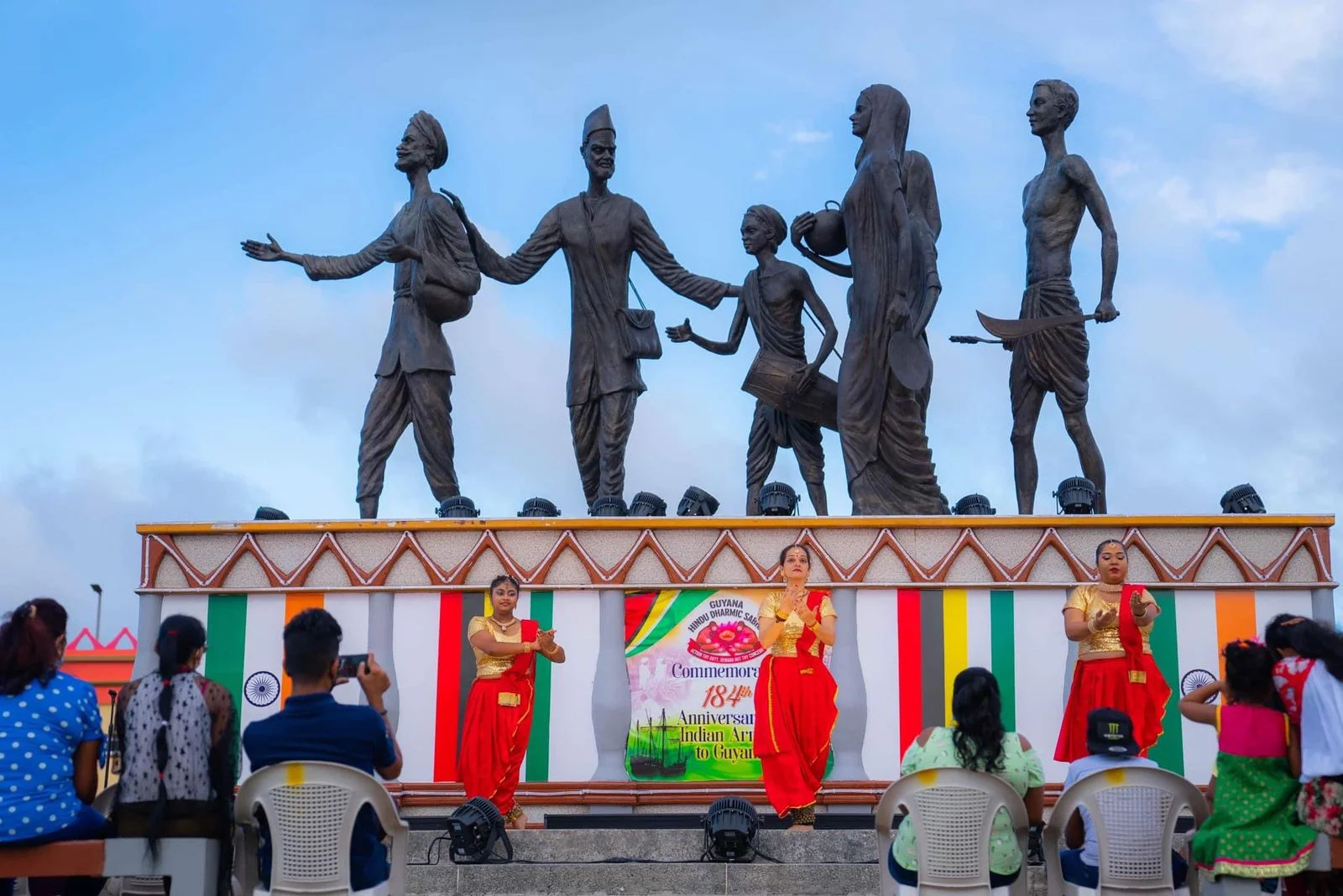
Every year on 5 May, Guyana observes Indian Arrival Day, a deeply significant occasion commemorating the arrival of the first Indians on its shores in 1838. This day is more than a historical remembrance; it is a tribute to endurance, cultural preservation, and the shaping of a modern, multicultural society. It reflects the story of the Indo-Guyanese who crossed oceans under difficult circumstances and went on to transform the country’s social, economic, and cultural fabric. The Indo-Guyanese came from one of the most advanced civilisations, which are prevalent today and gave the world modern mathematics, astronomy, yoga, meditation, Ayurveda, the Sanskrit language, and two of the most powerful...

Hinduism in South Africa: A Story of Faith, Culture, and Resilience

Hinduism in South Africa represents one of the most vibrant and enduring expressions of Indian culture outside the Indian subcontinent. Introduced by Indian indentured laborers during the 19th century, Hinduism has grown into a significant religious and cultural force in the country. Today, Hindus in South Africa continue to preserve their traditions, rituals, and spiritual values while contributing meaningfully to the nation’s multicultural identity. The journey of Hinduism in South Africa is not only about religion but also about resilience, unity, and the preservation of heritage across generations. The origins of Hinduism in South Africa date back to 1860, when the first group of Indian laborers arrived in...

Hinduism and Buddhism in Laos: A Story of Cultural and Spiritual Influence

The history of religion in Laos is deeply rooted in both Hinduism and Buddhism, which together shaped the spiritual, cultural, and political identity of the country. While Buddhism is the dominant religion in Laos today, Hinduism played an important role in the early formation of Lao civilization. These two religions arrived through trade, migration, and cultural exchange from India and neighboring regions, leaving lasting influences on Laos’ traditions, art, architecture, and social values. The blend of Hindu and Buddhist beliefs created a unique religious landscape that continues to define Lao society. The Arrival of Hinduism in Laos Vat Phou temple in Laos Hinduism reached Laos many centuries ago through Indian...

Hinduism in Cambodia: A Deep Historical and Cultural Connection

Hinduism has played a profound role in shaping the history, culture, architecture, and traditions of Cambodia. Long before Buddhism became the dominant religion, Hinduism was the spiritual and political foundation of ancient Cambodian civilisation. The influence of Hinduism can still be seen today in Cambodia’s temples, art, language, rituals, and national identity. From the majestic temples of Angkor to the myths carved in stone, Hinduism remains an essential part of Cambodia’s heritage and historical legacy. The Arrival of Hinduism in Cambodia Hinduism arrived in Cambodia around the first century CE through Indian traders, scholars, and priests who traveled across maritime trade routes connecting India with Southeast Asia. These interactions...

The Mahabharata: Wisdom, Legendary Characters, and Its Timeless Lessons for Humanity

The Mahabharata is one of the most influential and profound epics in world history, offering a rich combination of storytelling, philosophy, ethics, leadership, and spiritual knowledge. Traditionally composed by the sage Vyasa, the Mahabharata is not just a tale of war but a comprehensive guide to human life, relationships, governance, and moral responsibility. It reflects the complexities of human nature and the constant struggle between right and wrong, duty and desire, power and humility. Set in ancient India, the epic revolves around the royal family of the Kuru dynasty and the intense rivalry between two groups of cousins—the Pandavas and the Kauravas. Their conflict ultimately leads to the...

Hinduism in Indonesia: A Living Legacy of Ancient Indian Civilisation

Hinduism in Indonesia represents one of the most fascinating cultural journeys in world history, where ancient Indian spiritual traditions took root, evolved, and continue to thrive in a unique local form. Although Indonesia today is the world’s largest Muslim-majority country, Hinduism remains deeply embedded in its cultural fabric, particularly on the island of Bali. The story of Hinduism in Indonesia is not one of mere religious transmission, but of cultural adaptation, artistic expression, and enduring identity that has survived centuries of change. Origins of Hindu Culture in Indonesia The roots of Hinduism in Indonesia can be traced back to early maritime trade between India and Southeast Asia around the...

Mohenjo-daro: The Glorious Dawn of Indian Civilization

The story of Indian civilization begins not with myths alone, but with the remarkable remains of a real, thriving urban society that existed thousands of years ago in the northwestern part of the Indian subcontinent. Among the most extraordinary discoveries that illuminate this ancient past is the city of Mohenjo-daro, a place that continues to astonish historians, archaeologists, and scholars across the world. Flourishing around 2600 BCE as part of the great Indus Valley Civilization, Mohenjo-daro stands as one of the earliest examples of a well-planned urban settlement in human history. At a time when much of the world was still in primitive stages of development, this...

How Zoroastrianism Declined After the Arab Conquests: History, Conflict, and Its Connection with Hinduism

The Ancient Religion of Zoroastrianism Zoroastrianism is one of the world’s oldest monotheistic religions, founded by the prophet Zoroaster in ancient Persia more than 3,000 years ago. It was once the dominant religion of powerful Persian empires, including the Achaemenid, Parthian, and Sasanian Empires. Zoroastrianism is centred on the worship of Ahura Mazda, the embodiment of truth, order, and goodness. Fire temples, sacred rituals, and a moral code emphasising good thoughts, good words, and good deeds formed the foundation of the religion. At its height, millions of people across Persia and Central Asia followed this faith. The Arab Conquest of Persia and Religious Transformation The turning point in the history of...

Buddhism in Japan: Introduction, Temples, and Cultural Impact

Buddhism is one of the most influential religious and cultural traditions in Japan. Since its introduction more than 1,400 years ago, Buddhism has shaped Japanese art, architecture, philosophy, politics, and daily life. The religion blended with native beliefs and traditions, especially Shinto, creating a unique spiritual culture that continues to define Japan today. Understanding how Buddhism entered Japan, how temples were established, and how the religion transformed society provides insight into the development of Japanese civilization. How Buddhism Was Introduced to Japan Buddhism was officially introduced to Japan in the mid-6th century, traditionally dated to the year 552 CE, when a Buddhist statue and sacred texts were sent from...

The Story of Buddhism in China: Origins, Spread, and Cultural Impact

Buddhism is one of the most influential spiritual traditions in Chinese history, shaping the country’s philosophy, culture, art, and social values for nearly two thousand years. Although Buddhism originated in India, it found fertile ground in China, where it gradually blended with local traditions and became a major religious and cultural force. The journey of Buddhism into China is a fascinating story of trade, cultural exchange, and spiritual transformation. Buddhism was first introduced to China during the Han Dynasty, around the 1st century CE. The spread of Buddhism is closely linked to the famous Silk Road, an ancient network of trade routes that connected China with Central Asia,...