The World’s Largest Hindu Temple: The Magnificence of Angkor Wat
Deep in the heart of Cambodia, surrounded by dense forests and ancient ruins, stands one of the most awe-inspiring monuments ever created by human hands—Angkor Wat. Recognized as the largest Hindu temple in the world and the largest religious structure on Earth, Angkor Wat is a symbol of spiritual devotion, architectural brilliance, and cultural grandeur. Covering an area of more than 400 acres, this monumental complex reflects the power and sophistication of the ancient Khmer Empire and its deep-rooted connection with Hindu philosophy.
Originally built as a temple dedicated to Lord Vishnu, Angkor Wat has transcended centuries of change, evolving into a sacred site that continues to inspire millions. Its towering spires, intricate carvings, and harmonious design make it not just a place of worship, but a masterpiece of human creativity and religious expression.
Historical Origins and the Vision of Suryavarman II
The construction of Angkor Wat began in the early 12th century under the reign of King Suryavarman II, one of the most powerful rulers of the Khmer Empire. His reign marked a period of expansion, stability, and cultural flourishing. Determined to create a temple that would reflect both his devotion to Hinduism and his imperial authority, Suryavarman II commissioned the construction of Angkor Wat as a state temple and a grand funerary monument.
The temple was built at the capital city of Angkor, which was then one of the largest and most advanced urban centers in the world. It is believed that thousands of artisans, laborers, and architects worked tirelessly for decades to complete this massive structure. The scale of planning, engineering, and artistic execution involved in its construction demonstrates the extraordinary capabilities of the Khmer civilization.
Angkor Wat was not merely a place for religious rituals; it was also intended to symbolize the king’s divine connection with the gods, reinforcing his role as a ruler chosen by divine will.
Dedication to Lord Vishnu and Religious Significance
Unlike many earlier temples of the Khmer Empire that were dedicated to Lord Shiva, Angkor Wat was devoted to Lord Vishnu, the preserver and protector of the universe in Hindu belief. This distinction makes Angkor Wat unique in the region’s architectural and religious history.
The temple was originally known as “Vrah Vishnuloka,” meaning the sacred abode of Vishnu. Its orientation toward the west, which is unusual for Hindu temples, has intrigued historians and scholars. In Hindu symbolism, the west is often associated with the setting sun and the end of life, suggesting that Angkor Wat may have also served as a funerary temple for King Suryavarman II.
The spiritual atmosphere of Angkor Wat is deeply rooted in Hindu cosmology. The temple was designed not only as a place of worship but also as a representation of the universe itself, allowing devotees to experience a symbolic journey from the earthly realm to the divine.
Angkor Wat Temple
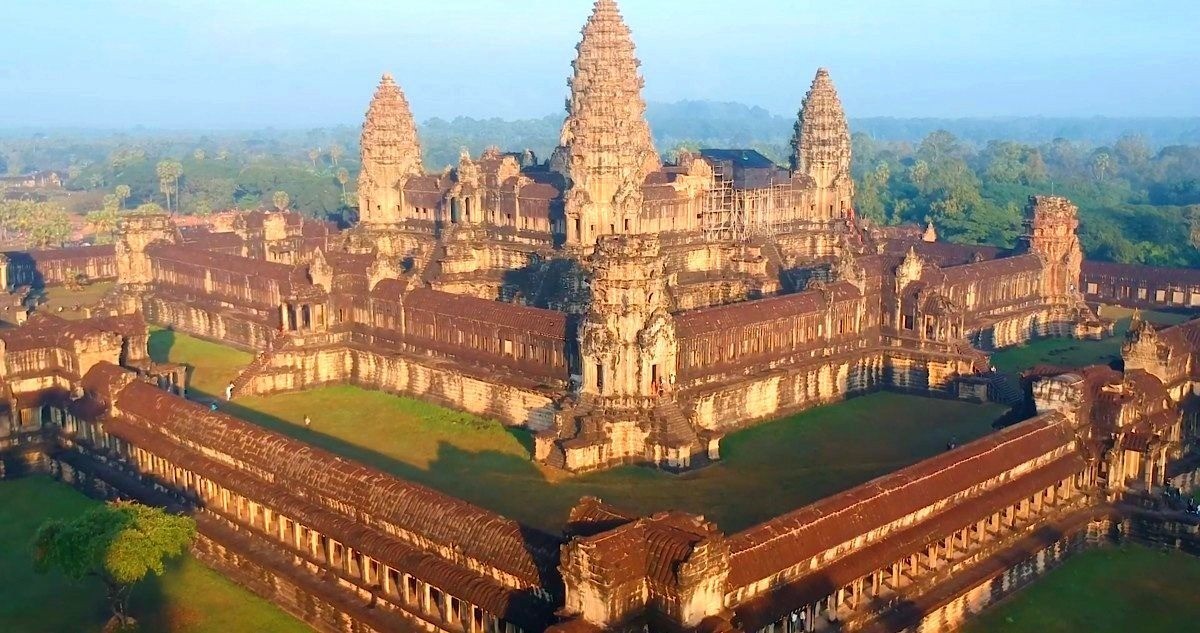
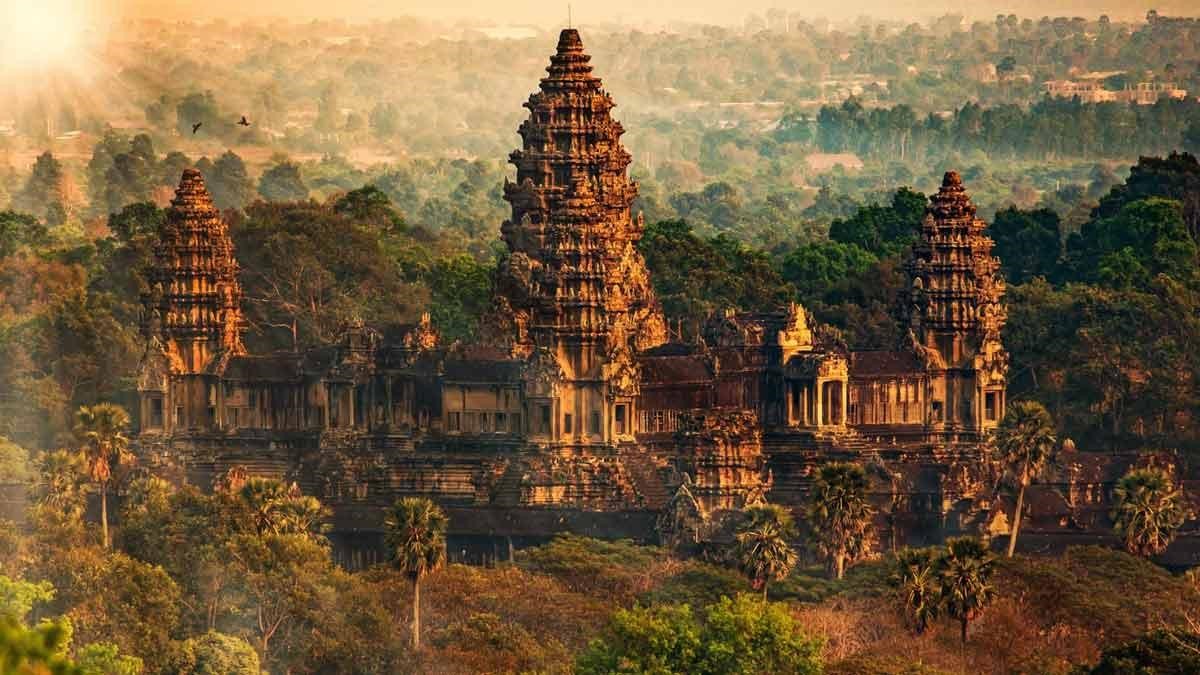
Angkor Wat is widely regarded as one of the greatest architectural achievements in human history. Its design is a perfect blend of symmetry, proportion, and symbolic meaning. The entire temple complex is constructed to represent Mount Meru, the mythical center of the universe in Hindu cosmology.
At the heart of the temple stand five towering spires, arranged in a quincunx pattern, symbolizing the five peaks of Mount Meru. Surrounding the temple is a विशाल moat, representing the cosmic ocean that encircles the universe. The temple’s galleries and courtyards are arranged in ascending levels, guiding visitors on a spiritual ascent toward the central sanctuary.
The construction materials used in Angkor Wat are primarily sandstone, transported from quarries located miles away. The precision with which these stones were cut and assembled, without the use of modern technology, is a testament to the advanced engineering skills of the Khmer builders.
The temple’s long causeway, grand entrances, and perfectly aligned corridors create a sense of harmony and balance that continues to captivate architects and historians even today.
Artistic Excellence and Mythological Narratives
One of the most remarkable features of Angkor Wat is its extensive and detailed carvings. The temple walls are adorned with bas-reliefs that stretch for hundreds of meters, depicting scenes from Hindu epics and mythology.
Among the most famous carvings is the depiction of the Samudra Manthan, or the churning of the ocean, a story that illustrates the struggle between gods and demons to obtain the nectar of immortality. Other carvings portray scenes from the Ramayana and the Mahabharata, bringing to life the heroic tales of Lord Rama, Lord Krishna, and other divine figures.
The walls also feature thousands of apsaras, or celestial dancers, each uniquely carved with intricate details. These artistic elements not only enhance the beauty of the temple but also serve as visual representations of religious teachings and philosophical ideas.
Every inch of Angkor Wat reflects a deep commitment to artistry and storytelling, making it a living gallery of ancient Hindu culture.
Transition from Hinduism to Buddhism
Over time, Angkor Wat underwent a significant religious transformation. By the late 12th and early 13th centuries, the region saw a gradual shift from Hinduism to Buddhism, particularly during the reign of Jayavarman VII.
As Buddhism became more prominent, Angkor Wat was adapted into a Buddhist temple. Many Hindu images were replaced or reinterpreted to align with Buddhist beliefs. Despite these changes, the original Hindu architecture and symbolism were largely preserved, creating a unique blend of two great religious traditions.
This seamless transition is one of the reasons why Angkor Wat has remained continuously in use as a religious site, unlike many other ancient temples that were abandoned or destroyed.
Decline, Rediscovery, and Preservation
By the 15th century, the once-thriving city of Angkor began to decline due to a combination of environmental challenges, invasions, and political changes. As the capital shifted to other regions, Angkor Wat was gradually abandoned and overtaken by the surrounding jungle.
Despite this decline, the temple was never completely forgotten. Local monks continued to maintain it as a place of worship. In the 19th century, the site gained international attention when it was documented by the French explorer Henri Mouhot, whose writings introduced the grandeur of Angkor Wat to the Western world.
Subsequent efforts were made to restore and preserve the temple, particularly during the French colonial period. Today, Angkor Wat is recognized as a UNESCO World Heritage Site, ensuring its protection for future generations.
Cultural Identity and National Pride
Angkor Wat holds immense cultural and national significance for Cambodia. It is prominently featured on the country’s national flag, making Cambodia the only nation in the world to display a temple on its flag.
The monument represents the pride, resilience, and heritage of the Cambodian people. It serves as a powerful reminder of the country’s glorious past and its enduring cultural identity.
Every year, millions of visitors from around the world travel to Angkor Wat, not only to admire its beauty but also to connect with its spiritual and historical essence. The temple continues to play a vital role in Cambodia’s tourism industry and global recognition.
A Legacy That Transcends Time
Angkor Wat is more than just an ancient structure; it is a timeless symbol of devotion, creativity, and human achievement. It stands as evidence of how deeply religion, art, and science were intertwined in ancient civilizations.
Its influence extends far beyond Cambodia, highlighting the spread of Hindu culture and philosophy across Southeast Asia. The temple serves as a reminder that the ideals of spirituality, harmony, and cosmic order are universal, transcending geographical boundaries.
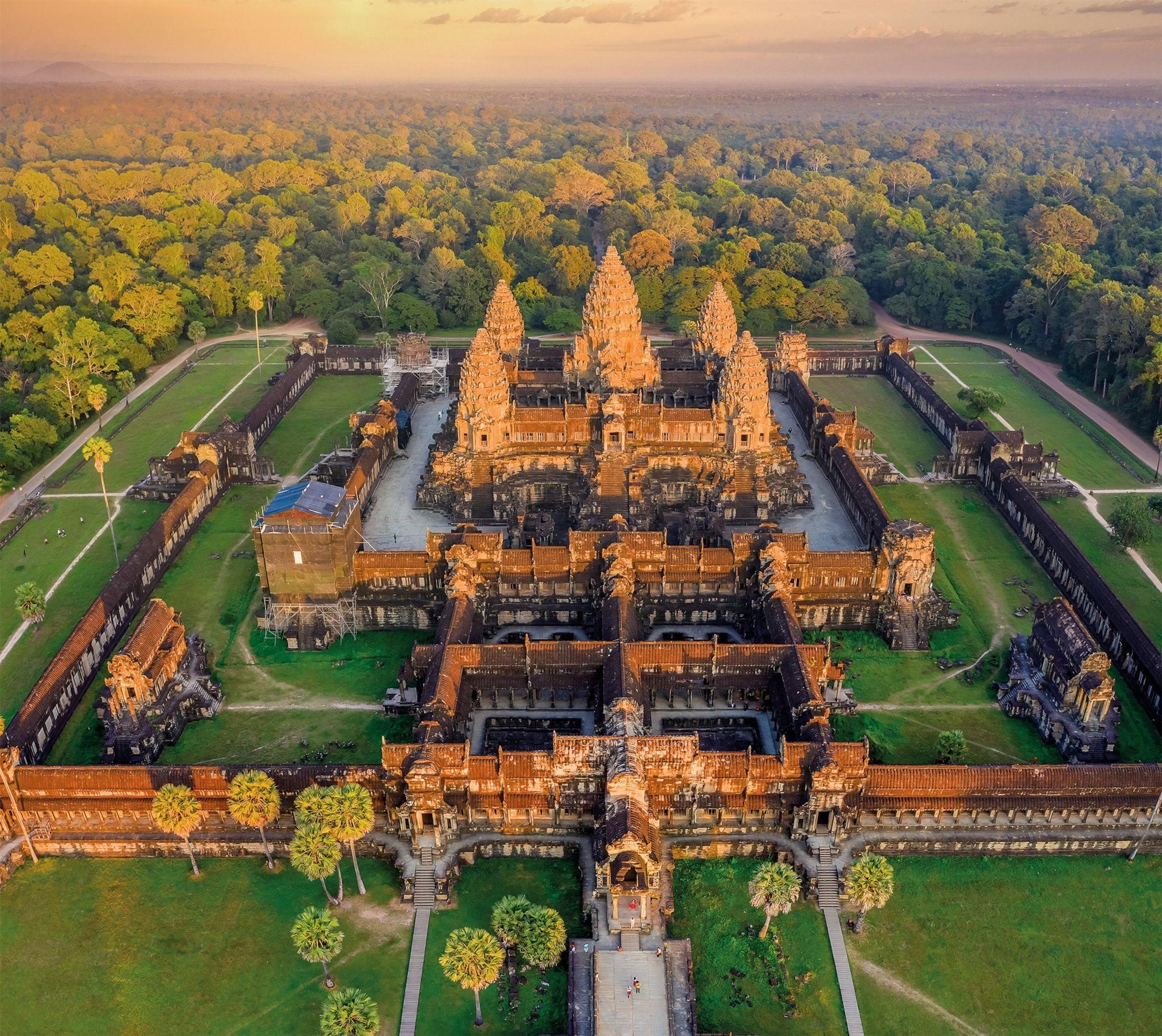
Angkor Wat Temple
Conclusion: An Eternal Wonder of the World
In the grand narrative of human history, Angkor Wat occupies a place of unparalleled significance. As the largest Hindu temple in the world, it embodies the heights of architectural excellence and spiritual devotion achieved by the Khmer Empire.
From its majestic towers to its intricate carvings, every aspect of Angkor Wat tells a story of faith, ambition, and artistic brilliance. It is a monument that has withstood the test of time, continuing to inspire awe and reverence centuries after its creation.
Angkor Wat is not just a relic of the past; it is a living testament to the enduring legacy of human civilization. Its beauty, mystery, and spiritual depth ensure that it will remain one of the greatest wonders of the world for generations to come.
Adhrit Narayanan Nair, Chennai, India