Hinduism in Indonesia: A Living Legacy of Ancient Indian Civilisation
Hinduism in Indonesia represents one of the most fascinating cultural journeys in world history, where ancient Indian spiritual traditions took root, evolved, and continue to thrive in a unique local form. Although Indonesia today is the world’s largest Muslim-majority country, Hinduism remains deeply embedded in its cultural fabric, particularly on the island of Bali. The story of Hinduism in Indonesia is not one of mere religious transmission, but of cultural adaptation, artistic expression, and enduring identity that has survived centuries of change.
Origins of Hindu Culture in Indonesia
The roots of Hinduism in Indonesia can be traced back to early maritime trade between India and Southeast Asia around the first century CE. Indian traders, scholars, and priests traveled across the seas, bringing with them not only goods but also religious ideas, languages, scripts, and cultural practices. These influences gradually merged with indigenous beliefs, giving rise to a distinctive form of Hindu culture in the region.
One of the earliest and most powerful Hindu kingdoms in Indonesia was the Majapahit Empire, which flourished between the 13th and 16th centuries. It played a crucial role in spreading Hindu-Buddhist culture across the Indonesian archipelago. Even earlier kingdoms such as Kutai and Tarumanagara had already embraced Hindu traditions, demonstrating how deeply Indian influence had penetrated the region.
The spread of Hinduism was not enforced through conquest but adopted willingly by local rulers and communities, who saw value in its philosophical depth, governance models, and cultural richness. Sanskrit became a language of prestige, and Indian epics like the Ramayana and Mahabharata were integrated into local storytelling traditions.
The Unique Form of Balinese Hinduism
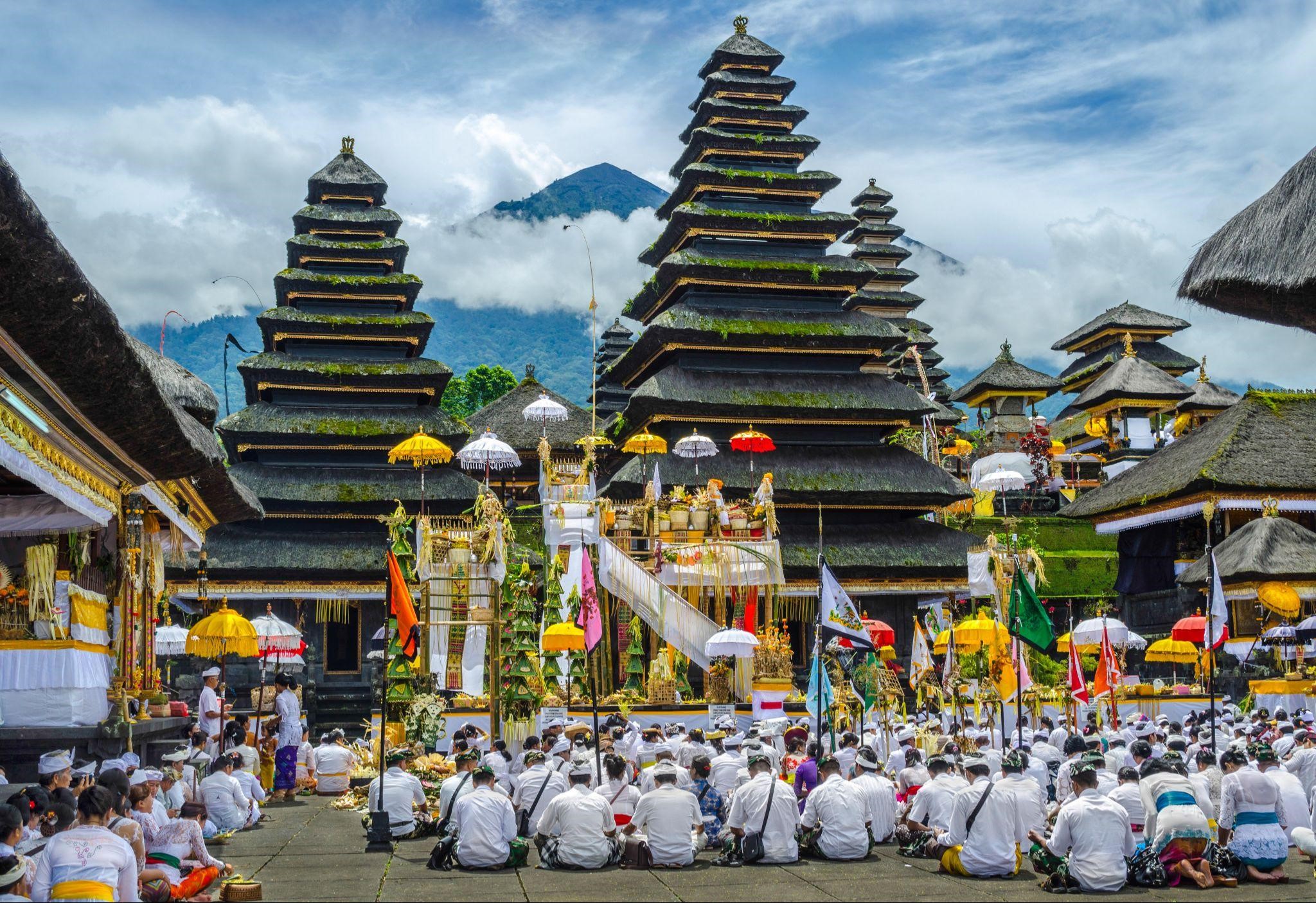
Balinese Hinduism
Unlike Hinduism in India, Hinduism in Indonesia—especially in Bali—developed its own distinct identity known as Agama Hindu Dharma. This form blends classical Hindu beliefs with local animistic traditions, ancestor worship, and Buddhist elements.
Balinese Hinduism emphasizes harmony between humans, nature, and the divine, a concept known as Tri Hita Karana. Temples, rituals, and daily offerings reflect this philosophy, where spirituality is woven into every aspect of life. Small offerings made of flowers, rice, and incense are placed daily at homes, temples, and even on streets, symbolizing gratitude and devotion.
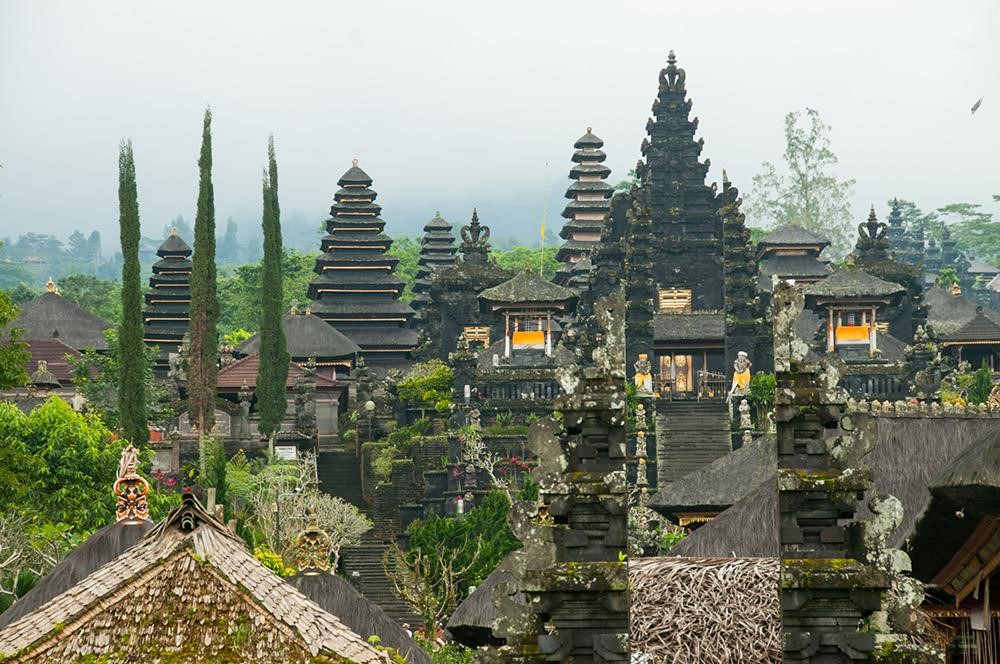
The Balinese temple system is also unique, with open-air structures and multiple shrines rather than enclosed sanctums. Each village, family, and region has its own temples, reflecting a decentralized yet deeply connected spiritual system.
Cultural Influence of Indian Epics
Temples in Bali
Indian epics such as the Ramayana and the Mahabharata have had a profound influence on Indonesian culture. These stories were adapted into local languages and artistic forms, becoming an integral part of Indonesian heritage.
One of the most iconic expressions of this influence is the Wayang Kulit shadow puppet theatre, where stories from these epics are performed with music and narration. These performances are not merely entertainment but serve as moral and philosophical guides for society.
Temples such as Prambanan Temple stand as architectural masterpieces dedicated to Hindu deities like Shiva, Vishnu, and Brahma. The carvings on these temples vividly depict scenes from the Ramayana, showcasing the deep cultural integration of Indian traditions.
Festivals and Religious Practices
Indonesian Temple
Hindu festivals in Indonesia, particularly in Bali, are vibrant, spiritual, and deeply symbolic. One of the most important festivals is Nyepi, the Balinese New Year, which is marked by a day of complete silence, fasting, and meditation. Unlike typical celebrations, Nyepi is a time for self-reflection, where the entire island comes to a standstill—no travel, no work, and even minimal lighting.
Another significant celebration is Galungan, which marks the victory of good over evil. During this festival, beautifully decorated bamboo poles called penjor line the streets, and families honor their ancestors with offerings and prayers. The festival concludes with Kuningan, symbolizing the return of ancestral spirits to the heavens.
Saraswati Day, dedicated to the goddess of knowledge, is also widely celebrated, reflecting the importance of education and wisdom in Balinese Hindu culture. Temples, homes, and schools become centers of prayer and offerings, highlighting the deep respect for learning.
Temples and Sacred Geography
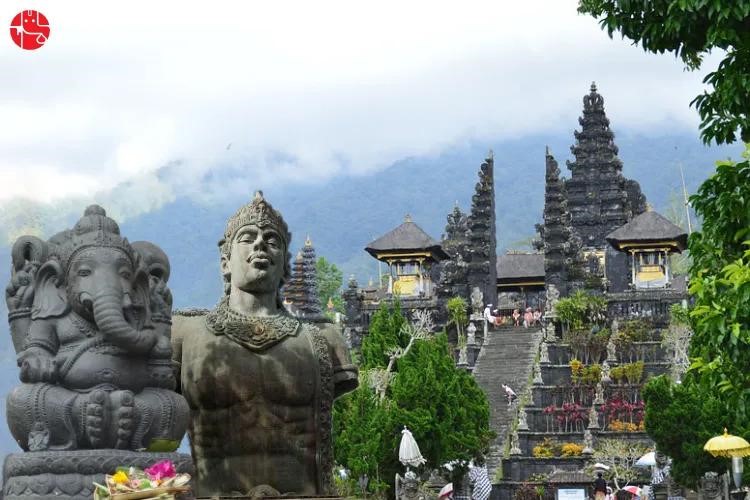
 Lord Ganesha
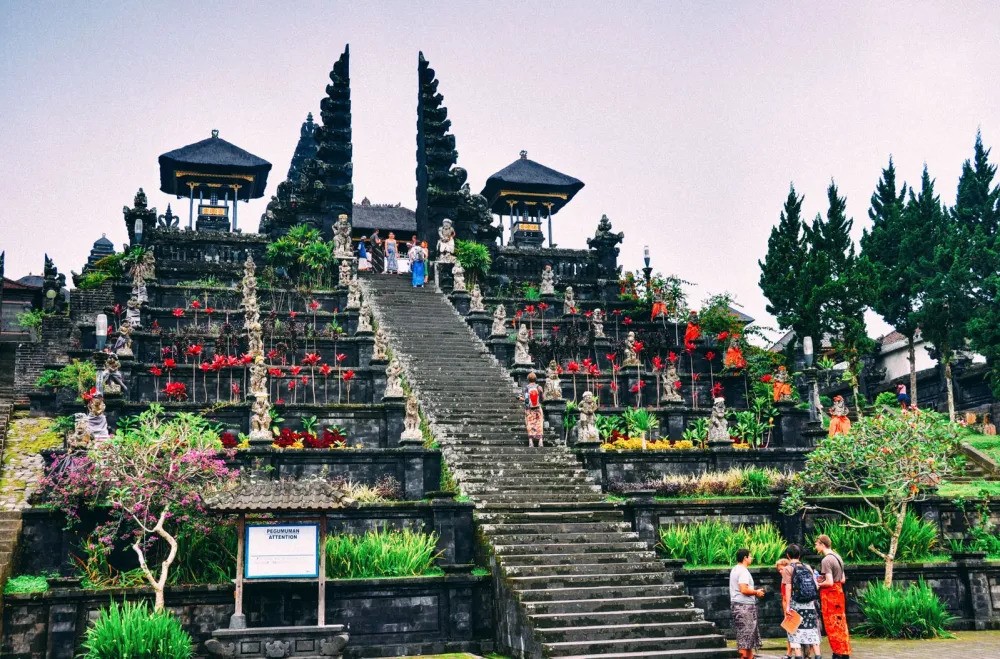
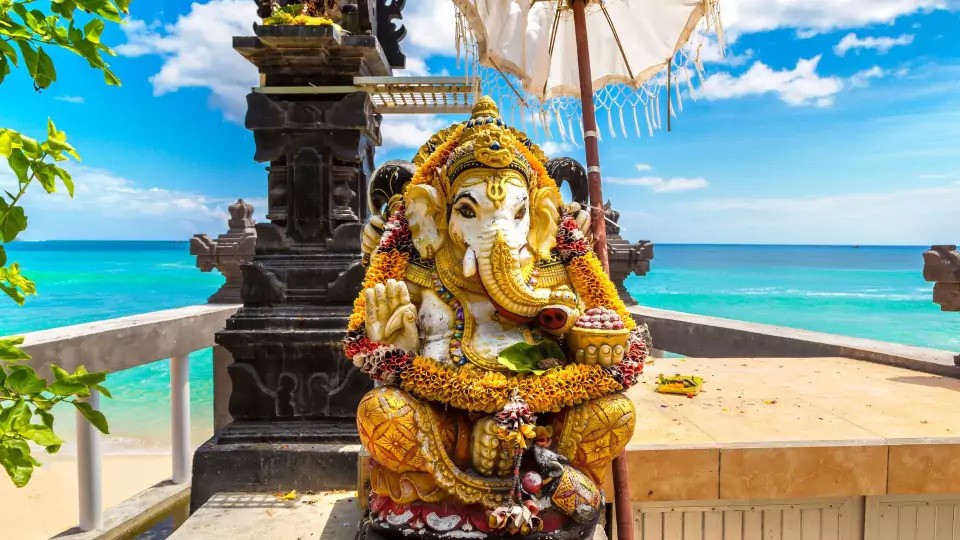
Temples, or pura, form the heart of Hindu life in Indonesia. Each temple is dedicated to specific deities or ancestral spirits and is designed according to strict architectural principles. Among the most famous is Besakih Temple, known as the “Mother Temple” of Bali, located on the slopes of Mount Agung.
Another iconic site is Tanah Lot Temple, perched on a rock formation in the sea. It is not only a place of worship but also a symbol of the spiritual connection between land and ocean.
These temples are not just religious centers but also cultural hubs where festivals, dances, and community gatherings take place, reinforcing social bonds and shared identity.
Survival and Continuity of Hindu Culture
Despite the spread of Islam across Indonesia from the 15th century onwards, Hindu culture survived strongly in Bali and in smaller communities across the archipelago. The fall of the Majapahit Empire led many Hindu nobles, priests, and artists to migrate to Bali, where they preserved and continued their traditions.
Today, Hinduism in Indonesia is officially recognized, and its followers continue to practice their faith with pride. The Indonesian government acknowledges Hindu festivals, and Balinese culture is celebrated as a vital part of the nation’s identity.
Conclusion: A Cultural Bridge Between India and Indonesia
Hinduism in Indonesia stands as a powerful testament to cultural exchange and adaptation. What began as an influence from ancient India evolved into a unique and vibrant tradition that reflects both its origins and its local environment. The festivals, temples, art, and daily rituals of Indonesian Hinduism demonstrate how a civilisation can absorb external ideas and transform them into something entirely its own.
This enduring legacy not only highlights the historical connections between India and Indonesia but also serves as a reminder of the universal nature of culture, where ideas travel across oceans and take root in new lands, enriching humanity as a whole.
Akash Agarwal, Mumbai, India